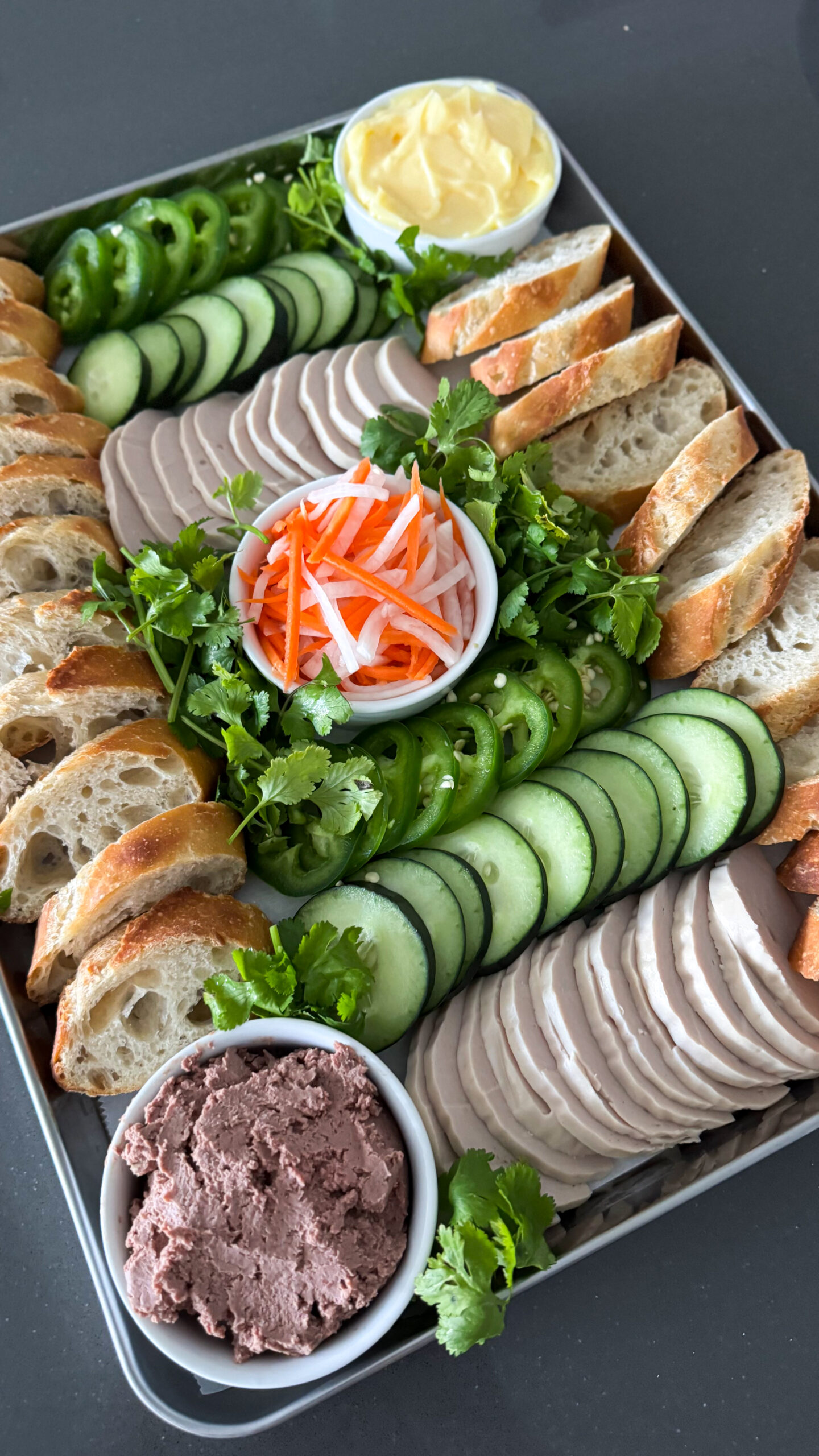
A deconstructed Vietnamese classic meant for sharing.
Servings: 6–8 people
Prep Time: 35 minutes
Cook Time: Minimal (mostly assembly)
Total Time: ~40 minutes
I’m not really interested in reinventing bánh mì.
It’s already perfect.
But sometimes, you want the flavors without committing to a full sandwich. Sometimes you’re hosting. Sometimes you want everyone to build their own plate. Sometimes you just want something that feels thoughtful, generous, and unfussy all at once.
That’s where this bánh mì charcuterie board comes in.
It’s not a gimmick. It’s not a trend for me. It’s just a natural extension of how bánh mì already exists — a collection of textures, temperatures, and flavors that work best when they come together intentionally.
Bread. Protein. Pickles. Fresh herbs. Sauce.
That’s it.
Laid out on a board, it becomes communal. Interactive. Relaxed.
The kind of food people linger around.
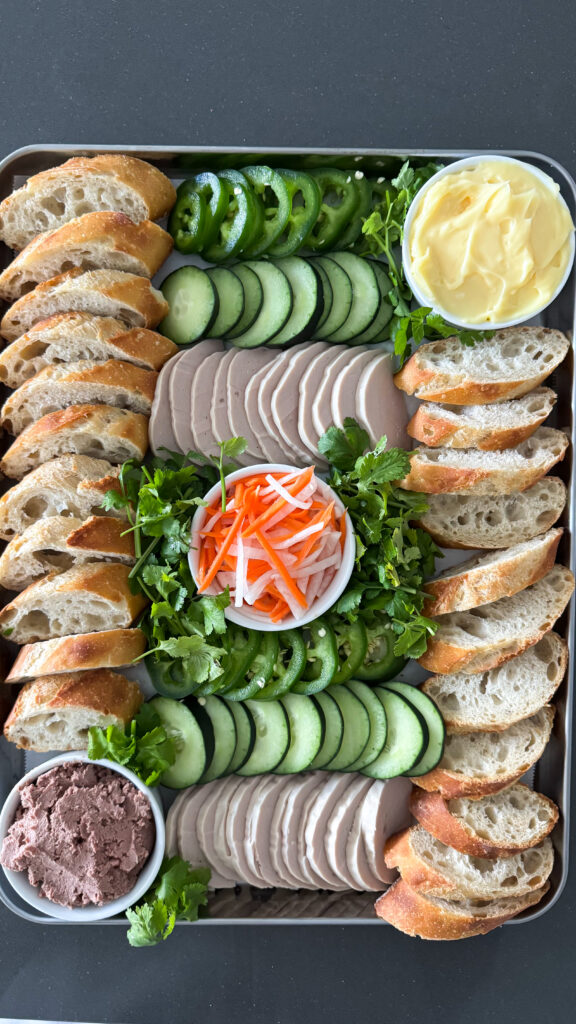
What a Bánh Mì Charcuterie Board Really Is
At its core, bánh mì has always been modular.
You choose your protein.
You add crunch.
You balance richness with acid.
You finish with herbs and heat.
A bánh mì board simply honors that structure — without stacking everything into a single sandwich.
Instead of handing someone a fully built bánh mì, you’re giving them the building blocks. And honestly? That’s how a lot of Vietnamese food is meant to be eaten anyway — assembled at the table, adjusted to taste, shared.
This isn’t about making bánh mì fancy.
It’s about making it flexible.
A Little History: Why This Actually Makes Sense
Bánh mì itself is already a hybrid food — born from French colonial influence and Vietnamese ingenuity. The baguette came from France, but everything else that makes bánh mì bánh mì is Vietnamese: the pickles, the sauces, the proteins, the herbs, the balance.
Vietnamese meals have always emphasized customization and contrast. Think about:
- Lettuce wraps
- Herb platters
- Dipping sauces
- Build-your-own rice paper rolls
So a bánh mì charcuterie board isn’t a departure from tradition — it’s just a different format.
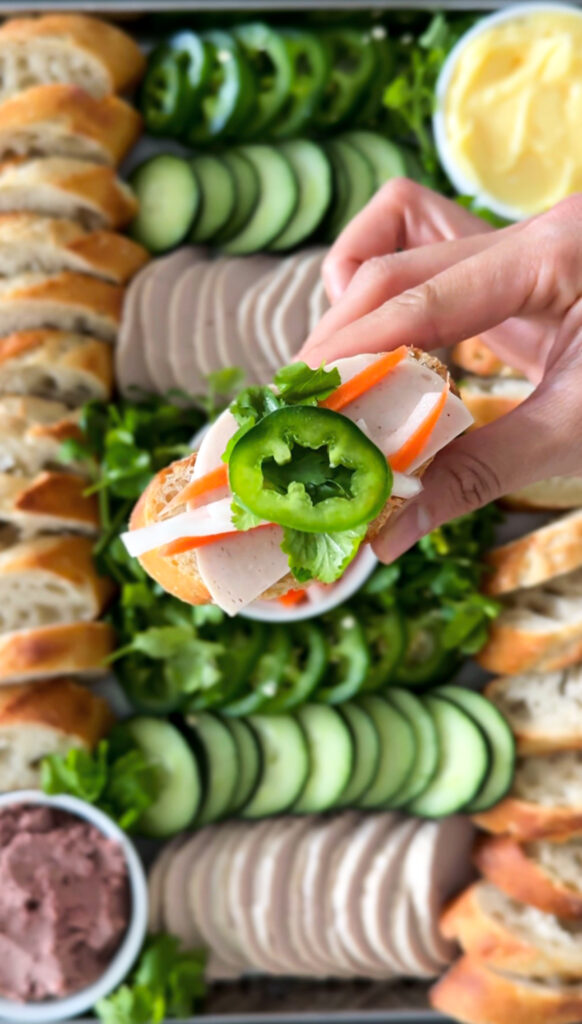
Instead of one sandwich per person, it becomes a shared table experience. Everyone takes what they like, skips what they don’t, and builds their own perfect bite.
Why I Love Serving It This Way
- It’s low pressure
- It feeds a group easily
- It works for mixed preferences
- It feels abundant without being wasteful
- It lets the ingredients speak for themselves
And honestly? It’s one of those things that looks impressive without requiring a ton of extra work. Quiet flex energy.
How to Think About Building the Board
A good bánh mì board needs five core elements:
- Bread
- Proteins
- Pickles & Crunch
- Fresh Herbs
- Sauces & Finishing Touches
Once you understand that structure, you can swap things in and out based on what you like or what you already have.
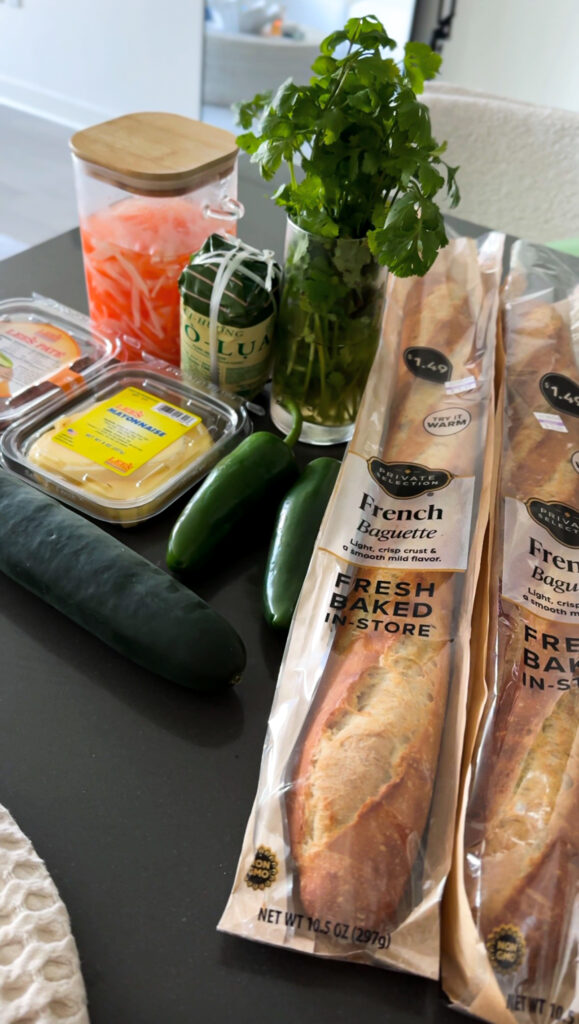
Ingredients (Serves 6–8)
🥖 Bread
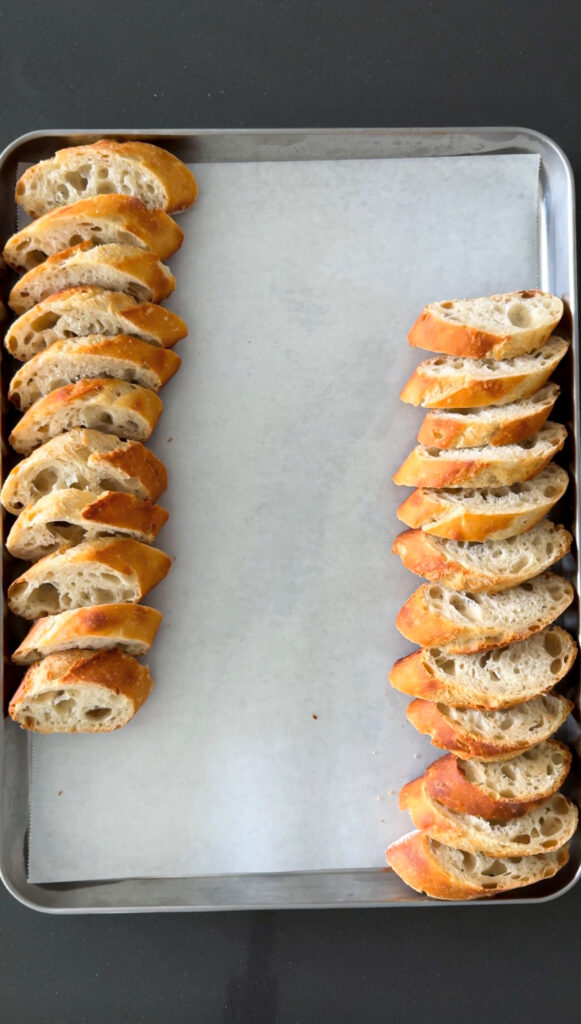
- 4–6 Vietnamese baguettes, sliced into 3–4 inch pieces
- Or one long baguette cut into segments
Warm lightly before serving for best texture.
🍖 Proteins (Choose 2–3)
- Vietnamese grilled pork (thịt nướng), sliced
- Caramelized pork belly
- Lemongrass chicken
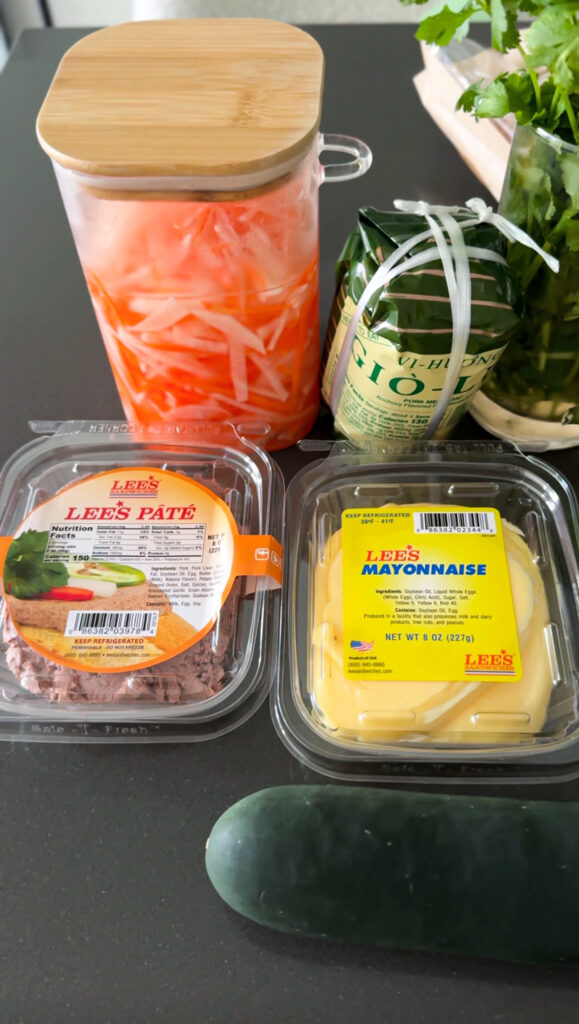
- Vietnamese ham (chả lụa), sliced
- Soy-marinated tofu (for a vegetarian option)
You don’t need everything. Two solid options are more than enough.
🥕 Pickles & Crunch
- Đồ chua (pickled carrot & daikon)
- Thinly sliced cucumber
- Jalapeños or Thai chilies
- Radish slices (optional)
This is where balance comes from. Don’t skip it.
🌿 Fresh Herbs
- Cilantro
- Thai basil
- Mint
Pile them generously. Herbs aren’t garnish here — they’re essential.
🧂 Sauces & Spreads
- Mayonnaise or Vietnamese mayo
- Maggi seasoning or soy sauce
- Chili sauce (sambal, sriracha, or chili oil)
- Pâté
Keep sauces in small bowls or ramekins so people can control how much they add.
Prep Timeline (So You’re Not Stressed)
Earlier in the day:
- Prep do chua
- Cook proteins
- Slice vegetables
- Wash and dry herbs
Right before serving:
- Warm bread
- Slice proteins
- Assemble the board
This board is about ease. Nothing should feel rushed.
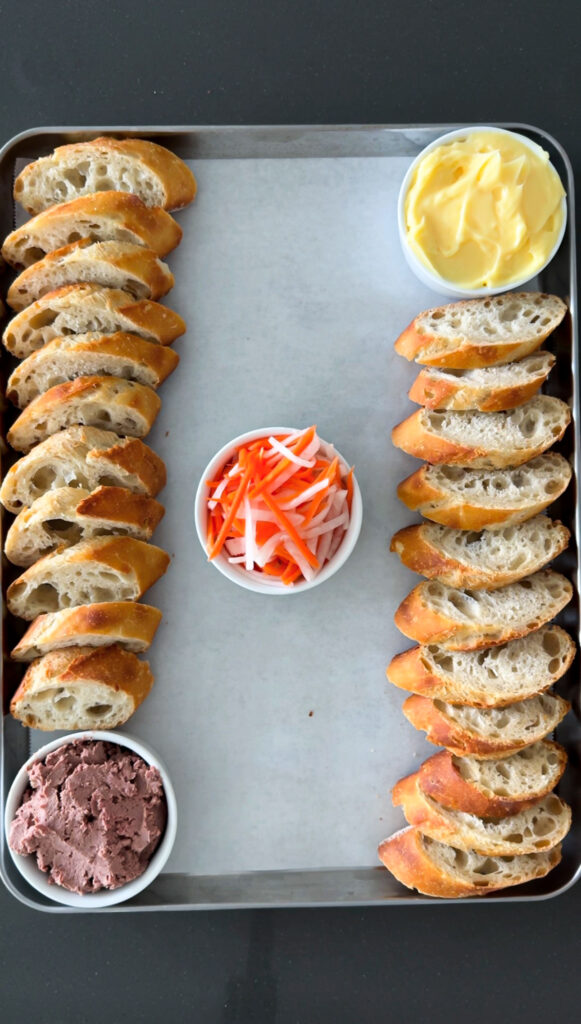
How to Assemble the Board
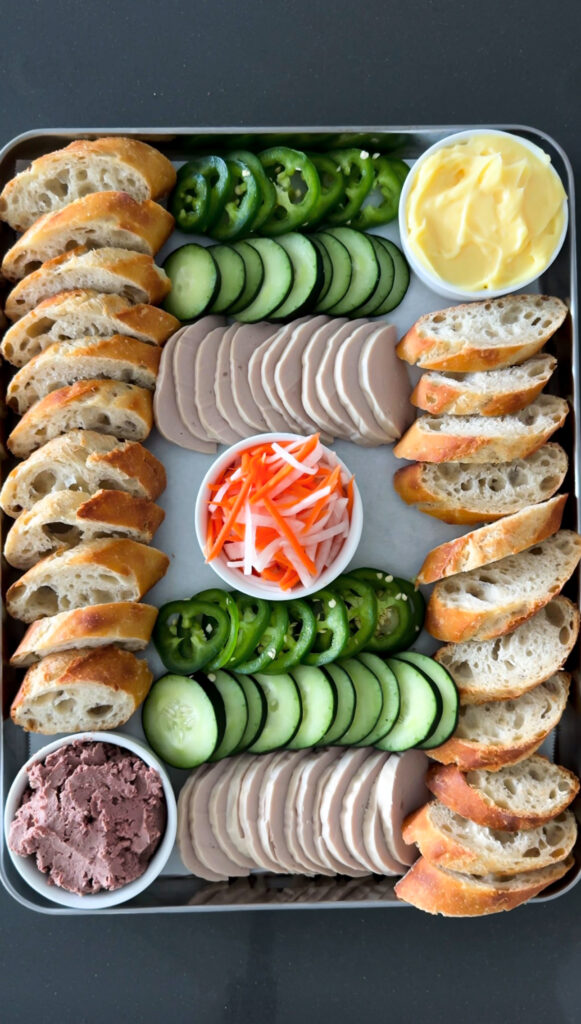
Start with bread as your anchor — it takes up the most space.
Then:
- Group proteins together
- Cluster pickles and vegetables nearby
- Scatter herbs around the board
- Tuck sauces into open spaces
The goal isn’t symmetry. It’s flow.
Everything should feel reachable and intuitive.
How People Should Eat It
There’s no wrong way.
Some people will build mini sandwiches.
Some will stack bites.
Some will eat protein and pickles straight off the board.
That’s kind of the point.
Variations I Love
- Weeknight version: One protein, fewer sauces, simple board
- Party version: More bread, extra herbs, multiple proteins
- Vegetarian-forward: Tofu, mushrooms, extra pickles and herbs
It scales easily — up or down.
Storage & Leftovers
- Store components separately
- Bread is best same day
- Proteins and pickles keep well for 3–4 days
Leftovers turn into easy weekday bánh mìs, rice bowls, or lettuce wraps.
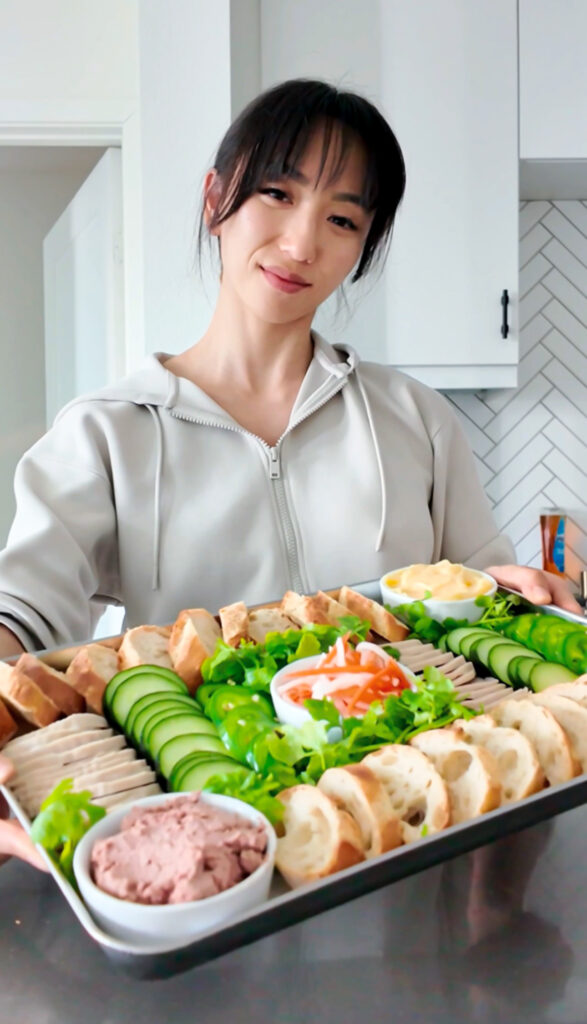
Why This Fits My Cooking Philosophy
I like food that:
- Respects tradition
- Doesn’t overperform
- Feels generous, not flashy
- Lets people eat how they want
This board checks all of those boxes.
It’s not about impressing people.
It’s about feeding them well.
Final Thoughts
A bánh mì charcuterie board is just bánh mì — slowed down, spread out, and shared.
It keeps everything I love about the sandwich: balance, contrast, freshness. But it removes the pressure of perfection. No one sandwich has to be “right.” Every bite can be.
If you’re hosting, bringing something to a gathering, or just want a meal that feels intentional without being complicated, this is one of my favorite ways to do it.
Quietly abundant. Comfortably confident. Built to be enjoyed — together.
Bánh Mì Charcuterie Board
Course: Appetizers, Pork, RecipesCuisine: Vietnamese, AsianDifficulty: easy6-8
servings35
minutes5
minutesA deconstructed Vietnamese classic meant for sharing.
Ingredients
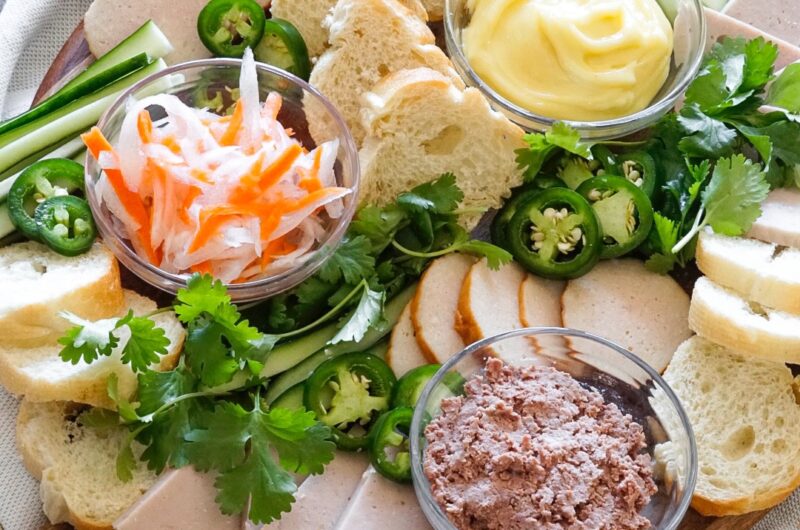
4–6 Vietnamese/French baguettes, sliced
Vietnamese ham (chả lụa)
Cucumber slices
Jalapeños
Cilantro
Vietnamese Mayo
Pâté
Directions
- Warm and slice the baguettes.
- Slice cooked proteins.
- Arrange bread, proteins, pickles, herbs, and sauces on a large board.
- Serve and let everyone build their own bánh mì bites.