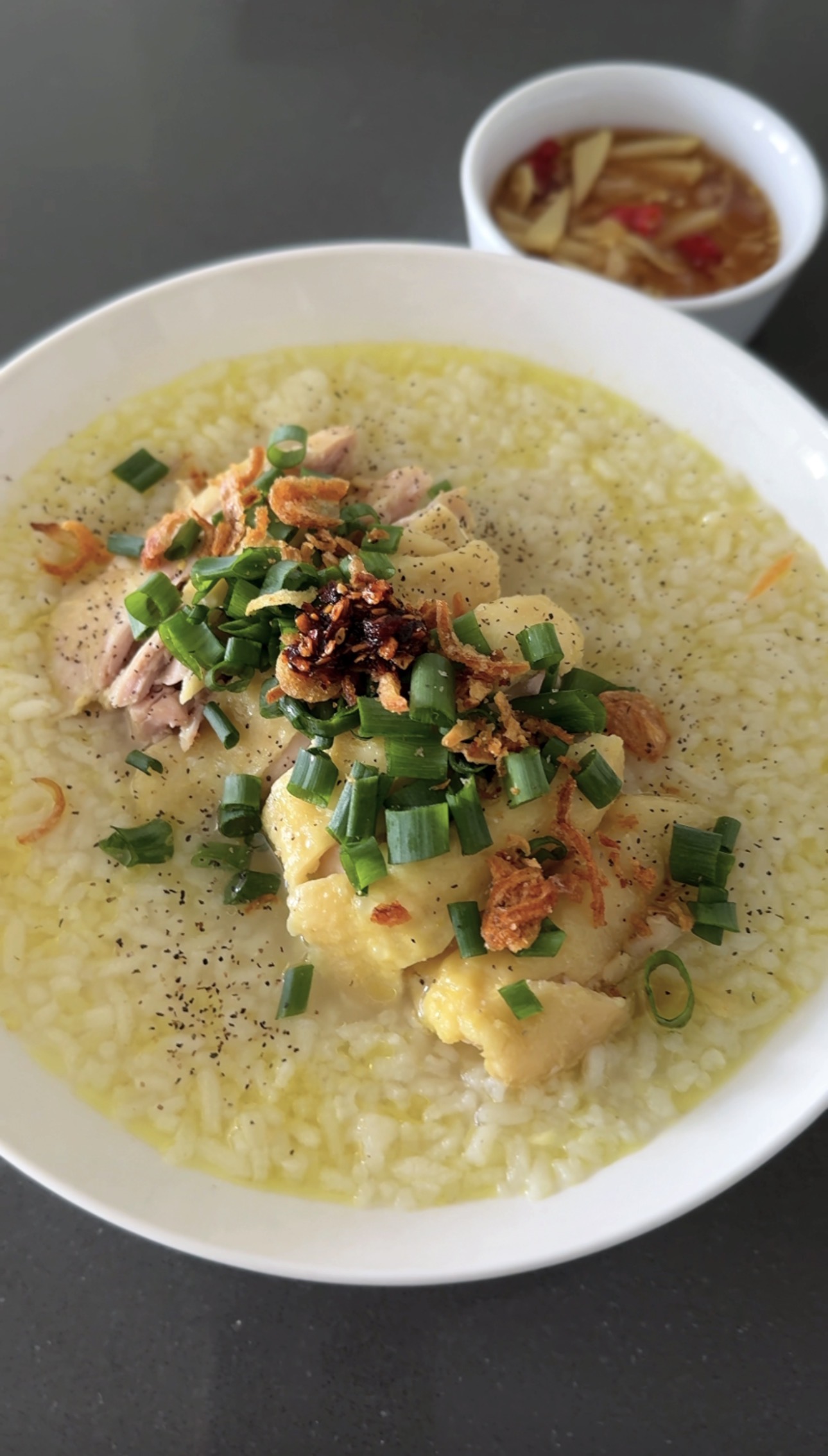
A humble, comforting bowl built from leftovers, cold winters, and practical cooking.
Servings: 3–4
Prep Time: 10 minutes
Cook Time: 35–40 minutes
Total Time: ~45–50 minutes
Introduction: The Kind of Meal That Made Sense Growing Up
Growing up in Minnesota to immigrant parents meant a lot of things. It meant learning how to layer clothes before walking out into a brutal winter. It meant watching your parents stretch ingredients so a meal could feed everyone. And it meant understanding that food wasn’t about luxury — it was about practicality, warmth, and comfort.
One of the dishes that showed up in our kitchen often was cháo gà, Vietnamese chicken congee.
If you’re not familiar with cháo, think of it as a rice porridge — something somewhere between soup and oatmeal in texture. It’s simple, nourishing, and deeply comforting. In Vietnamese cooking, cháo shows up in a lot of forms, but chicken congee is probably one of the most familiar.
For my family, this dish made perfect sense. Minnesota winters are long and cold. When the temperature drops below zero and the wind hits your face like needles, the only thing that really sounds good is something warm, filling, and easy to digest. Cháo gà checks all those boxes.
But the other reason we made it so often was simpler: it’s affordable.
Chicken thighs are inexpensive, flavorful, and perfect for making broth. Rice is always around. And the rest of the ingredients are basic pantry items — ginger, fish sauce, a little bouillon for depth. It’s the kind of meal that stretches ingredients without feeling like you’re sacrificing flavor.
Even now, years later, I still make cháo gà often. And my favorite shortcut? Using leftover cooked rice instead of starting with raw rice. If you cook rice regularly (which I do), there’s almost always some sitting in the fridge from another meal. Using cooked rice makes the congee come together faster while still giving you that silky, comforting texture.
It’s simple food, but that’s kind of the point.
What Is Cháo Gà?
Cháo is Vietnamese rice porridge. It’s part of a much larger family of congee dishes found throughout Asia, but every culture has its own approach and flavor profile.
Vietnamese cháo tends to be:
- lighter in seasoning
- built on a clean broth
- finished with herbs, pepper, and fried shallots
It’s less about heavy toppings and more about balance.
Cháo gà specifically is chicken congee. Traditionally, it’s made by simmering a whole chicken with rice until the grains break down and thicken the broth into a creamy porridge.
But home cooking evolves. Families adapt based on what’s practical. In many Vietnamese kitchens — especially busy ones — shortcuts appear naturally. Using cooked rice instead of raw rice is one of those shortcuts.
It works beautifully and saves time.
Why Cooked Rice Works So Well
If you already have cooked rice in the fridge, you’re halfway to cháo.
Cooked rice breaks down much faster than raw grains, which means:
- shorter cook time
- easier weeknight cooking
- less stirring and monitoring
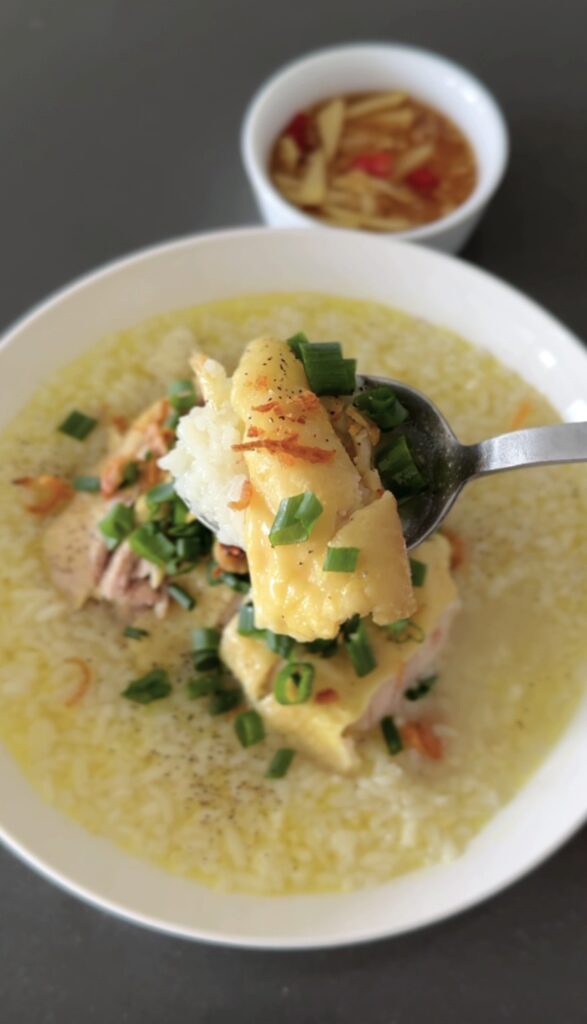
Once simmered in broth, the grains soften and expand, slowly turning the soup into that signature porridge texture.
And honestly? The result tastes just as comforting.
This is one of those practical kitchen tricks that quietly makes life easier.
Cháo in Vietnamese Food Culture
Cháo is one of the most universal comfort foods in Vietnamese cuisine.
It’s the dish people make when:
- someone is sick
- someone just got home from traveling
- the weather is cold
- you want something gentle on the stomach
It’s often served for breakfast in Vietnam, but at home it can show up at any time of day.
Some common versions include:
- Cháo gà – chicken congee
- Cháo lòng – congee with pork offal
- Cháo cá – fish congee
- Cháo vịt – duck congee
But chicken is probably the most widely loved. It’s approachable, flavorful, and comforting without being heavy.
Ingredients (Serves 3–4)
For the Congee
- 1 lb chicken thighs
- 5 cups water
- pinch of salt
- ¼ tsp turmeric
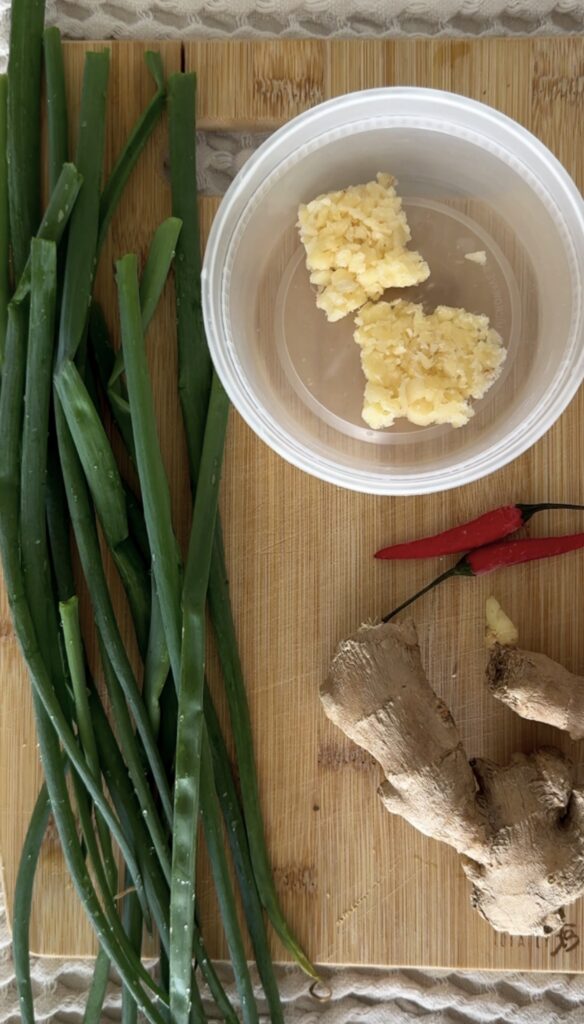
- 1 inch knob ginger, cut into matchsticks
- 1 cup cooked rice
Seasonings
- 2 tsp chicken bouillon
- ½ tsp sugar
- ¼ tsp black pepper
- 2 tsp fish sauce
Garnish
- green onions, sliced
- cilantro
- fried shallots
- black pepper
Ingredient Notes
Chicken Thighs
Chicken thighs are ideal here. They’re affordable, flavorful, and release a lot of richness into the broth.
You could use chicken breast, but it won’t give you the same depth.
Turmeric
The turmeric isn’t traditional in every cháo gà recipe, but many home cooks add a small amount for warmth and color. It gives the broth a gentle golden hue and a subtle earthy note.
Ginger
Ginger brightens the broth and balances the richness of the chicken.
Fish Sauce
This is where the umami comes in. Fish sauce adds depth without making the soup taste overtly “fishy.”
Step-by-Step Instructions
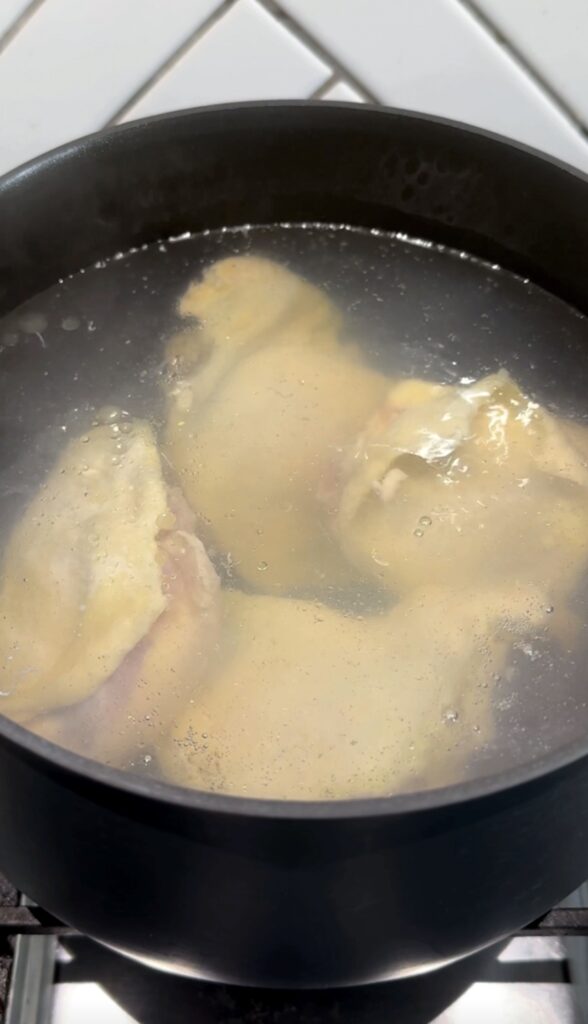
Step 1: Build the Broth
In a medium pot, combine:
- chicken thighs
- water
- ginger
- pinch of salt
- turmeric
Bring to a gentle boil, then lower to a simmer.
Cook for 25-30 minutes, until the chicken is fully cooked and the broth becomes fragrant.
Step 2: Shred the Chicken
Remove the chicken from the pot and let it cool slightly.
Shred into bite-sized pieces and set aside.
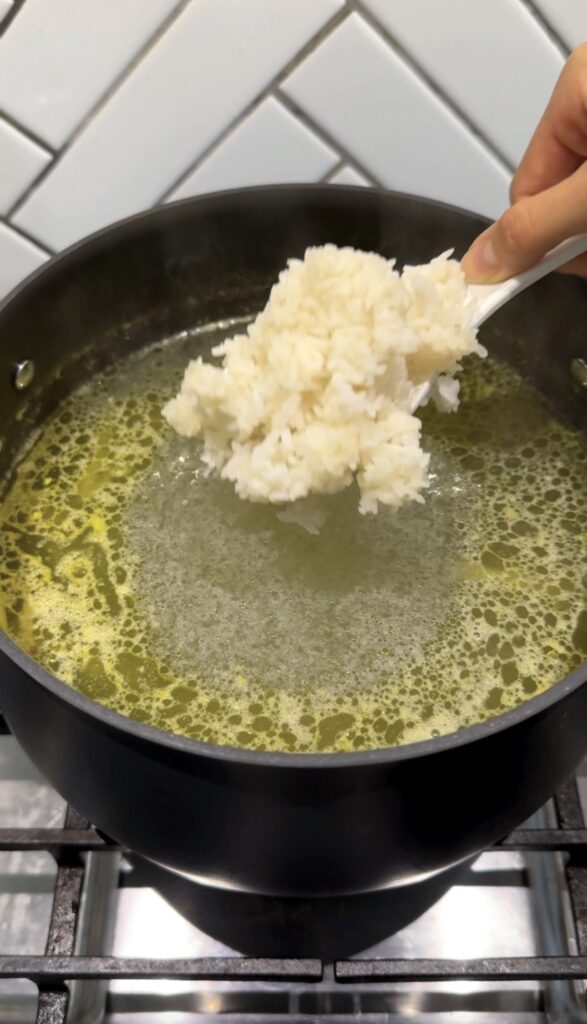
Step 3: Add the Rice
Add the cooked rice directly into the broth.
Stir well and simmer for 10–15 minutes, stirring occasionally.
The rice will slowly break down and thicken the soup.
If you want a thicker congee, cook a little longer.
Step 4: Season the Cháo
Add:
- chicken bouillon
- sugar
- black pepper
- fish sauce
Taste and adjust seasoning if needed.
The flavor should be light, savory, and comforting.
Step 5: Add the Chicken Back
Return the shredded chicken to the pot or set aside to serve on top of congee.
Simmer for another 5 minutes so everything comes together.
How to Serve Cháo Gà
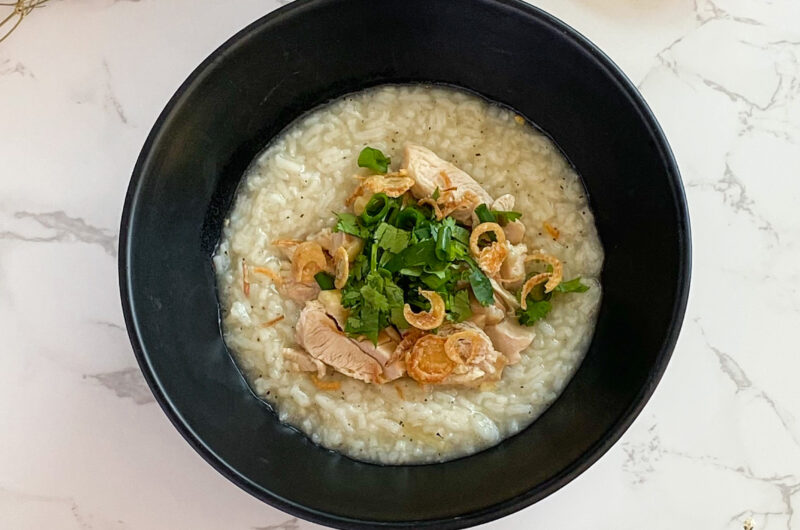
Ladle the hot congee into bowls and finish with:
- green onions
- cilantro
- fried shallots
- extra black pepper
This is where the texture contrast happens. The creamy porridge meets crispy shallots, fresh herbs, and a little bite from the pepper.
Ginger Fish Sauce Dip (Optional, but Highly Recommended)
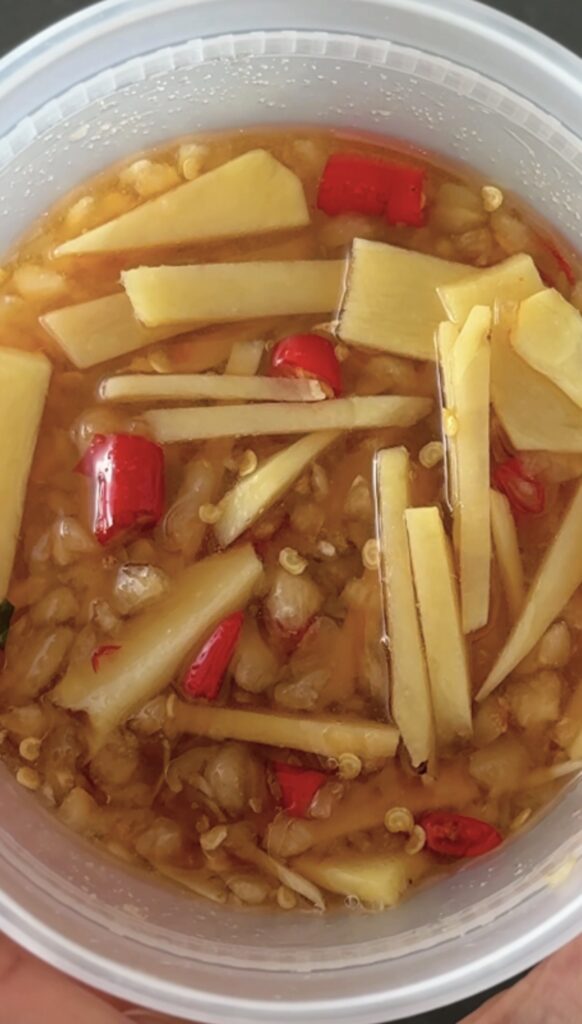
If you grew up eating cháo gà, there’s a good chance there was a small bowl of ginger fish sauce sitting on the table too. It’s sharp, salty, slightly sweet, and just spicy enough to wake everything up.
The cháo itself is gentle and comforting, so dipping pieces of chicken into this sauce adds contrast — a little brightness, a little heat, and that familiar Vietnamese balance of flavors.
You can drizzle a little into your bowl or dip the chicken directly into it as you eat.
Ingredients
- 1 tbsp fish sauce
- 1 tsp sugar
- 1 tbsp fresh ginger, finely minced
- 1 small garlic clove, minced
- 1 Thai chili, finely sliced (optional)
Instructions
1. In a small bowl, combine the fish sauce and sugar. Stir until the sugar dissolves.
2. Add the minced ginger, garlic, and chili. Mix well and let it sit for a few minutes so the flavors come together.
3. Taste and adjust if needed — some people like it a little sweeter, others prefer it more salty and sharp.
4. Serve alongside the cháo and dip pieces of chicken as you eat.
Why This Dish Still Matters to Me
Cháo gà is not flashy food. It’s not the dish people line up for at restaurants or post dramatic photos of online.
But it’s the kind of food that quietly takes care of people.
It’s what you make when someone needs warmth. When ingredients are limited. When the weather is cold and you want something simple.
Growing up, meals like this were normal. They weren’t considered “special.” But looking back now, I realize how much care went into them. My parents cooked what made sense — food that fed us well without wasting anything.
Using leftover rice in cháo is a perfect example of that mindset. Nothing wasted. Everything repurposed. Still delicious.
And honestly, those kinds of recipes stick with you the longest.
Tips for the Best Cháo Texture
- Stir occasionally to help the rice break down
- Add water if the porridge becomes too thick
- For smoother cháo, mash some rice grains with the back of a spoon
Everyone has their preferred consistency. Some like it thick, some like it more soupy.
Storage & Leftovers
Cháo thickens as it sits.
To reheat:
- add a splash of water
- warm gently on the stove
- stir until smooth again
It keeps well in the fridge for 3–4 days.
Final Thoughts
Cháo gà is one of those dishes that reminds me what cooking is really about.
Not perfection.
Not presentation.
Just nourishment.
A pot of broth, a little rice, a cheap cut of chicken — and suddenly you have something warm enough to carry you through a cold winter day.
Sometimes the simplest meals are the ones that stay with you the longest.

The EASIEST Cháo Gà a.k.a. Vietnamese Chicken Congee Hack (With Cooked Rice!)
Course: Recipes, Breakfast, Lunch, DinnerCuisine: viet, vietnamese, asianDifficulty: easy3-4
servings10
minutes30
minutesA humble, comforting bowl built from leftovers, cold winters, and practical cooking.
Ingredients
1 lb chicken thighs
5 cups water
pinch salt
1 inch knob ginger, cut into matchsticks
1 cup cooked rice
½ tsp turmeric
- Seasonings
2 tsp chicken bouillon
½ tsp sugar
¼ tsp black pepper
2 tsp fish sauce (to taste)
- Garnish
Green onions
Cilantro
Fried Shallots
Directions
- Make the broth
In a pot, combine chicken thighs, water, ginger, turmeric, and a pinch of salt. Bring to a boil, then simmer for 25-30 minutes until the chicken is cooked. - Shred the chicken
Remove the chicken, shred into bite-sized pieces, and set aside. - Cook the congee
Add cooked rice to the broth. Simmer 10–15 minutes, stirring occasionally until the rice softens and the soup thickens. - Season
Add chicken bouillon, sugar, black pepper, and fish sauce. Taste and adjust seasoning.
Ladle into bowls and top with green onions, cilantro, fried shallots, and extra black pepper.