
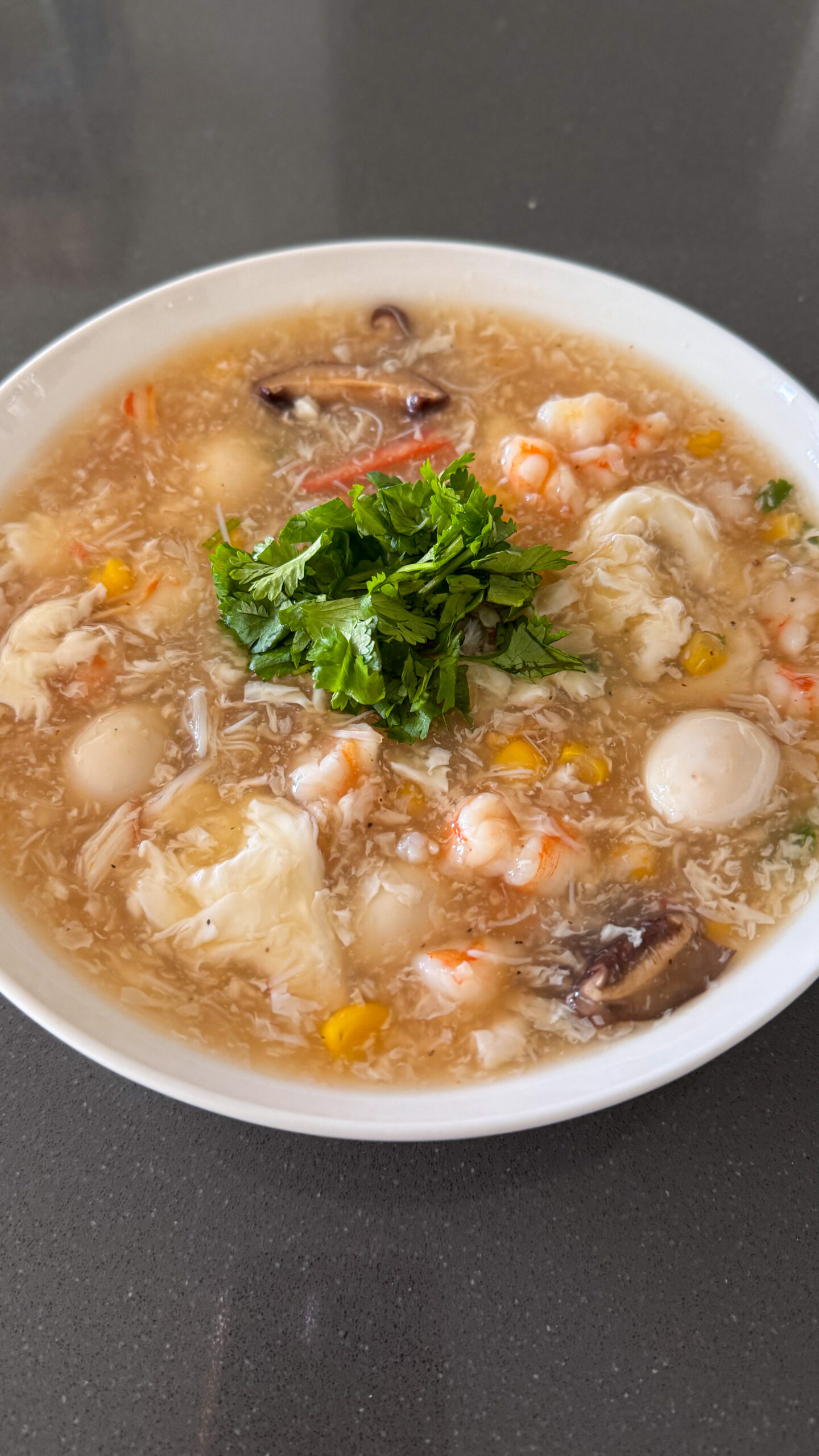
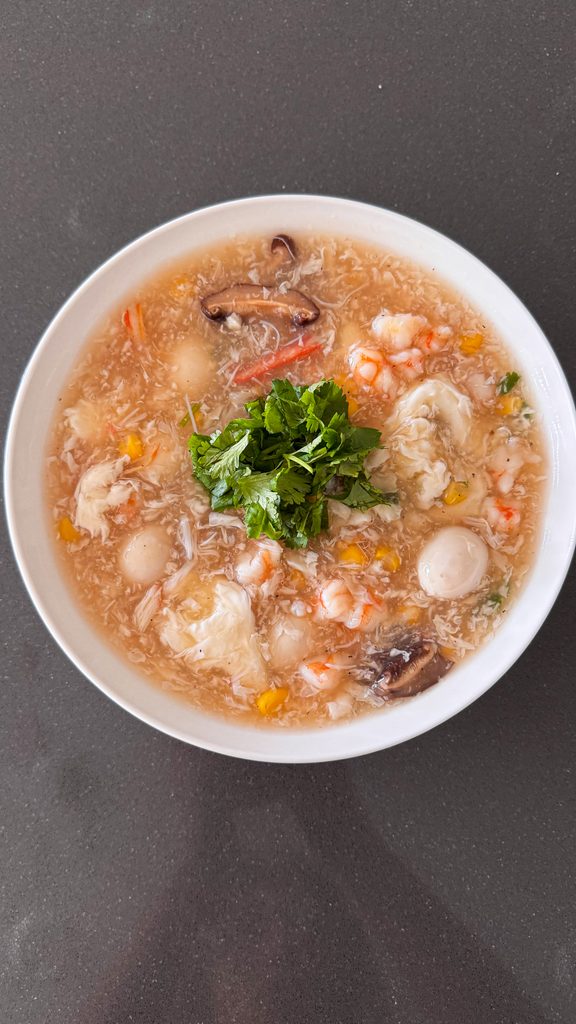
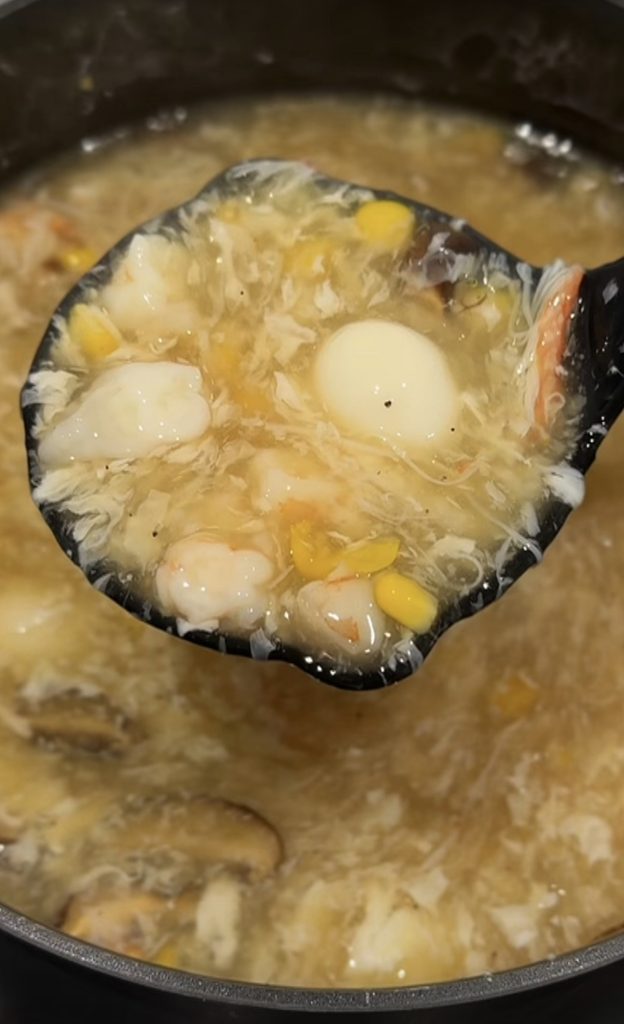
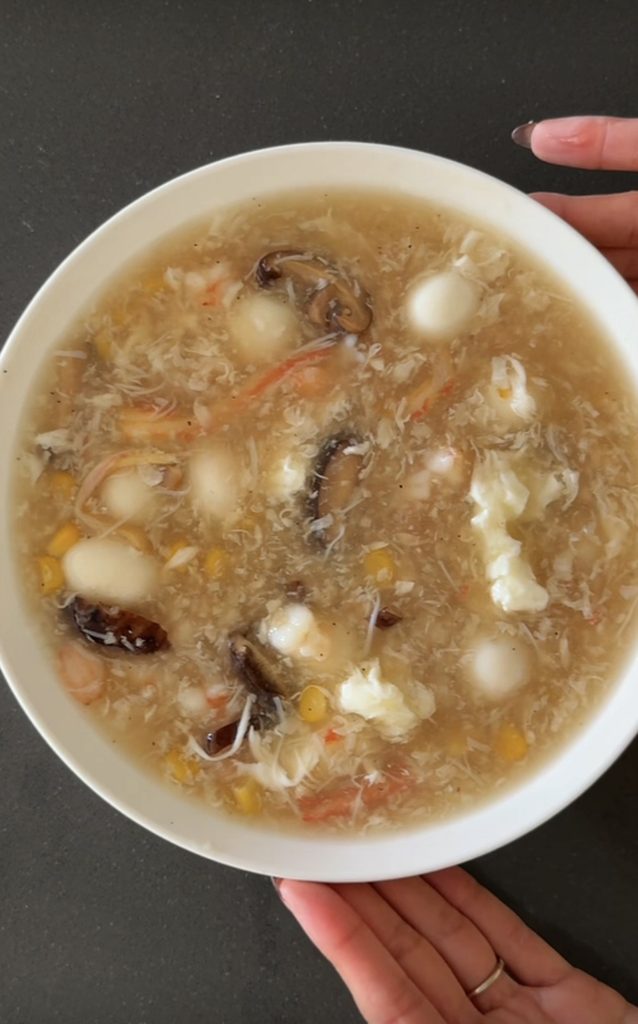
If you know me, you know I love a good súp cua! Also known as Vietnamese crab soup, this is one of those dishes I can eat any time of the day. Breakfast, lunch, dinner, or even as a little afternoon snack. There’s just something about a warm bowl of thick, savory soup filled with crab meat, shrimp, and little quail eggs that always hits the spot.
And if you’ve been following my recipes for a while, you probably already know that this isn’t my first crab soup rodeo.
I’ve made quite a few variations over the years, including my Súp Cua Trứng (Dungeness Crab Egg Drop Soup) and my Súp Bong Bóng Cua (Crab & Fish Maw Soup). Both are delicious in their own ways, but I figured it was finally time to share a more classic Vietnamese street-style súp cua recipe.
You know, the kind you find at little street food stalls in Vietnam. The soup is super thick, glossy, and loaded with toppings. Every spoonful has a little bit of everything, and if you’re lucky, you’ll scoop up a whole quail egg. It’s the little things in life! LOL.
For today’s recipe, I’m using snow crab because I actually had some leftover from another recipe. And you already know how I feel about letting good seafood go to waste, especially with how expensive crab can be these days.
But don’t worry! You definitely don’t need to go out and buy fresh snow crab just to make this. Canned crab meat works perfectly fine too, and I’ll go over a few substitutions to make this recipe as easy and accessible as possible.
We’re also adding shrimp, corn, shiitake mushrooms, egg whites, and quail eggs because why settle for a plain bowl of soup when you can have one loaded with all the goodies?
So let’s get into it!
What Is Súp Cua?
Súp cua, which literally translates to crab soup in Vietnamese, is a popular Vietnamese soup made with crab meat, a savory broth, and a combination of ingredients like eggs, mushrooms, corn, and sometimes other seafood.
Unlike Vietnamese soups such as phở or bún bò Huế, which have more of a liquid broth, súp cua has a thicker, almost gravy-like consistency.
Think of it as Vietnamese comfort food meets egg drop soup, but with a whole lot more going on.
The broth is usually made with chicken or pork stock and thickened with cornstarch or tapioca starch. Beaten eggs are slowly drizzled into the hot soup to create those beautiful silky ribbons throughout the broth.
And of course, you can’t forget the crab!
Depending on where you get your súp cua, you’ll find all kinds of different toppings and ingredients. Some versions are pretty simple, with shredded crab, mushrooms, and eggs. Others are loaded with shrimp, imitation crab, quail eggs, and even century eggs.
Personally, I love the ones that are extra thick and filled with toppings. I want a little bit of everything in each spoonful!
That’s exactly what we’re making today.
A Little History Behind Vietnamese Crab Soup
One thing I love about Vietnamese cuisine is how so many of our dishes have evolved over time, taking influences from different cultures while becoming something uniquely Vietnamese.
Súp cua is a great example of that.
Vietnam has a long history of Chinese and French culinary influences, and you can see similarities between súp cua and other thickened soups, particularly Chinese-style egg drop soups.
The use of a starch-thickened broth, delicate egg ribbons, and ingredients like mushrooms and crab is reminiscent of Chinese soup-making techniques.
However, Vietnamese cooks have developed their own versions over the years, using ingredients and seasonings that give súp cua its recognizable flavor.
There isn’t one universally documented origin story for the exact súp cua we know today, but the dish has become especially associated with southern Vietnamese food culture.
In Ho Chi Minh City, or Sài Gòn, súp cua is a popular street food that you can find at small food stalls, markets, and neighborhood shops.
It’s commonly enjoyed as a quick snack or light meal, especially in the afternoon.
You might see vendors serving it in small bowls or even takeaway cups, finishing each portion with herbs, black pepper, and a little chili sauce.
And then there are the more elaborate versions served at Vietnamese restaurants, weddings, and celebrations.
One popular variation is súp măng cua, or Vietnamese crab and asparagus soup, which often features white asparagus, crab meat, and a delicate broth. Asparagus became part of Vietnamese cooking through French influence, and this version has long been associated with special occasions and banquet meals.
Then there’s súp bong bóng cua, which uses fish maw and is another favorite at Vietnamese celebrations.
It’s pretty interesting how one type of soup can have so many variations depending on the occasion.
Some are more delicate and elegant, while others are hearty, extra thick, and packed with ingredients.
For this recipe, we’re leaning more toward the casual street-food version, with a thick broth and lots of seafood.
Bruh, I Love This Vietnamese Crab Soup Recipe
I think one of the reasons I keep coming back to súp cua is that it’s comforting without being overly complicated.
You get the natural sweetness from the crab and shrimp, a savory broth, a little sweetness from the corn, and the earthiness of shiitake mushrooms.
Then there’s the texture.
And honestly, the texture is probably one of my favorite things about this soup.
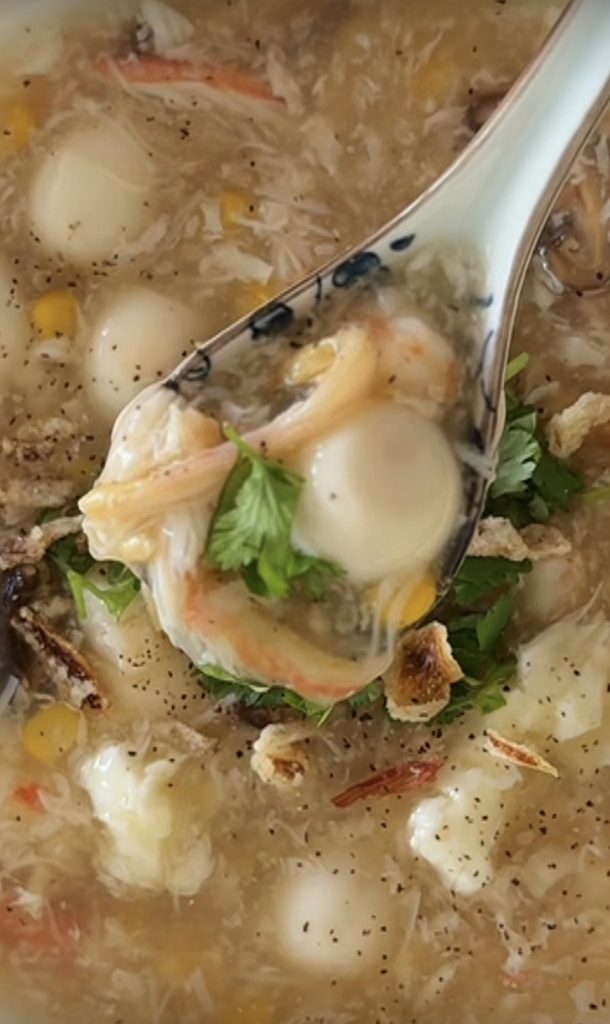
I love when it’s thick enough to coat your spoon, but still silky and smooth. Not watery, but also not so thick that it turns into a solid blob when it cools down.
There’s a happy medium, and we’re going for that extra-thick Vietnamese street-food consistency.
The best part? You really don’t need a long list of complicated ingredients or hours of simmering to get a flavorful broth.
We’re using store-bought chicken stock as our base and building flavor with fish sauce, chicken bouillon, oyster sauce, and a little sugar.
Yes, sugar!
If you cook a lot of Vietnamese food, you already know that sugar isn’t just for desserts. A little bit helps balance the savory and salty ingredients, creating that well-rounded flavor we’re looking for.
This is also a great recipe for using up leftover seafood, which is exactly how this particular batch came together.
What You’ll Need to Make Súp Cua
Let’s go over some of the main ingredients and why we’re using them.
Snow Crab Meat
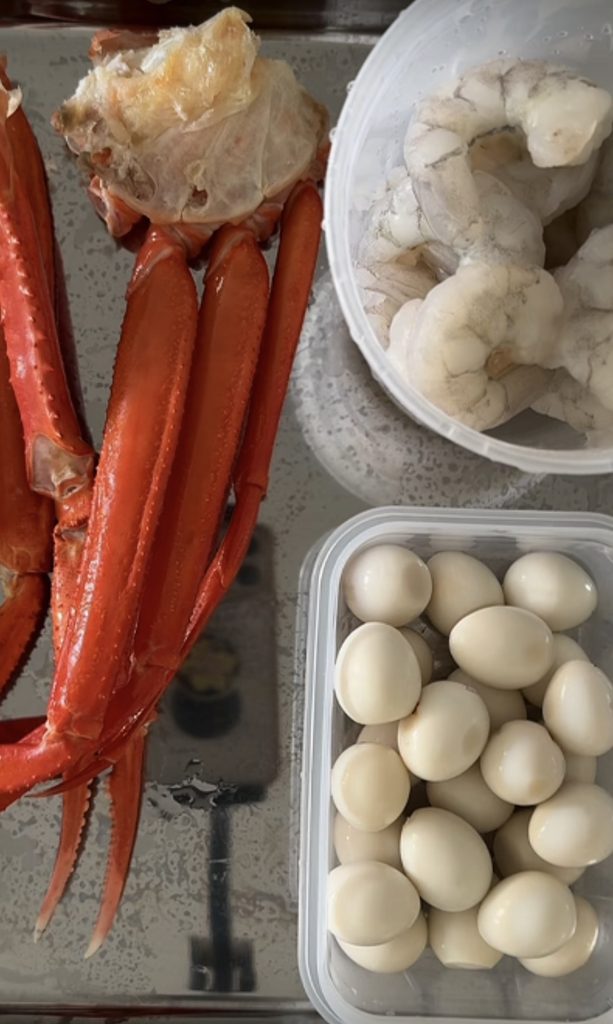
For this recipe, I used cooked snow crab meat because I had some leftover from another dish.
Snow crab has a naturally sweet, delicate flavor that works really well in soup. The meat is tender and easy to shred, so it distributes nicely throughout the broth.
I like to shred most of the crab into smaller pieces and save a few larger chunks to add on top when serving.
That way, you get crab in every spoonful, plus a few nice pieces for presentation.
And let’s be real, a bowl of crab soup should actually have crab in it!
Shrimp
We’re also adding shrimp because I love the combination of crab and shrimp together.
The shrimp adds another layer of seafood flavor while giving the soup a little more texture.
I like to chop half of the shrimp into smaller pieces and leave the remaining shrimp whole.
This gives you little bites of shrimp throughout the soup while keeping a few larger pieces for that seafood-loaded presentation.
Chicken Stock
Chicken stock serves as the base for our soup.
You can absolutely make your own homemade stock, but for this recipe, we’re keeping things simple with store-bought chicken stock.
I recommend using a good-quality stock that already has some flavor.
We’ll also be adding chicken bouillon, fish sauce, and oyster sauce, so there’s no need to start with an overly salty broth.
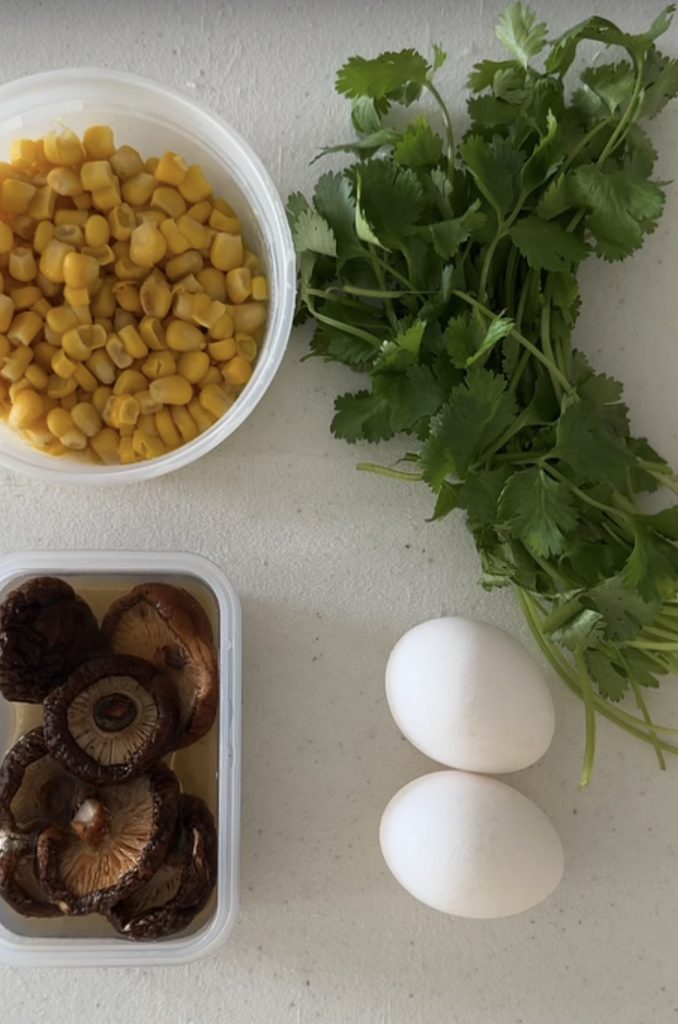
Dried Shiitake Mushrooms
I love using dried shiitake mushrooms because they have such a concentrated savory flavor.
Once rehydrated, they add a slightly chewy texture that complements the tender crab meat and shrimp.
They also provide some extra umami to the broth without overpowering the seafood.
Just soak them in warm water until softened, remove the tough stems, and finely chop the caps before adding them to the soup.
Canned Corn
Yes, we’re using canned corn!
You can use fresh or frozen corn if that’s what you have, but canned corn is convenient and works perfectly fine for this recipe.
The corn adds little pops of sweetness throughout the soup, which balances the savory broth.
Just make sure to drain it before adding it to the pot.
Quail Eggs
If there’s one ingredient I almost always want in my súp cua, it’s quail eggs.
They’re small, cute, and make the soup feel a little more special.
I like using already-cooked and peeled quail eggs to save time, but you can also boil fresh ones yourself.
Since they’re already cooked, we add them toward the end so they can warm through without overcooking.
Egg Whites
For this version, we’re using two egg whites instead of whole eggs.
The egg whites create those delicate white ribbons throughout the soup without changing the broth’s color too much.
They also give the soup that classic egg-drop appearance.
The trick is to drizzle them slowly into the hot broth instead of pouring them in all at once.
I’ll explain more about that below.
Fish Sauce, Oyster Sauce, and Chicken Bouillon
This combination is what gives our soup a more savory, well-rounded flavor.
Fish sauce provides that familiar Vietnamese seasoning, oyster sauce adds depth and umami, and chicken bouillon helps strengthen the overall broth.
We’re also adding a little sugar to balance everything out.
I actually adjusted the seasonings while making this recipe because I wanted the broth to have a little more flavor.
So don’t be afraid to taste and adjust along the way!
Different brands of chicken stock, fish sauce, and bouillon have different salt levels, so the final seasoning may vary slightly.
Black Pepper
We’re keeping it simple with black pepper.
A little black pepper adds warmth and fragrance without overpowering the natural sweetness of the seafood.
I also like adding another sprinkle on top right before serving.
Can You Use Canned Crab Instead of Fresh Snow Crab?
Absolutely!
In fact, canned crab is one of my favorite shortcuts for making Vietnamese crab soup at home.
Fresh crab is delicious, but it can get expensive, and depending on the type you’re using, removing the meat from the shells can be pretty time-consuming.
If you don’t feel like spending all that time cracking crab legs, canned crab is a great alternative.
Look for canned lump crab meat or another good-quality canned crab with minimal added ingredients.
Drain it well before adding it to the soup, and gently break apart any large pieces.
You can substitute the same amount of canned crab for the cooked snow crab in this recipe.
The flavor may be slightly different, but once combined with the seasoned broth, shrimp, mushrooms, and other ingredients, you’ll still have a delicious bowl of súp cua.
You can also use Dungeness crab, blue crab, or another type of cooked crab meat.
Basically, use what you have and what fits your budget.
Cooking should be enjoyable, not an excuse to spend your entire grocery budget on one ingredient. LOL.
How to Make Súp Cua Extra Thick
Okay, let’s talk about the most important part of this recipe.
The thickness!
If you’ve ever had Vietnamese crab soup from a street vendor, you’ll know exactly what I’m talking about.
Some versions are lightly thickened, while others have that beautiful glossy, almost gravy-like consistency.
For this recipe, I personally prefer the thicker version.
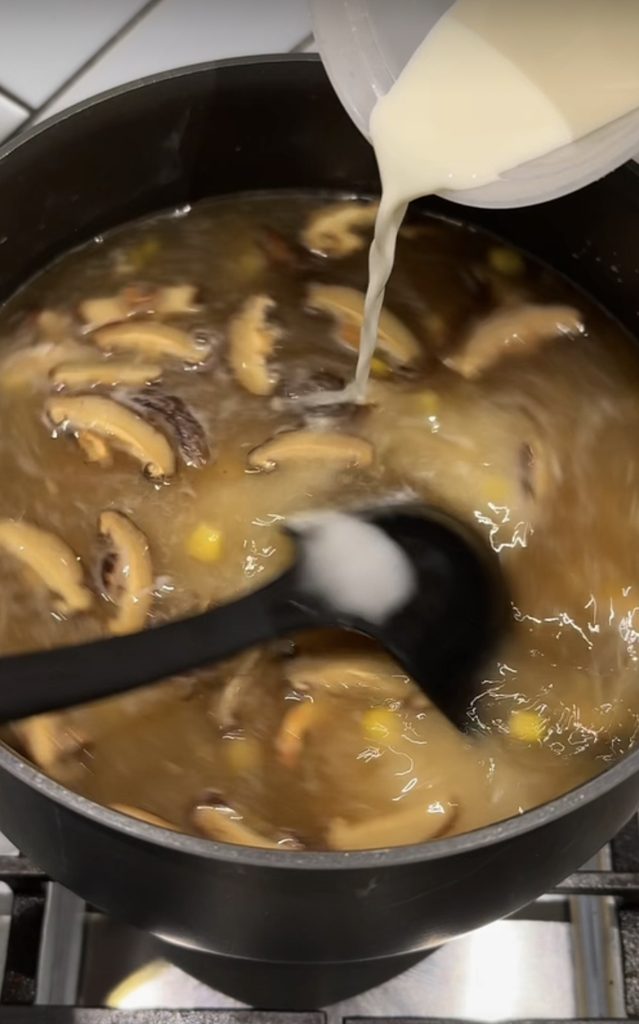
And the secret is a cornstarch slurry.
A slurry is simply cornstarch mixed with cold water before being added to a hot liquid.
The cornstarch thickens the broth as it heats, creating that silky texture we’re looking for.
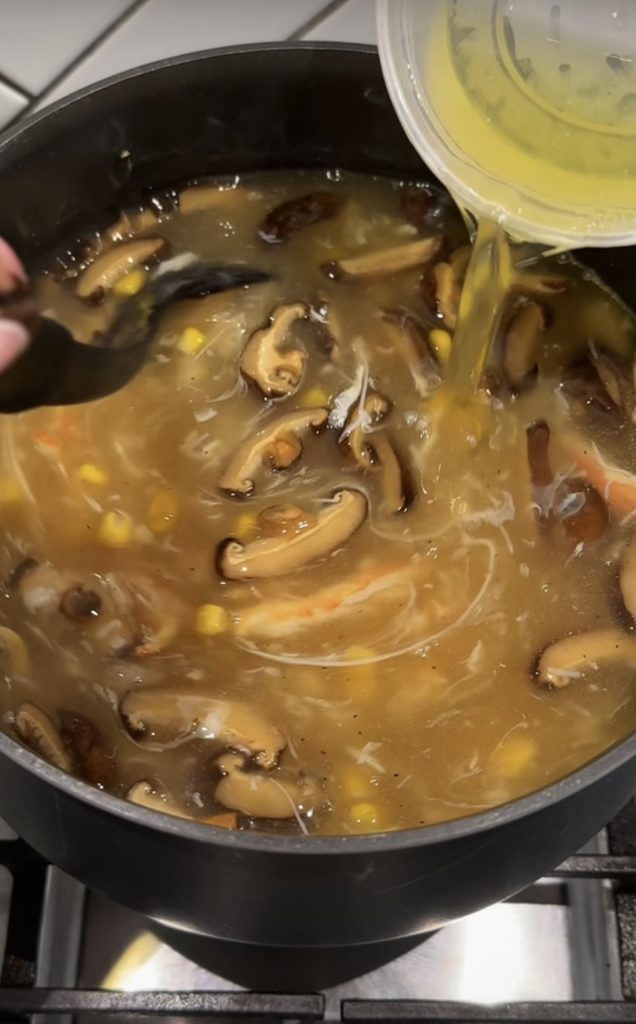
For four cups of chicken stock, we’re using approximately seven to eight tablespoons of cornstarch.
I know that sounds like quite a bit, but remember that we’re going for an extra-thick soup loaded with seafood and other ingredients.
The key is to add the slurry gradually.
I recommend starting with about three-quarters of the prepared mixture, letting the soup simmer for a minute or two, and then adding more until you reach your desired consistency.
Don’t dump everything into the pot at once!
Cornstarch needs a little time to thicken, and the soup will continue to set slightly as it cools.
You want the broth to coat your spoon and hold the ingredients throughout the soup without becoming overly gummy.
Also, always mix cornstarch with cold water first. Adding dry cornstarch directly into hot broth is a one-way ticket to a lumpy soup.
And we don’t want that.
Cornstarch vs. Tapioca Starch
You might notice that some Vietnamese crab soup recipes call for tapioca starch instead of cornstarch.
Both can be used, but they produce slightly different textures.
Cornstarch gives the soup a smooth, glossy consistency with a little more body.
Tapioca starch tends to create a more translucent and slightly stretchy texture.
I’ve used tapioca starch in some of my other soup recipes, but for this version, I went with cornstarch because it’s easy to find and works well for that thick, silky consistency.
If you decide to use tapioca starch instead, I recommend adjusting the quantity gradually rather than substituting the full amount without testing.
Tips for Making the Best Vietnamese Crab Soup
This recipe is pretty straightforward, but a few little tricks can make a difference.
1. Use cooked crab meat.
We’re not cooking whole raw crabs in this recipe. The snow crab should already be cooked and removed from the shells before being added to the soup.
This makes the cooking process much faster and helps prevent overcooking the delicate crab meat.
2. Don’t overcook the shrimp.
Shrimp cooks quickly, usually within a few minutes, depending on its size.
Once it’s opaque and cooked through, you’re good to go.
Overcooked shrimp can become rubbery, and nobody wants that.
3. Taste the broth before and after thickening.
One thing I learned while testing this recipe is that the broth needs to be flavorful enough to stand up to all the ingredients.
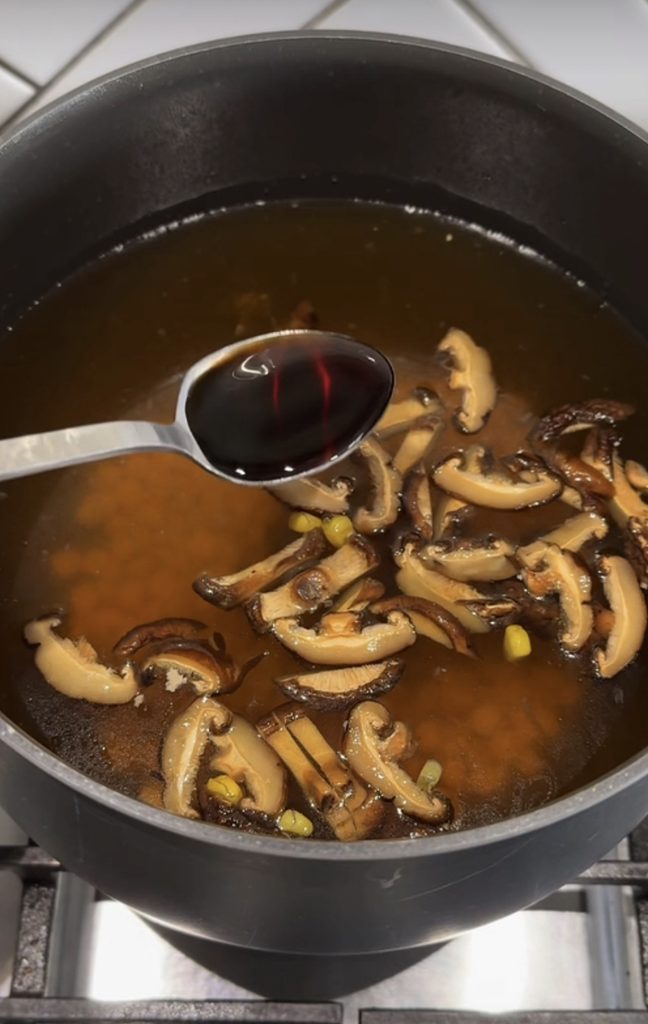
Chicken bouillon, fish sauce, oyster sauce, and sugar help build that flavor.
Taste the soup and adjust it to your preference. Just remember that adding more bouillon and fish sauce also adds salt.
4. Add the cornstarch slurry slowly.
This helps prevent lumps and gives you more control over the thickness.
Make sure to stir the slurry again right before pouring because the cornstarch naturally settles at the bottom.
5. Be gentle with the egg whites.
Slowly drizzle the egg whites into the hot soup while gently swirling the broth.
Let them set for a few seconds before stirring again.
This creates thin, delicate ribbons instead of large scrambled egg pieces.
6. Save your garnishes for the end.
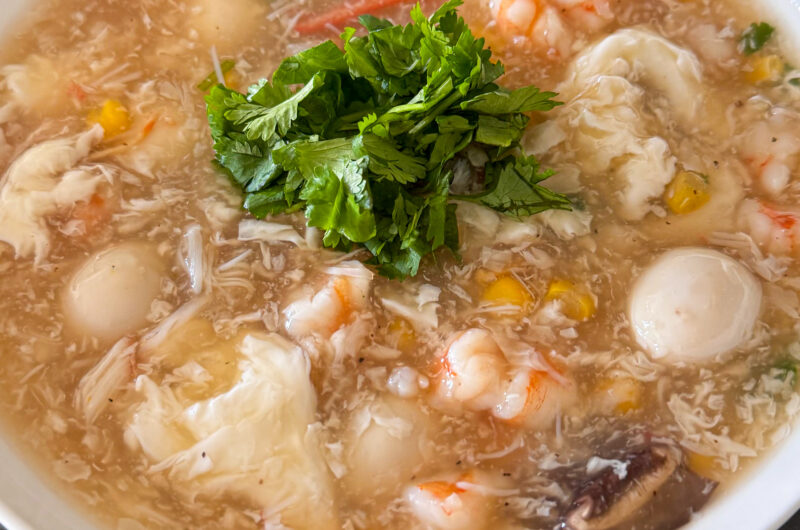
For this recipe, I used fresh cilantro, fried shallots, and black pepper.
The cilantro adds freshness, while the fried shallots provide a little crunch.
Adding them right before serving keeps everything fragrant and delicious.
Variations and Substitutions
One of the best things about súp cua is how customizable it is.
You can make it as simple or as loaded as you want.
Chicken and crab soup: Add some cooked, shredded chicken breast for extra protein. This is a popular addition to many Vietnamese crab soup variations.
Imitation crab: If fresh or canned crab is outside your budget, you can substitute some imitation crab. It won’t taste exactly the same, but it works well with the other ingredients.
Extra mushrooms: Add more shiitake mushrooms or some wood ear mushrooms for additional texture.
Century eggs: If you’ve had súp cua in Vietnam, you may have seen versions served with preserved century eggs. These add a completely different flavor and creamy texture.
More vegetables: You can also add finely diced carrots or peas for additional color and sweetness.
The important thing is to keep the overall flavors balanced.
You still want the savory broth and crab to shine through.
What to Serve with Vietnamese Crab Soup
Honestly, I love eating súp cua all on its own.
Because this recipe already has crab, shrimp, eggs, corn, and mushrooms, it’s pretty filling for a soup.
You can serve it as an appetizer before a larger meal or enjoy a bigger bowl as a light lunch.
For the toppings, I love adding chopped cilantro, crispy fried shallots, and a little extra black pepper.
And if you like a little heat, add some chili oil on the side.
I personally recommend letting everyone add their own chili oil after serving, since not everyone has the same spice tolerance.
The contrast between the thick, savory soup and the spicy chili oil is SO good.
If you’re serving this as part of a larger meal, it also pairs nicely with other Vietnamese dishes, especially when you want something warm and comforting to start.
How to Store and Reheat Leftover Súp Cua
If you happen to have leftovers, allow the soup to cool promptly and transfer it into airtight containers.
Store it in the refrigerator for up to three days, keeping it chilled at 40°F or below.
Since this soup contains seafood, I recommend refrigerating it within two hours of cooking.
You’ll probably notice that the soup thickens quite a bit once refrigerated.
Don’t panic!
That’s completely normal because of the cornstarch.
When you’re ready to eat it again, transfer the soup to a saucepan and reheat gently over medium-low heat, stirring occasionally.
Add a small splash of chicken stock or water if the consistency is too thick.
Heat it until it’s steaming hot throughout, ideally to 165°F.
I recommend adding fresh cilantro, fried shallots, and black pepper after reheating rather than storing them directly in the soup.
That way, the toppings stay fresh.
I personally prefer enjoying súp cua freshly made, but leftovers are still delicious when reheated properly.
Frequently Asked Questions About Vietnamese Crab Soup
What is súp cua made of?
Vietnamese súp cua is typically made with crab meat, chicken or pork broth, eggs, and a starch thickener. Common additions include mushrooms, corn, shredded chicken, shrimp, and quail eggs.
The exact ingredients vary depending on the cook and the region.
Is súp cua the same as egg drop soup?
Not exactly, although they’re similar.
Both soups can feature delicate egg ribbons, but súp cua usually contains crab meat and other ingredients such as mushrooms, corn, and seafood.
Vietnamese crab soup also tends to have a thicker consistency, especially the street-food versions.
Can I use frozen crab meat?
Yes! Frozen cooked crab meat works well for this recipe.
Simply thaw it safely in the refrigerator, drain any excess liquid, and add it to the soup toward the end of cooking.
Why is my Vietnamese crab soup watery?
The most common reason is not enough starch or not allowing the slurry enough time to thicken.
If your soup is still too thin, mix an additional tablespoon of cornstarch with cold water and gradually add it to the gently simmering broth.
Give it a minute or two to thicken before adding more.
Why did my cornstarch turn into lumps?
Cornstarch can clump when added directly to hot liquid.
Always dissolve it in cold water first, then gradually pour the slurry into the soup while stirring.
If your slurry has been sitting for a while, give it another good stir before adding it.
Can I make Vietnamese crab soup ahead of time?
Yes, but I recommend making the soup fresh whenever possible for the best texture.
If you’re preparing it ahead of time, you can rehydrate and chop the mushrooms, prepare the crab meat, clean the shrimp, and boil the quail eggs in advance.
Store everything properly in the refrigerator until you’re ready to cook.
Then all you have to do is prepare the broth, add the ingredients, thicken the soup, and finish with the egg whites.
Can I make this soup without quail eggs?
Of course!
Quail eggs are a delicious addition, but they’re not absolutely necessary.
You can omit them or substitute chopped hard-boiled chicken eggs if that’s what you have.
Is Vietnamese crab soup gluten-free?
It can be, but you’ll need to check your ingredients.
Cornstarch is naturally gluten-free, but some oyster sauces, chicken bouillons, and other packaged seasonings may contain wheat or gluten-containing additives.
If you’re preparing this for someone who needs to avoid gluten, choose certified gluten-free products where necessary and check all labels.
Final Thoughts
I hope you guys enjoy this version of Vietnamese crab soup as much as I do!
I know I’ve shared a few crab soup variations over the years, but I love how every version has its own little personality.
My Dungeness crab egg drop soup is a little simpler, while the fish maw version is more decadent and reminds me of those elaborate Vietnamese banquet soups.
And this version? It’s all about that thick, savory broth and all the seafood toppings.
Plus, it’s a great way to use up leftover crab without having to make an entirely new complicated dish.
And remember, you don’t need fresh snow crab to make a good bowl of súp cua. Canned crab works too, so don’t let one expensive ingredient stop you from trying this recipe.
As always, feel free to adjust the seasonings and toppings to your liking. That’s the beauty of home cooking!
If you give this Vietnamese crab soup recipe a try, let me know how it turns out and tag me on social media so I can see your creations.
Happy cooking y’all!!

How to Make Súp Cua (Vietnamese Crab Soup)
3-4
servings20
minutes20
minutesThis thick and savory Vietnamese crab soup is loaded with snow crab, shrimp, quail eggs, corn, and shiitake mushrooms. A comforting, seafood-packed soup that’s easy to make at home!
Ingredients
- Soup
4 cups chicken stock
150–200 g cooked snow crab meat/can crab
150–200 g raw shrimp, peeled and deveined
8–10 cooked quail eggs, peeled
½ cup canned corn, drained
3 dried shiitake mushrooms
2-3 egg whites
- Seasonings
1 tsp chicken bouillon powder
1 tbsp fish sauce
1 tsp oyster sauce
2 tsp sugar
½ tsp black pepper
- Cornstarch Slurry
7–8 tbsp cornstarch
⅔ cup cold water
- Garnishes
Chopped cilantro
Fried shallots
Black pepper
Chili oil (optional)
Directions
- Prepare the ingredients. Soak dried shiitake mushrooms in warm water for 20–30 minutes until softened. Remove stems and dice. Shred the crab meat and cut half the shrimp into smaller pieces.
- Make the broth. Bring chicken stock to a gentle simmer. Add mushrooms, corn, chicken bouillon, fish sauce, oyster sauce, sugar, and black pepper. Simmer for 5–7 minutes.
- Add seafood. Add shrimp and cook for 2–3 minutes until fully cooked. Stir in the cooked snow crab meat.
- Thicken the soup. Mix cornstarch with cold water. Gradually pour the slurry into the simmering soup while stirring continuously. Cook for 1–2 minutes, adding more slurry as needed until thick and glossy.
- Add eggs. Slowly drizzle lightly beaten egg whites into the soup while gently stirring to create ribbons. Add cooked quail eggs and heat through for another minute.
- Serve. Taste and adjust seasonings as needed. Garnish with cilantro, fried shallots, and black pepper. Serve hot with optional chili oil on the side.
Notes
- Crab: Substitute canned crab meat for snow crab if preferred.
Consistency: Start with 7 tbsp cornstarch and increase to 8 tbsp for an extra-thick soup.
Seasoning: Adjust fish sauce, sugar, and bouillon to taste.
Storage: Refrigerate leftovers for up to 3 days. Add a splash of stock or water when reheating if needed.


