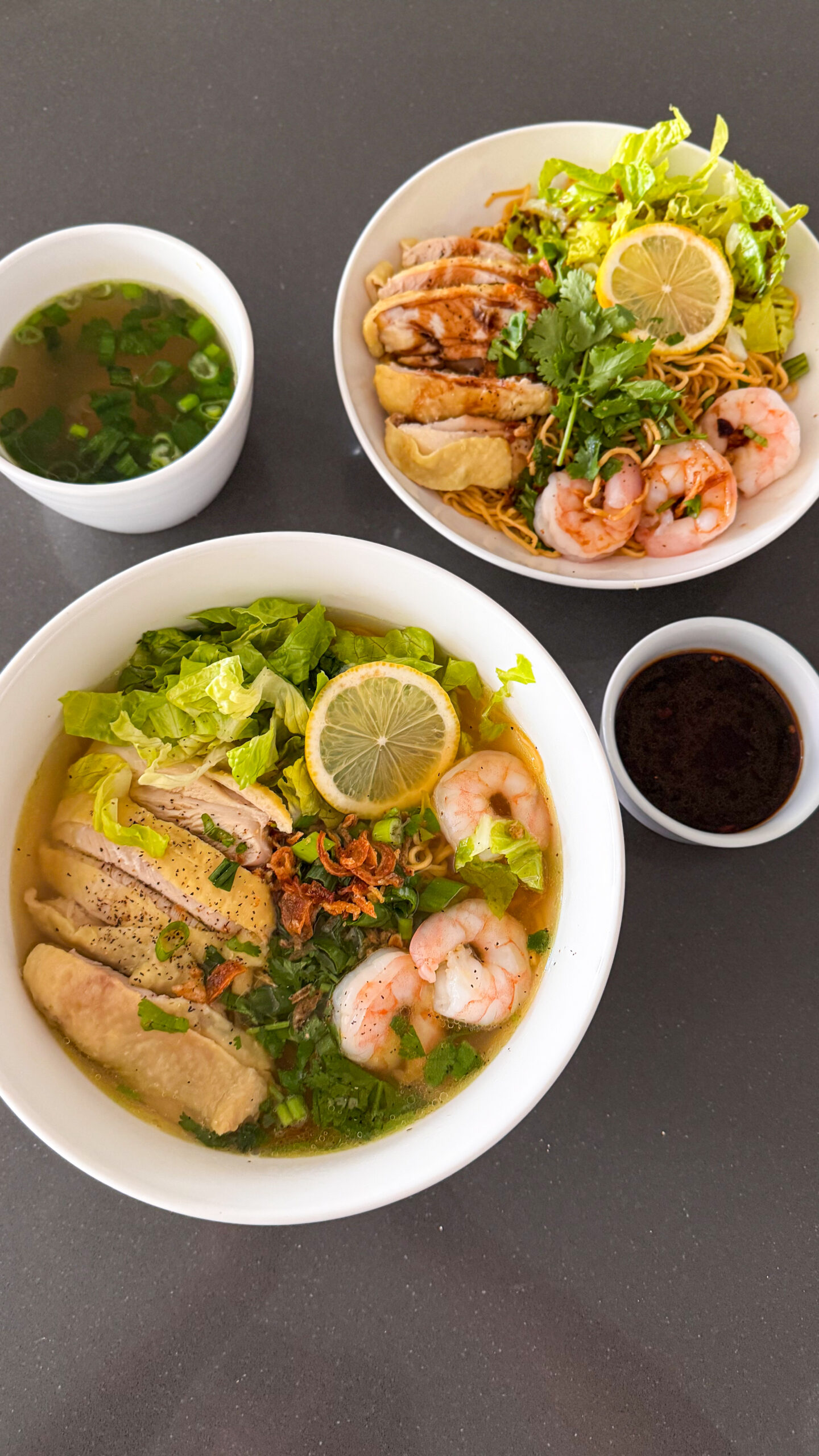
If there’s one thing I love about Vietnamese noodle dishes, it’s how versatile they are. You can take a handful of simple ingredients and turn them into something so comforting, and this Vietnamese chicken egg noodle recipe, also known as mì gà, is exactly that!
The funny thing is, John and I actually prefer eating our noodles completely differently. I personally love mì khô, which is the dry version with the noodles tossed in a savory sauce and the broth served on the side. John, on the other hand, prefers mì nước, where everything is served together in a big bowl of hot chicken broth.
And that’s exactly why I love making this recipe at home!
With just one pot of homemade Vietnamese chicken broth, we can both enjoy our noodles the way we like them. I get my savory dry noodles with a little bowl of broth to sip on the side, and John gets his comforting bowl of noodle soup. Same ingredients, two different meals, and everyone’s happy!
For this recipe, we’re making a flavorful homemade chicken broth with ginger, onion, chicken bouillon, a touch of turmeric, and tender shredded chicken thighs. We’ll serve everything with springy egg noodles, shrimp, and a simple savory sauce for the dry version.
I’m also using my air fryer to char the onion and ginger instead of doing it over the stovetop. It’s an easy little shortcut that brings out their natural sweetness and aroma without having to stand over a pan.
Whether you’re team mì khô or team mì nước, I’ve got you covered!
What Is Mì Gà?
Mì gà is a Vietnamese chicken egg noodle dish made with thin, springy egg noodles, tender chicken, and a light, savory chicken broth.
In Vietnamese, mì refers to wheat-based noodles, commonly egg noodles, while gà means chicken.
Unlike phở, which uses flat rice noodles, mì gà is made with yellow egg noodles that have a slightly chewy, springy texture. These noodles are especially good at soaking up flavorful sauces while still holding their shape.
There are two popular ways to enjoy this dish.
Mì Gà Nước (Vietnamese Chicken Egg Noodle Soup)
This is the soup version, where the egg noodles and chicken are served together in a bowl of hot, aromatic chicken broth.
It’s light, comforting, and perfect for when you’re craving something warm.
This is John’s preferred way of eating mì gà. He loves having the noodles, shredded chicken, and vegetables all together in the broth.
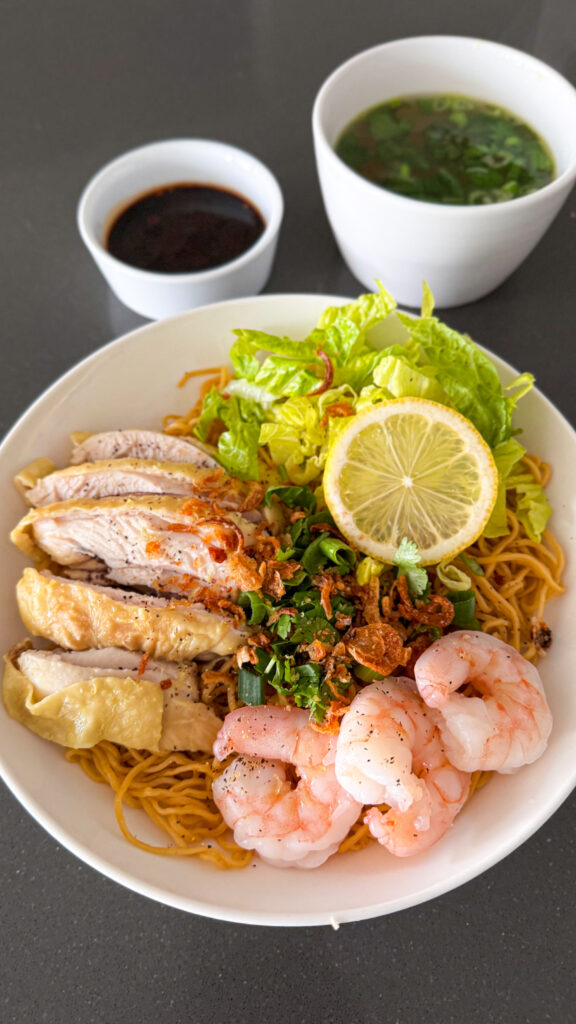
Mì Gà Khô (Vietnamese Dry Chicken Egg Noodles)
This is my personal favorite!
Mì gà khô is served without broth directly in the noodle bowl. Instead, the egg noodles are tossed in a savory, slightly sweet sauce and topped with shredded chicken, vegetables, and aromatics.
The chicken broth is served separately on the side.
And despite the name, mì khô isn’t actually dry! The noodles are coated in a flavorful sauce, making every bite delicious.
I personally love being able to enjoy the savory noodles and sip on the warm broth separately.
Both versions can be prepared differently depending on the family or restaurant, but for this homemade recipe, we’re keeping things simple and using one pot of chicken broth to make both.
Why You’ll Love This Recipe
There are so many reasons to love homemade Vietnamese chicken egg noodles, but here are a few of my favorites!
One recipe, two different meals. This is probably my favorite thing about this recipe. John and I can eat the exact same meal but enjoy it completely differently. I prefer dry noodles, while he prefers noodle soup. No need to make two separate dishes!
A flavorful homemade chicken broth. We’re using bone-in chicken thighs, charred onion, ginger, chicken bouillon, and a touch of turmeric to create a savory, golden chicken broth without spending hours in the kitchen.
Easy air-fried aromatics. Instead of charring the onion and ginger over an open flame or in a skillet, we’re using the air fryer. It’s convenient, requires minimal cleanup, and adds depth to the broth.
Tender shredded chicken. Chicken thighs stay juicy during simmering, making them perfect for shredding and serving over noodles.
Customizable toppings. You can add your favorite leafy greens, bean sprouts, fried shallots, fresh herbs, or chilies.
Great for meal prep. The broth, chicken, and dry noodle sauce can all be prepared ahead of time, making assembly quick and easy.
And personally, I love recipes where you can get more than one meal out of the same ingredients!
Ingredients for Vietnamese Chicken Egg Noodles
This recipe has a few different components, but don’t let that intimidate you!
Most of these ingredients are pantry staples if you cook Vietnamese or Asian food regularly.
We’ll break everything down into the homemade chicken broth, mì khô sauce, egg noodles, and toppings.
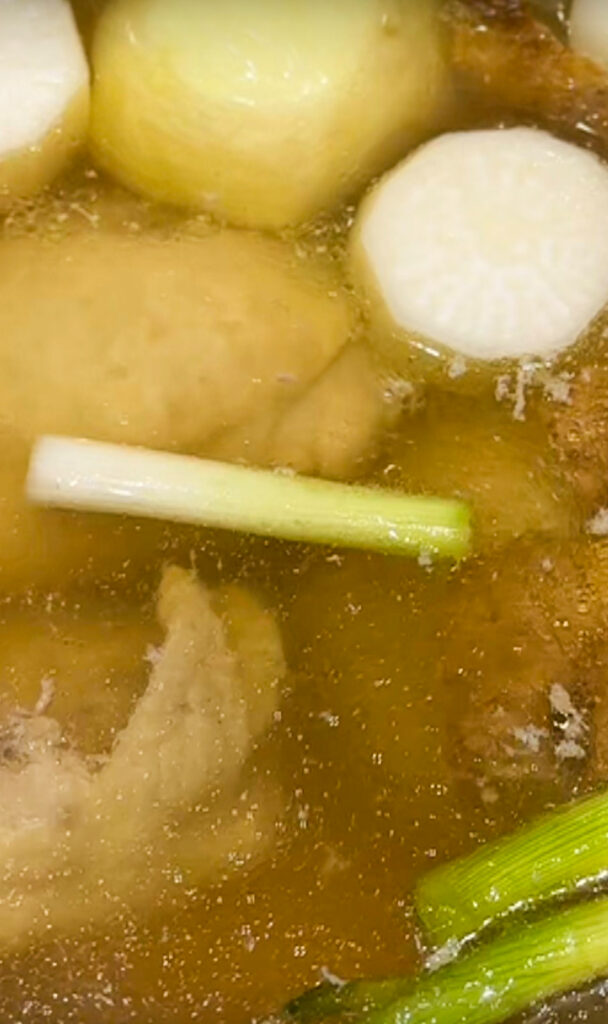
1. Vietnamese Chicken Broth (Nước Lèo)
The chicken broth is the foundation of this recipe, so we want it to be flavorful without being too heavy.
Ingredients
- 4 bone-in, skin-on chicken thighs
- 8 cups water
- 1 medium yellow onion, halved
- 3-inch piece fresh ginger, cut into thick slices
- 1 tablespoon dried shrimp, rinsed (optional)
- 200 g daikon radish, cut into large chunks (optional)
- 1 teaspoon chicken bouillon powder, or to taste
- ¼ teaspoon ground turmeric
- ½ teaspoon salt, plus more to taste
- 2 teaspoons rock sugar or granulated sugar
- 1 tablespoon fish sauce, plus more to taste
Why These Ingredients Matter
Chicken thighs: I prefer using bone-in, skin-on chicken thighs because the bones and skin add flavor to the broth. The meat also stays tender during simmering, making it perfect for shredding afterward.
You can use chicken breast if you prefer, but I find that thighs have more flavor and are less likely to dry out.
Yellow onion: Onion adds natural sweetness and depth to the broth. We’re air-frying it until lightly charred before adding it to the pot to bring out more of its flavor.
Fresh ginger: Ginger gives the broth that warm, fragrant aroma I love in Vietnamese chicken noodle soups. Air-frying it alongside the onion helps bring out its natural aroma.
Chicken bouillon: This is one of my favorite additions when I want a little extra savory flavor without having to simmer the broth for hours.
Although we’re already using chicken thighs to make the broth, chicken bouillon helps intensify that chicken flavor and gives the soup a more rounded, savory taste.
Different brands vary in saltiness, so I recommend starting with a small amount and adjusting after tasting.
Turmeric: I like adding just a touch of turmeric to give the chicken broth a subtle earthy flavor and beautiful golden color.
You really don’t need much! The turmeric isn’t meant to overpower the broth. It should complement the chicken, onion, and ginger while giving the soup a little extra warmth.
I recommend starting with ¼ teaspoon of ground turmeric for this recipe. You can always add a little more, but too much can make the broth taste bitter or overly earthy.
Dried shrimp: This is optional, but it adds a little extra umami. You don’t need much because the flavor can become pretty strong.
Daikon radish: Daikon adds subtle natural sweetness to the broth. It’s optional, but I love adding it when I have some available.
Fish sauce: A little fish sauce adds savory depth and that familiar Vietnamese flavor. Since we’re also using chicken bouillon, make sure to taste the broth before adding more salt or fish sauce.
Rock sugar: Rock sugar helps balance the savory seasonings with a subtle sweetness. Regular sugar works just as well if that’s what you have.
The goal is a broth that’s light, aromatic, slightly sweet, and full of chicken flavor, with a beautiful golden color from the turmeric.
2. Mì Khô Sauce (Vietnamese Dry Noodle Sauce)
If you’re making the dry version like me, this sauce is what brings everything together!
It’s savory, slightly sweet, and coats the egg noodles without making them overly saucy.
Ingredients
- 2 tablespoons oyster sauce
- 2 tablespoons soy sauce
- 2 teaspoons granulated sugar
- 4 tablespoons prepared chicken broth
- 1 teaspoon sesame oil
- ½ teaspoon dark soy sauce (optional)
What Makes This Sauce So Good?
The combination of oyster sauce and soy sauce creates a savory base, while the sugar helps balance everything out.
Adding a little of our homemade chicken broth loosens the sauce so it coats the noodles more evenly.
I also like adding sesame oil for extra fragrance. You really don’t need much because a little goes a long way!
Dark soy sauce is optional, but it gives the noodles a deeper color.
The sauce should taste slightly concentrated on its own because the flavor will mellow out once tossed with the noodles.
For me, this sauce is what makes mì khô so good. I love how the noodles soak up all that savory flavor while still keeping their chewy texture.
3. Egg Noodles and Toppings
Ingredients
- 12–16 oz fresh thin egg noodles
- 2 cups bok choy or choy sum
- 1 cup bean sprouts
- Fried shallots
- Fresh cilantro
- Sliced green onions
- Lime wedges
- Fresh chilies or chili garlic sauce (optional)
Choosing the Right Noodles
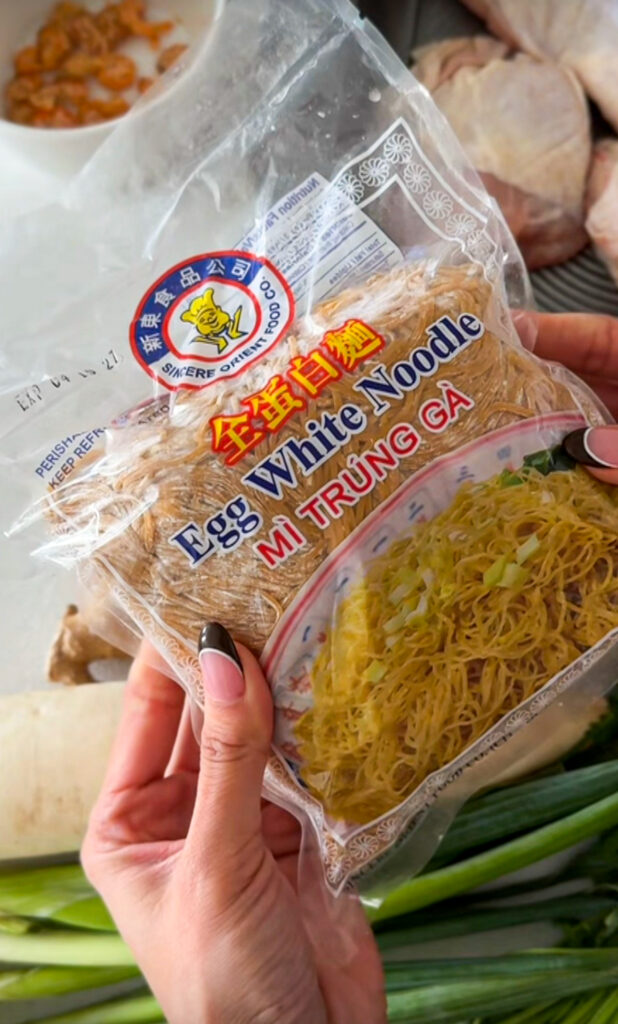
For this recipe, I recommend using fresh thin egg noodles, sometimes labeled as Chinese egg noodles, wonton noodles, or mì trứng.
You can usually find them in the refrigerated section of Asian grocery stores.
Fresh egg noodles have that springy, chewy texture that works really well for both mì khô and mì nước.
If you can’t find fresh noodles, dried egg noodles are another option. Just follow the cooking instructions on the package.
I wouldn’t recommend substituting rice noodles because they’ll completely change the texture of the dish.
And since the noodles are such a big part of both versions, using the right type really makes a difference!
How to Make Vietnamese Chicken Egg Noodles
Now that we have our ingredients ready, let’s get cooking!
We’ll start by air-frying the onion and ginger, then make our homemade chicken broth. While the chicken cooks, we can prepare the dry noodle sauce and toppings.
Once everything is ready, you can assemble your noodles either dry or with soup.
Step 1: Air-Fry the Onion and Ginger
Instead of charring the aromatics over an open flame or in a skillet, we’re using the air fryer!
Start by cutting your yellow onion in half and slicing the ginger into thick pieces.
Preheat your air fryer to 400°F (200°C).
Place the onion halves and ginger slices in the air fryer basket in a single layer.
Air-fry for approximately 10–15 minutes, checking halfway through. Remove the ginger earlier if it starts getting too dark.
You want the onion to have some browned, lightly charred edges and the ginger to become fragrant.
You don’t need to burn them completely. We’re just looking for enough browning to bring out their natural sweetness and aroma.
Once finished, remove the onion and ginger from the air fryer and set aside.
This is such an easy way to prepare the aromatics without having to stand over the stove!
Step 2: Make the Homemade Chicken Broth
In a large pot, add the chicken thighs and 8 cups of water.
Add the air-fried onion, ginger, dried shrimp, and daikon radish.
Bring everything to a gentle simmer over medium heat.
As the broth heats up, you may notice some foam rising to the surface. Use a spoon or fine-mesh strainer to skim it off.
This helps keep the broth clearer.
Once the broth reaches a gentle simmer, add the chicken bouillon, turmeric, salt, and sugar.
Stir gently to dissolve the seasonings and distribute the turmeric throughout the broth.
The turmeric will give the soup a subtle golden color as it simmers. You don’t need much because the color and flavor will become more noticeable as everything cooks.
Reduce the heat to medium-low and simmer for approximately 25–35 minutes, depending on the size of your chicken thighs.
Avoid boiling the broth too aggressively. A gentle simmer helps keep the chicken tender and prevents the broth from becoming cloudy.
The chicken is ready when the thickest part reaches an internal temperature of 165°F.
Step 3: Remove and Shred the Chicken
Once the chicken is fully cooked, carefully remove the thighs from the broth.
Transfer them to a plate and allow them to rest for approximately 5–10 minutes, or until cool enough to handle.
Remove the skin and bones, then shred the chicken into bite-sized pieces.
I personally like keeping some of the pieces a little larger instead of shredding everything super finely. It gives the noodle bowl a better texture, and you get more chicken in each bite.
Once shredded, add a few spoonfuls of warm broth to the meat to help keep it moist while you prepare everything else.
Optional: Return the chicken bones to the broth and simmer for another 20–30 minutes to extract additional flavor.
If you’re short on time, you can skip this step.
Step 4: Season the Chicken Broth
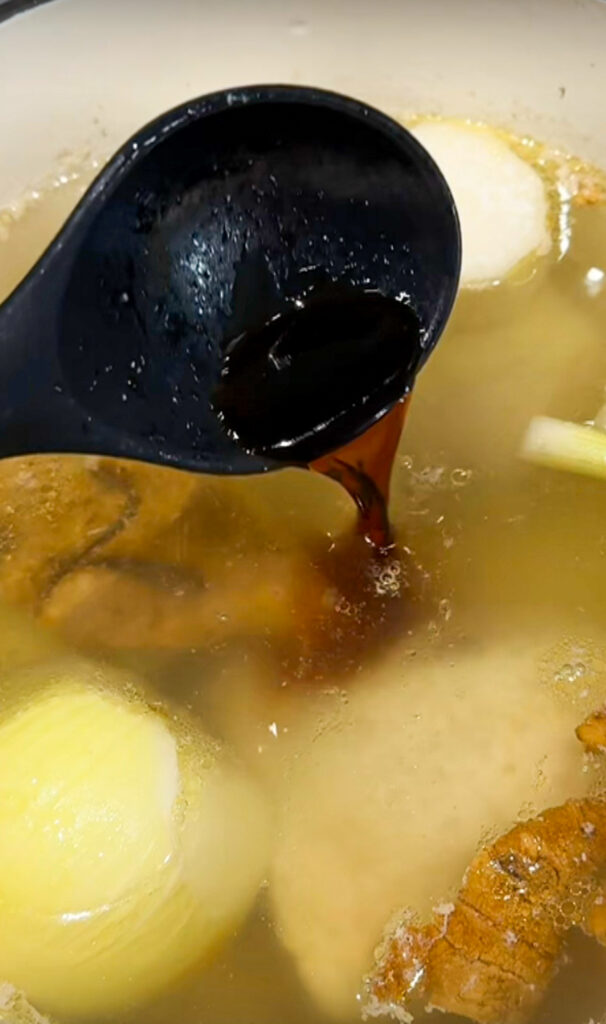
Once the chicken is removed, add the fish sauce to the broth.
Give everything a good stir and taste.
Since we’re using chicken bouillon, the broth should already have a nice savory chicken flavor.
The turmeric also adds a subtle earthy note and gives the broth a warm golden color.
Adjust the salt, fish sauce, and sugar as needed.
If you prefer a stronger chicken flavor, you can add a little more bouillon, but remember that many brands also contain salt.
I recommend adding small amounts at a time and tasting in between.
I like my broth savory with just a subtle sweetness from the onion, daikon, and sugar.
Let the broth simmer for another 10–15 minutes if desired.
Before serving, strain out the onion, ginger, dried shrimp, daikon, and any bones.
Keep the broth warm over low heat.
And that’s it! Your homemade Vietnamese chicken broth is ready.
Step 5: Prepare the Mì Khô Sauce
While the broth is simmering, prepare the sauce for the dry noodles.
In a small saucepan, combine the oyster sauce, soy sauce, sugar, prepared chicken broth, sesame oil, and dark soy sauce if using.
Heat over low heat for approximately 1–2 minutes, stirring until the sugar dissolves.
Remove from heat and set aside.
The sauce should taste savory, slightly sweet, and concentrated.
Remember, this sauce is meant to coat the noodles, so you don’t need to use all of it at once.
If you’re making both versions like I do for John and myself, you’ll only need this sauce for the dry noodles.
Step 6: Prepare the Vegetables
Bring a separate pot of water to a boil.
Blanch the bok choy or choy sum (if using) for approximately 1–2 minutes, until tender but still slightly crisp.
Remove and drain.
If you’re using bean sprouts, you can blanch them briefly or serve them fresh, depending on your preference.
Prepare the remaining toppings by chopping the cilantro, slicing the green onions, and cutting the lime/lemon into wedges.
Having everything ready before cooking the noodles makes assembly much easier.
Step 7: Cook the Egg Noodles
Bring a large pot of water to a boil.
Add the fresh egg noodles and cook according to the package instructions.
Fresh egg noodles typically cook quickly, often in just 1–3 minutes.
Be careful not to overcook them!
You want the noodles tender but still slightly chewy and springy.
Drain thoroughly.
If you’re making mì khô, removing excess water is especially important so the sauce doesn’t become diluted.
Now comes the fun part: assembling your noodles!
How to Make Mì Gà Khô (Vietnamese Dry Chicken Egg Noodles)
This is my personal favorite way of eating mì gà!
I love how the savory sauce coats the noodles and how you can really taste all the different flavors and textures.
You still get to enjoy the homemade chicken broth, but instead of pouring it over your noodles, it’s served separately on the side.
For me, it’s the best of both worlds!
Instructions
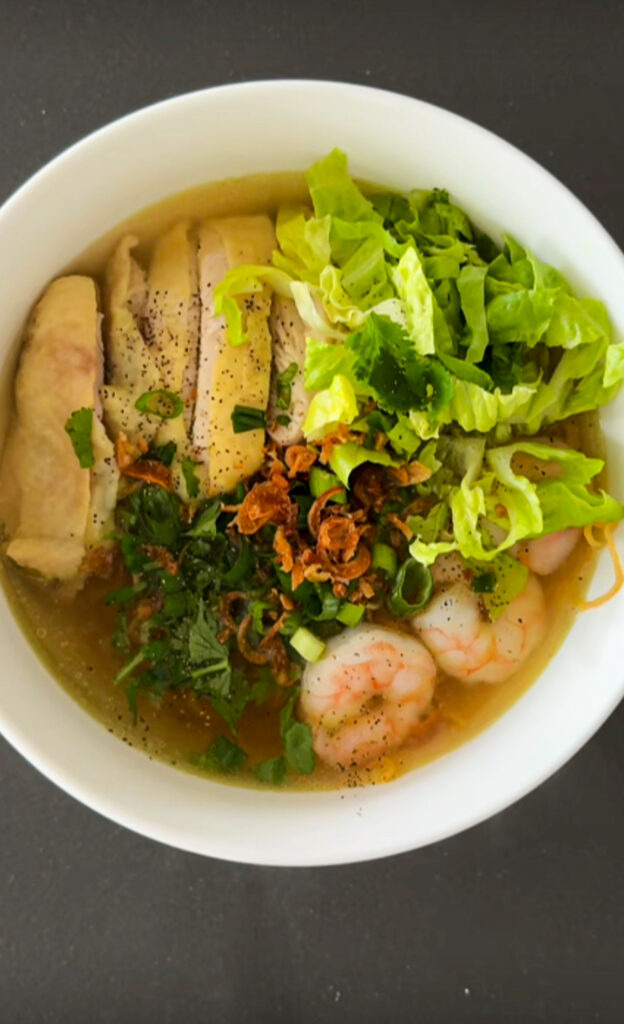
1. Add the cooked noodles to a bowl.
Start with approximately one-quarter of the cooked egg noodles per serving.
2. Add the mì khô sauce.
Drizzle approximately 1–2 tablespoons of sauce over the noodles.
Toss everything together until evenly coated.
You can add more sauce depending on how flavorful you like your noodles.
3. Add the shredded chicken.
Arrange a generous portion of shredded chicken over the noodles.
4. Add the vegetables and toppings.
Top with blanched greens, bean sprouts, cilantro, green onions, and fried shallots.
5. Serve with chicken broth on the side.
Ladle some hot homemade chicken broth into a separate small bowl and serve it alongside the noodles.
Add fresh chilies, chili garlic sauce, or a squeeze of lime if desired.
And that’s it!
You have a bowl of savory Vietnamese dry chicken egg noodles with homemade chicken broth on the side.
How to Eat Mì Khô
One of my favorite things about mì khô is being able to enjoy the noodles and broth separately.
I love taking a few bites of the savory noodles and then sipping on the warm broth in between.
The noodles stay coated in that flavorful sauce without getting diluted by the broth, which is probably why I prefer this version.
Some people also like adding a little broth directly to their noodles as they eat.
There’s really no wrong way to enjoy it!
How to Make Mì Gà Nước (Vietnamese Chicken Egg Noodle Soup)
Now, if you’re more like John and prefer your noodles with soup, this version is for you!
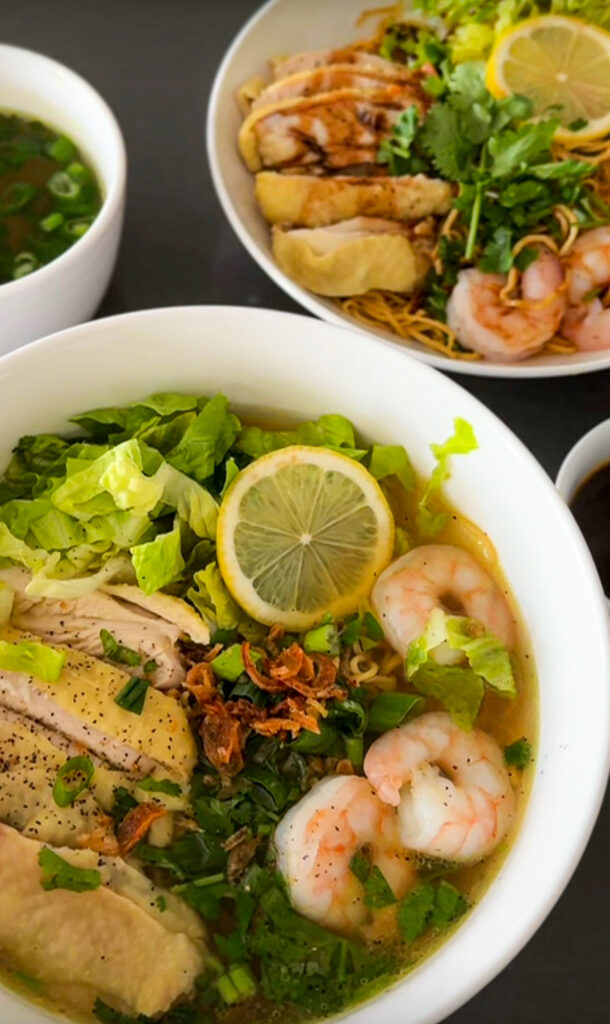
Mì gà nước is lighter than the dry version because we’re skipping the savory noodle sauce and letting the homemade chicken broth shine.
The combination of tender shredded chicken, springy egg noodles, and aromatic broth makes this such a comforting meal.
And because we added chicken bouillon and a touch of turmeric to the broth, it has a savory chicken flavor with a beautiful golden color without needing to simmer for hours.
Instructions
1. Add the cooked egg noodles to a serving bowl.
Divide the freshly cooked noodles evenly among your bowls.
2. Add the shredded chicken.
Arrange a generous portion of shredded chicken over the noodles.
3. Add the vegetables.
Top with blanched bok choy or choy sum and bean sprouts.
4. Pour in the hot chicken broth.
Ladle enough hot broth into each bowl to cover most of the noodles.
5. Finish with toppings.
Garnish with sliced green onions, cilantro, and fried shallots.
Add fresh chilies or a squeeze of lime if desired.
Serve immediately while the broth is hot!
What Makes Mì Gà Nước Different From Phở Gà?
Although both dishes are Vietnamese chicken noodle soups, they’re actually pretty different.
The biggest difference is the noodles.
Phở gà uses flat rice noodles, while mì gà uses thin wheat-based egg noodles.
The broths can also be different.
Phở gà typically uses additional aromatics and spices, while this mì gà broth is intentionally simpler, focusing on chicken, ginger, onion, and savory seasonings.
Both are delicious, but the springy egg noodles give mì gà a completely different texture.
Tips for Making the Best Vietnamese Chicken Egg Noodles
Here are a few tips to help you get the best results!
1. Air-Fry the Onion and Ginger
Using the air fryer is an easy alternative to charring onion and ginger over the stovetop.
You want the aromatics lightly charred and fragrant, not completely burnt.
Every air fryer cooks a little differently, so keep an eye on them toward the end.
2. Use Bone-In Chicken Thighs
Bone-in chicken thighs are one of my favorite cuts for homemade chicken broth.
The bones contribute flavor, while the meat stays tender during simmering.
Plus, we’re using the cooked chicken for our noodle toppings, so nothing goes to waste.
3. Use Just a Touch of Turmeric
Turmeric adds a subtle earthy flavor and a beautiful golden color to the broth.
I recommend starting with ¼ teaspoon of ground turmeric for 8 cups of water.
A little goes a long way, and you don’t want the turmeric to overpower the chicken and ginger.
4. Don’t Overdo the Chicken Bouillon
Chicken bouillon is a great shortcut for adding extra flavor, but a little can go a long way.
Since it often contains salt, start with a smaller amount and adjust after tasting.
You want the bouillon to enhance the homemade broth, not overpower it.
5. Keep the Broth at a Gentle Simmer
A rolling boil can make the broth cloudy and cause the chicken to become tough.
For a clearer broth, keep the heat low enough that you see gentle bubbling rather than aggressive boiling.
6. Don’t Overcook the Chicken
Start checking the chicken around 25 minutes.
Once the thickest part reaches 165°F, remove it from the broth.
Leaving the chicken simmering for too long can cause the meat to dry out.
7. Cook the Noodles Separately
I recommend cooking your egg noodles in a separate pot rather than directly in the chicken broth.
Egg noodles release starch as they cook, which can make your broth cloudy.
Cooking them separately also gives you better control over the texture.
8. Adjust the Dry Noodle Sauce to Taste
Everyone has their own preference when it comes to mì khô sauce.
Some people like their noodles sweeter, while others prefer a more savory flavor.
Start with a smaller amount of sauce, toss the noodles, and taste before adding more.
It’s always easier to add more sauce than remove it!
9. Add Fried Shallots Right Before Serving
Fried shallots add such a delicious crunch and aroma.
I recommend adding them right before eating so they stay crispy.
This is especially important for the soup version, where they’ll soften quickly once they touch the broth.
Can You Make Mì Gà Ahead of Time?
Yes! This is actually a great recipe to prepare ahead of time.
The broth and shredded chicken can be made in advance, which makes assembling the noodles much easier.
If you’re meal prepping, I recommend storing each component separately.
How to Store the Chicken Broth
Allow the broth to cool quickly, then transfer it to airtight containers.
Store in the refrigerator for up to 3–4 days.
You can also freeze the broth for approximately 2–3 months for best quality.
When you’re ready to eat, reheat the broth thoroughly before serving.
How to Store the Shredded Chicken
Store the cooked chicken in an airtight container in the refrigerator for up to 3–4 days.
I like adding a little broth to the container to help prevent the chicken from drying out.
How to Store the Mì Khô Sauce
The sauce can be prepared ahead of time and stored in an airtight container in the refrigerator for up to 3–4 days.
Since it contains homemade chicken broth, make sure to keep it refrigerated.
What About the Egg Noodles?
For the best texture, I recommend cooking the noodles fresh.
Freshly cooked egg noodles have a much better springy texture than noodles that have been sitting in the refrigerator.
If you’re meal prepping, store the uncooked noodles according to the package instructions and cook them when you’re ready to eat.
Food safety tip: Refrigerate cooked chicken and broth within two hours of cooking. Divide large batches of broth into shallow containers to help them cool quickly.
Frequently Asked Questions
What Is the Difference Between Mì Khô and Mì Nước?
Mì khô is the dry version of Vietnamese egg noodles, where the noodles are tossed in a savory sauce and served with broth on the side.
Mì nước is the soup version, where the noodles are served directly in hot broth.
Both versions can use the same noodles, chicken, vegetables, and toppings.
The biggest difference is how they’re assembled and seasoned.
Can I Use Chicken Breast Instead of Chicken Thighs?
Yes!
Chicken breast works if you prefer leaner meat.
However, I recommend bone-in chicken thighs because they add more flavor to the broth and stay tender during cooking.
If using chicken breast, check for doneness earlier because it may cook faster.
Can I Make the Broth Without Chicken Bouillon?
Absolutely!
Chicken bouillon adds extra savory flavor, but it’s optional.
If you prefer not to use it, you can still make a delicious broth using chicken thighs, ginger, onion, fish sauce, salt, and sugar.
You may need to adjust the seasonings or simmer the bones a little longer to develop more flavor.
Why Add Turmeric to Vietnamese Chicken Broth?
I like adding a small amount of turmeric because it gives the broth a subtle earthy flavor and warm golden color.
It also complements the ginger and chicken without making the broth taste heavily spiced.
The key is not adding too much. We’re only using a small amount so the chicken flavor remains the star of the dish.
Can I Make Mì Gà Without Turmeric?
Yes!
Turmeric is an optional addition to this version of the broth.
Leaving it out will give you a lighter-colored chicken broth, but the onion, ginger, chicken thighs, and seasonings will still provide plenty of flavor.
What Does Chicken Bouillon Do in Vietnamese Chicken Broth?
Chicken bouillon helps intensify the savory chicken flavor of the broth.
It’s especially helpful when you’re making a quick homemade broth and don’t have hours to simmer the bones.
Since many brands contain salt, I recommend tasting the broth before adding additional seasonings.
Can I Char Onion and Ginger Without an Air Fryer?
Yes!
Although I’m using an air fryer for this recipe, you can also char the onion and ginger in a dry skillet, under the oven broiler, or over a gas burner.
The goal is to lightly brown the aromatics to bring out their flavor.
Can I Make This Recipe Without Dried Shrimp?
Yes!
Dried shrimp adds extra umami, but it’s completely optional.
The chicken thighs, charred aromatics, chicken bouillon, turmeric, and seasonings will still create a flavorful broth.
What Type of Noodles Should I Use for Mì Gà?
I recommend fresh thin egg noodles, often labeled as wonton noodles, Chinese egg noodles, or mì trứng.
You can find them at most Asian grocery stores.
Dried egg noodles are another good option if fresh noodles aren’t available.
Can I Make Both Versions at the Same Time?
Yes, and that’s probably my favorite part about this recipe!
John and I actually prefer our noodles differently, so I love being able to make both versions without having to cook two separate meals.
I prefer mì khô with the savory sauce and broth on the side, while John prefers mì nước with everything served together in the broth.
Since both versions use the same chicken, broth, noodles, and vegetables, all you have to do is assemble them differently.
It’s such an easy way to accommodate everyone’s preferences!
How Do I Keep the Chicken From Drying Out?
The key is not overcooking it.
Once the chicken reaches an internal temperature of 165°F, remove it from the broth and let it rest before shredding.
I also recommend keeping the shredded chicken with a few spoonfuls of broth until you’re ready to serve.
Can I Freeze Vietnamese Chicken Egg Noodle Soup?
You can freeze the chicken broth and shredded chicken, but I don’t recommend freezing the assembled noodle soup.
Cooked egg noodles can become mushy after freezing and reheating.
For the best results, freeze the broth and chicken separately, then prepare fresh noodles when you’re ready to eat.
Final Thoughts
One of the things I love most about Vietnamese cooking is how versatile it can be.
With just one pot of homemade chicken broth, you can make two completely different noodle dishes depending on what you’re craving.
And that’s exactly why this recipe works so well for John and me!
I’m definitely team mì khô because I love the savory noodles with the broth on the side, while John is team mì nước because he prefers everything together in a big bowl of soup.
I love that we can both enjoy the same homemade meal without having to make two completely different dishes.
Air-frying the onion and ginger also makes preparing the broth super easy, while chicken bouillon and a little turmeric add savory flavor and a beautiful golden color without needing to simmer for hours.
Whether you’re making Vietnamese chicken egg noodle soup for the first time or looking for an easy homemade mì khô recipe, I hope you give this one a try!
And if you’re making it for someone who has a different noodle preference than you, now you know you can easily make both versions at once.
Happy cooking! ♡
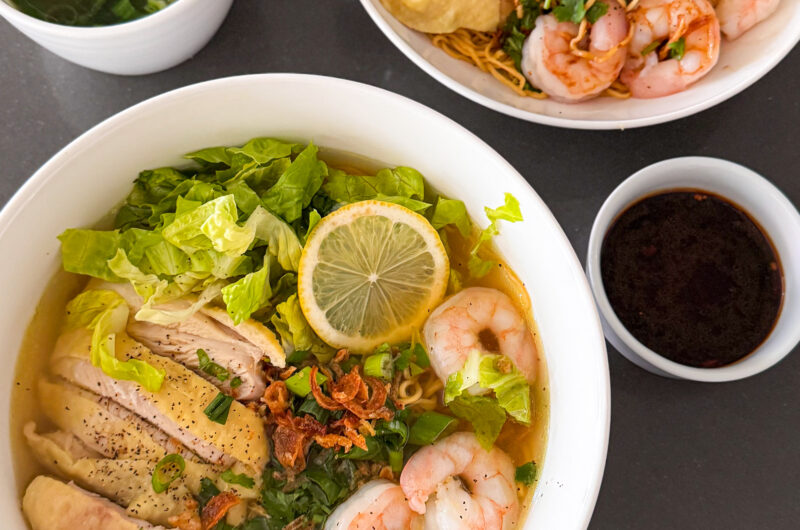
Vietnamese Chicken Egg Noodles (Mì Gà Khô & Mì Gà Nước)
Course: lunch, dinnerCuisine: vietnamese, viet, asianDifficulty: easy4
servings20
minutes45
minutesIngredients
- Chicken Broth
4 bone-in, skin-on chicken thighs
8 cups water
1 medium yellow onion, halved
3-inch piece fresh ginger, thickly sliced
1 tbsp dried shrimp, rinsed (optional)
200 g daikon radish (optional)
1 tsp chicken bouillon powder, or to taste
½ tsp salt, plus more to taste
2 tsp rock sugar or regular sugar
1 tbsp fish sauce, plus more to taste
¼ tsp ground turmeric
- Mì Khô Sauce
2 tbsp oyster sauce
2 tbsp soy sauce
2 tsp sugar
4 tbsp prepared chicken broth
1 tsp sesame oil
½ tsp dark soy sauce
- Noodles and Toppings
12–16 oz fresh egg noodles
cooked shrimp (optional)
fried shallots
Cilantro
Green onions
Lime/lemon wedges
Directions
- Make the Chicken Broth
- Char the aromatics: Air-fry the onion and ginger at 400°F for 10–15 minutes, until lightly charred and fragrant.
Prepare the broth: In a large pot, combine chicken thighs, water, charred onion, ginger, dried shrimp, and daikon. Bring to a gentle simmer and skim off any foam.
Season and simmer: Add chicken bouillon, turmeric, salt, and sugar. Simmer for 25–35 minutes, or until the chicken reaches 165°F internally.
Shred the chicken: Remove the chicken, let cool slightly, then discard the skin and bones. Shred the meat and set aside.
Finish the broth: Add fish sauce, adjust seasonings to taste, and strain the broth. Keep warm. - Prepare the Sauce and Noodles
- Make the mì khô sauce: Combine all sauce ingredients in a small saucepan. Heat over low heat for 1–2 minutes until the sugar dissolves.
Cook the noodles and vegetables: Blanch the vegetables until tender. Cook egg noodles separately according to package instructions and drain well. - For Mì Gà Khô (Dry Noodles)
- Toss cooked noodles with 1–2 tbsp of mì khô sauce per serving. Top with shredded chicken, vegetables, and garnishes. Serve with hot chicken broth on the side.
- For Mì Gà Nước (Noodle Soup)
- Add cooked noodles, shredded chicken, and vegetables to a bowl. Pour hot chicken broth over everything and finish with your favorite garnishes.
Recipe Video
Notes
- Use bone-in chicken thighs for a richer broth and tender shredded chicken.
Keep the broth at a gentle simmer for a clearer appearance.
Cook noodles separately to prevent the broth from becoming starchy.
Adjust the mì khô sauce according to your preference.
You can easily make both versions at once by preparing the dry noodle sauce separately and assembling each bowl according to preference.
Store broth, chicken, and noodles separately for meal prep.
For the best texture, cook fresh egg noodles right before serving.