Why I’ll Never Get Over Bánh Cuốn
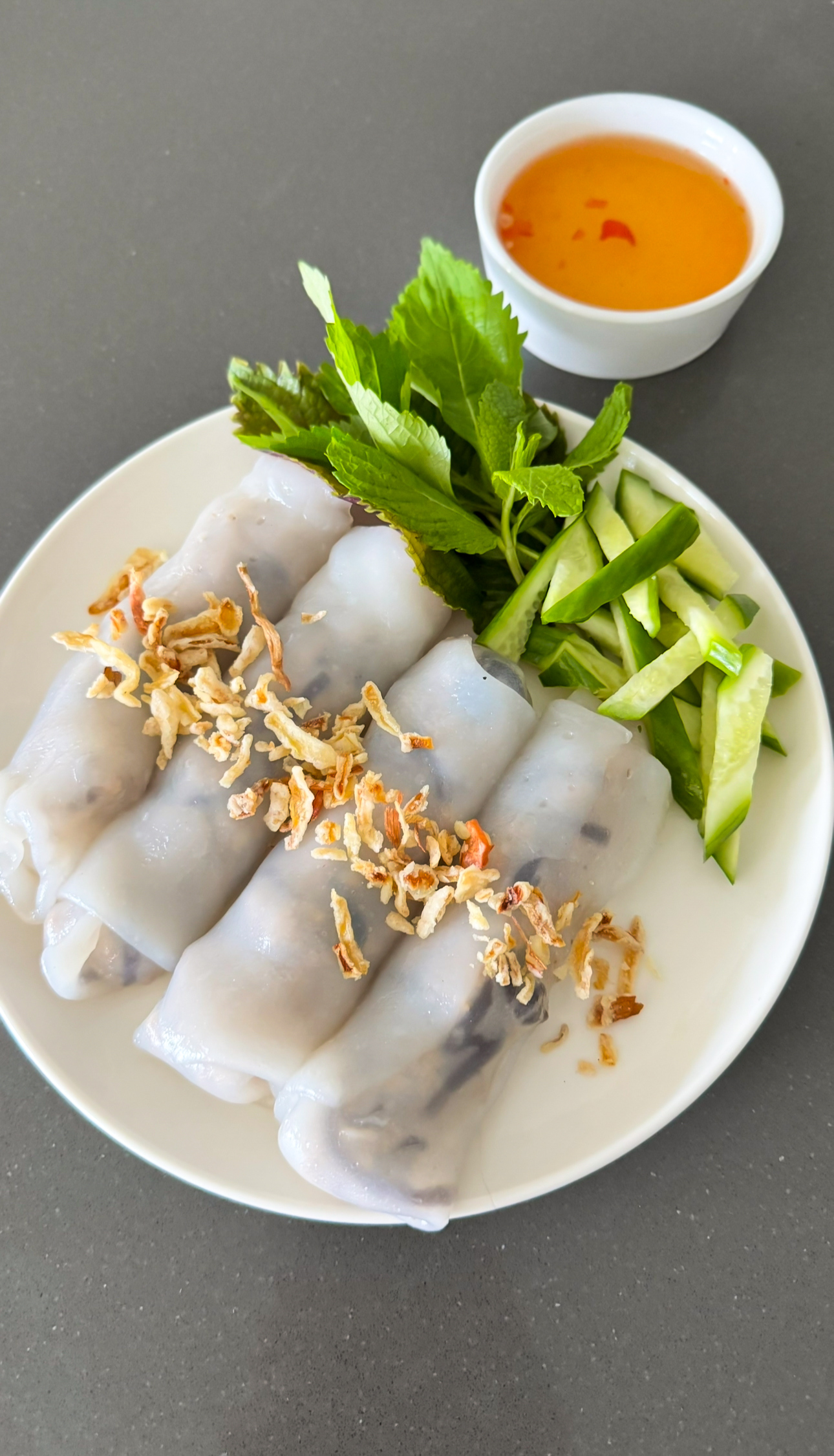
If there’s one Vietnamese dish that instantly takes me back to childhood mornings, it’s bánh cuốn. Imagine soft, delicate steamed rice sheets, thin as silk, rolled up with savory pork and wood ear mushrooms, topped with crispy fried shallots, fresh herbs, and slices of chả lụa (Vietnamese pork roll). Dunk it in a bowl of nước chấm dipping sauce, and you’ll understand why this dish is beloved from Hanoi all the way to Little Saigon in California.
It’s light yet filling, fresh yet comforting, and honestly — it’s a dish that makes you appreciate the art of Vietnamese cooking. Because let me tell you: making those thin rice sheets is a labor of love. But don’t worry, I’ll walk you through it step by step (and give you some pro tips I wish I knew sooner).
A Quick Dive Into Bánh Cuốn History
So, where does bánh cuốn come from? This dish hails from Northern Vietnam, especially Hanoi, where breakfast is basically a national sport. Traditionally, bánh cuốn vendors steam the batter over cloth stretched tightly across a pot of simmering water. They ladle a thin layer of batter, cover it with a lid, and in less than a minute — voila! — you’ve got a translucent rice sheet ready to be filled and rolled.
The word “cuốn” means “to roll,” which makes perfect sense. And “bánh” is the catch-all word in Vietnamese for cakes, pastries, and all things carb-y. So together, bánh cuốn literally means “rolled cake.”
While it’s a breakfast staple in Hanoi, you’ll find bánh cuốn served all day at Vietnamese restaurants around the world. Each family and region does it a little differently — some keep the filling simple with pork and mushrooms, while others add shrimp, jicama, or even tofu for a vegetarian version.
But one thing stays the same: bánh cuốn is all about balance. Silky, savory rolls paired with crunchy fresh herbs, cooling cucumber, and that punchy-sweet-sour nước chấm. It’s a whole experience.
Servings: 4
Prep Time: 30 minutes
Cook Time: 30 minutes
Total Time: ~1 hour
Ingredients You’ll Need
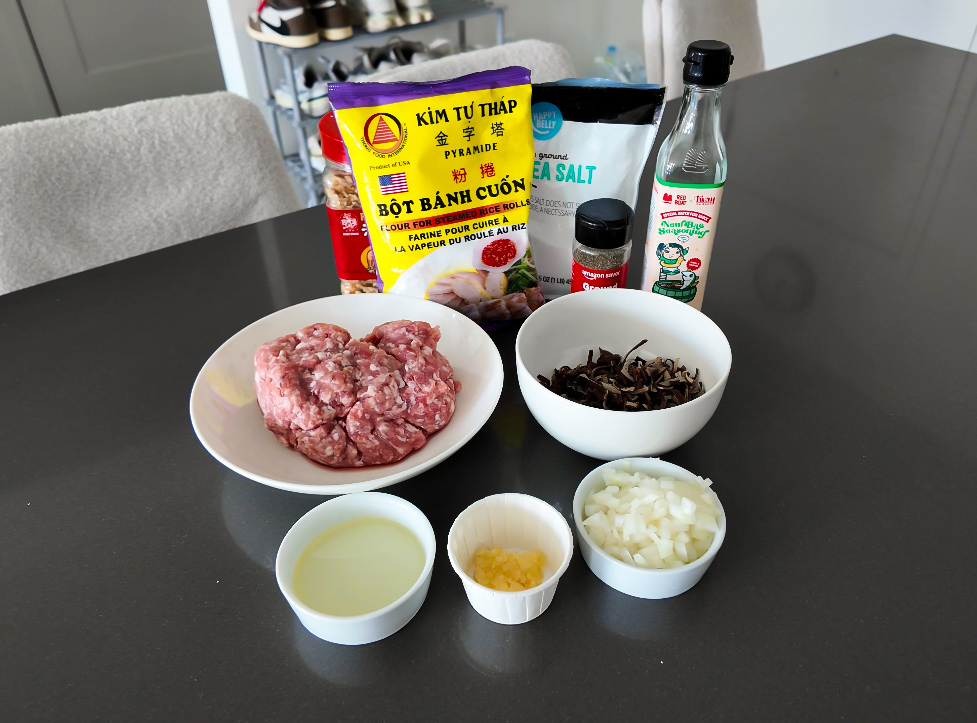
Here’s everything you need to make bánh cuốn at home. Don’t worry — it looks like a lot, but it’s really just batter, filling, and toppings.
🥣 Batter
- 1 full packet Bột Bánh Cuốn (340g)
- 3½ cups (840ml) water
- 2 tbsp neutral oil (canola or avocado)
- ½ tsp salt
🍖 Filling
- ½ lb ground pork
- ½ cup wood ear mushrooms (soaked & minced)
- ¼ cup yellow onion (minced)
- 1 clove garlic (minced)
- 1 tbsp fish sauce
- ½ tsp sugar
- ½ tsp pepper
- 1 tbsp oil for sautéing
🌿 Toppings
- Fried shallots
- Fresh herbs (cilantro, mint, Thai basil)
- Cucumber (julienned)
🥢 Quick Nước Chấm (Dipping Sauce)
- 3 tbsp fish sauce
- 3 tbsp sugar
- 6 tbsp warm water
- 2 tbsp lime or lemon juice
- 2-3 garlic cloves (minced)
- 1 chili (optional, minced)
Step-by-Step Bánh Cuốn Instructions
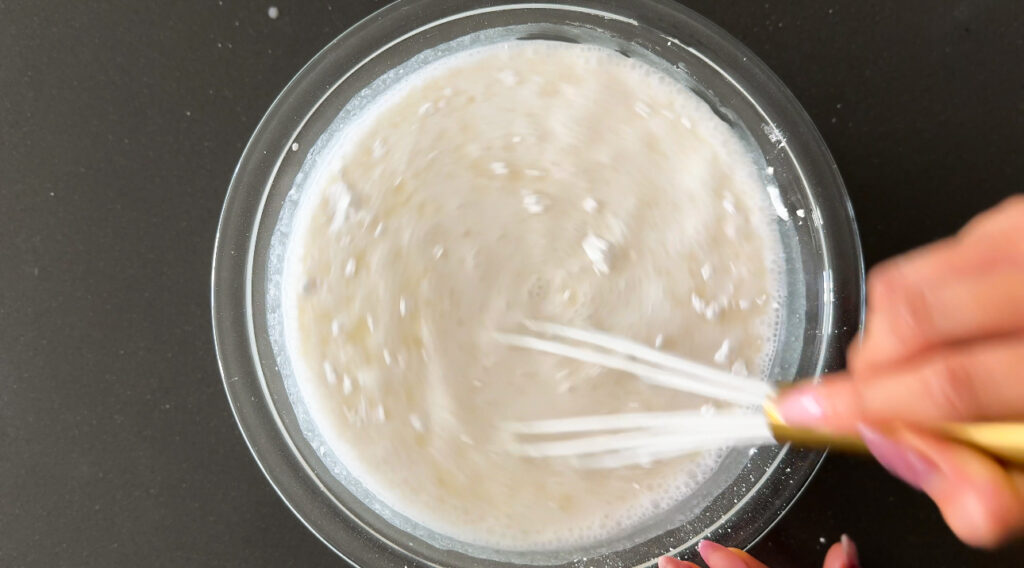
🥣 Step 1: Make the Batter
In a large bowl, whisk together:
- 1 packet bột bánh cuốn
- 840ml water
- 2 tbsp oil
- ½ tsp salt
Stir until completely smooth — no lumps allowed. Let it rest for at least 30 minutes, then stir again before cooking.
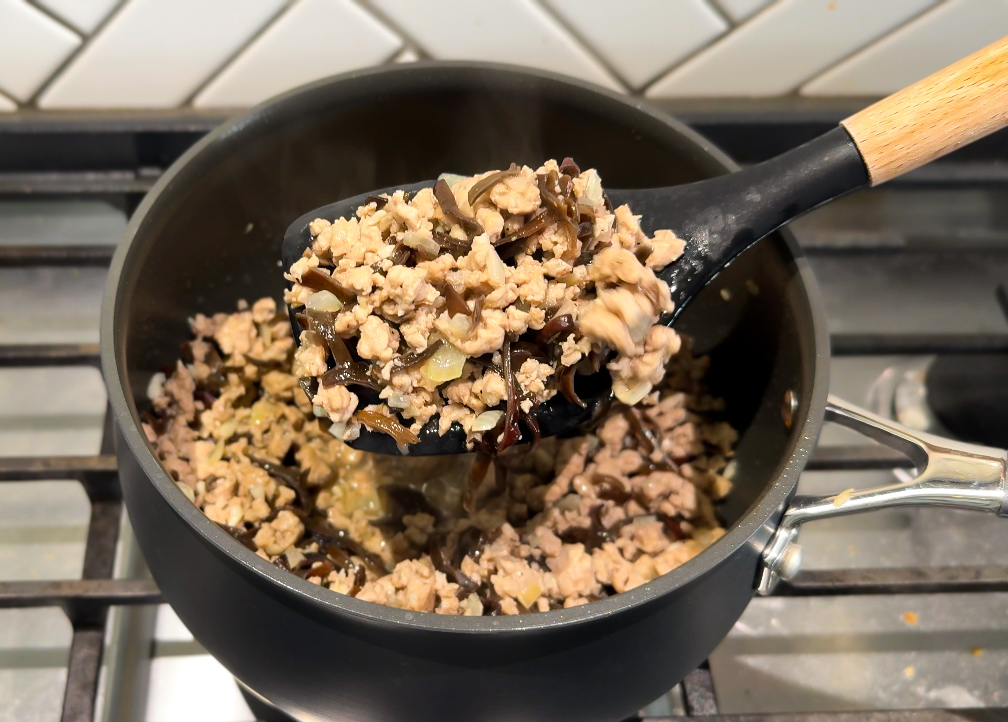
🍖 Step 2: Make the Filling
- Heat 1 tbsp oil in a pan over medium heat.
- Sauté garlic and onion until fragrant.
- Add ground pork and cook until almost done.
- Stir in chopped wood ear mushrooms, fish sauce, sugar, and pepper.
- Cook until everything is combined and moisture is mostly gone. Set aside.
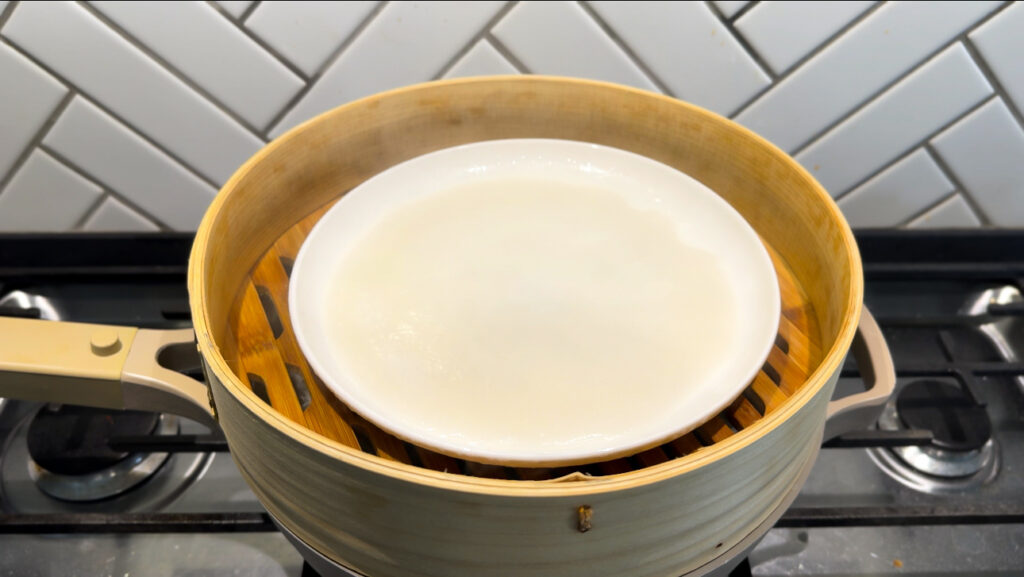
🧖🏻♀️ Step 3: Prep the Steaming Station
You’ll need:
- A large steamer (or big pot with lid + steaming rack)
- A heatproof flat plate (ceramic, glass, or metal works)
- A thin oil brush or paper towel
Fill the steamer with a few inches of water and bring it to a steady simmer. Lightly oil your plate so the rice sheet won’t stick.
🌫️ Step 4: Steam the Sheets
- Stir the batter again.
- Pour just enough batter to thinly coat the bottom of your plate (about 2–3 tbsp).
- Place the plate in the steamer and cover with the lid.
- Steam for 30–40 seconds, or until the sheet looks shiny and fully cooked.
- Carefully remove the plate and let cool for a few seconds.
- Use a spatula to peel off the rice sheet and transfer it to an oiled tray.
Pro Tip: If the sheets are sticking or tearing, try brushing more oil on the plate or thinning the batter with a little water.
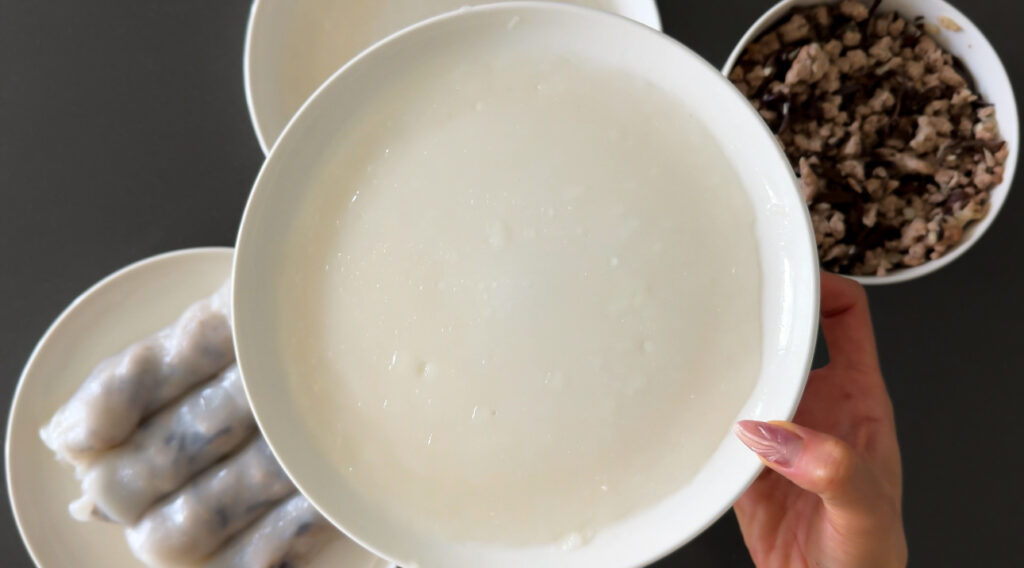
🥟 Step 5: Fill & Roll
- Place a rice sheet on a clean surface.
- Add a spoonful of pork-mushroom filling to the center.
- Fold over like a burrito or roll like a spring roll.
- Keep finished rolls covered so they stay soft and warm.
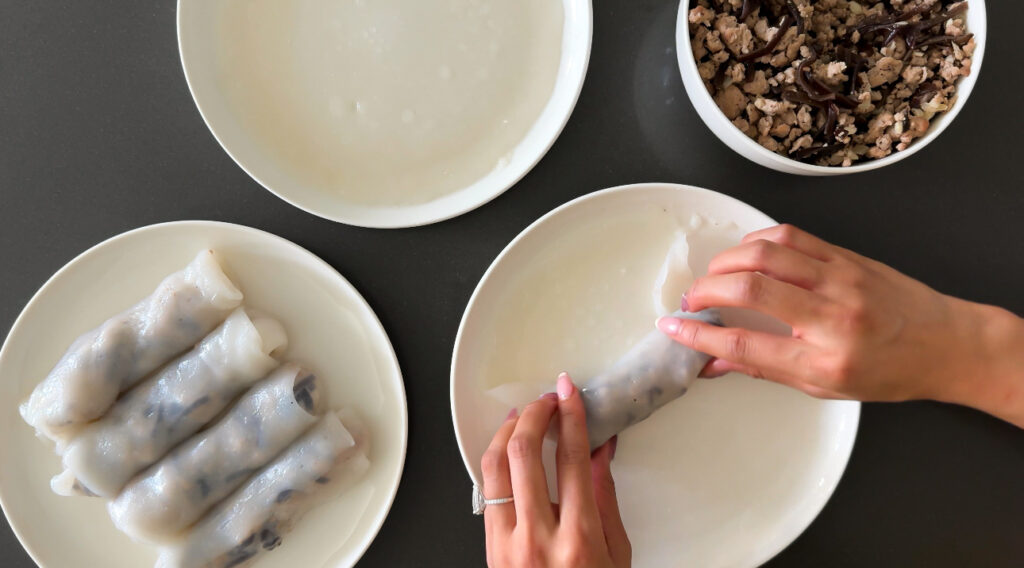
🍽 Step 6: Assemble & Serve
Plate your rolls and top with:
- Fried shallots
- Sliced chả lụa (optional)
- Fresh herbs
- Cucumber/bean sprouts
Serve warm with a bowl of nước chấm on the side for dipping.
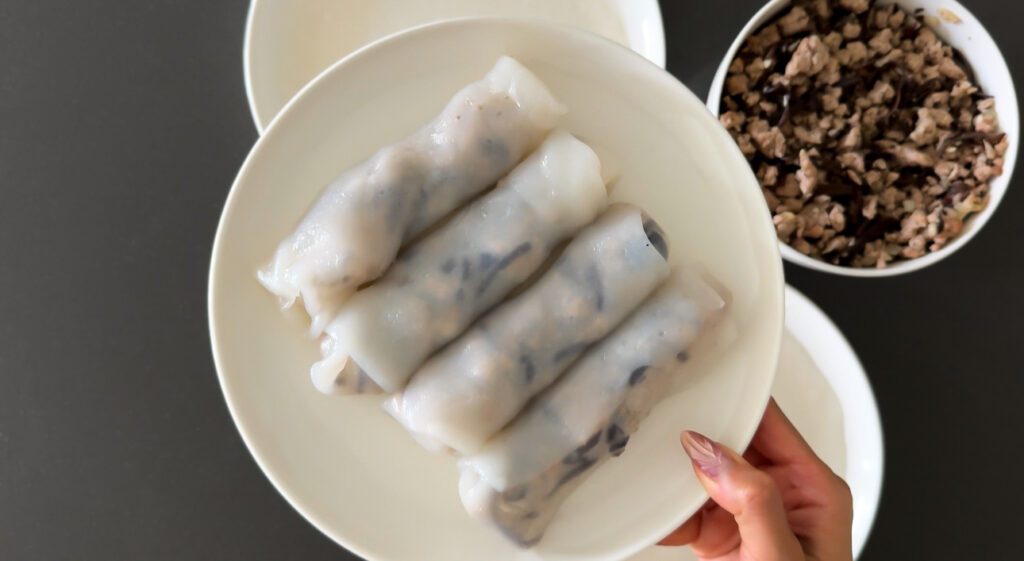
🧠 Tips for the Perfect Bánh Cuốn
- Rest the batter. Don’t skip this — it helps the starches hydrate for a smoother, silkier sheet.
- Keep it thin. Less batter is better — you want translucent, delicate sheets, not thick pancakes.
- Stay oiled. Lightly brushing your plate with oil before every sheet will save you from sticking nightmares.
- Work fast. Bánh cuốn is all about rhythm: pour, steam, peel, fill, repeat.
- Keep rolls covered. Use a damp towel or lid to prevent them from drying out while you cook.
🌏 What Makes Bánh Cuốn Special
Food is never just food, especially in Vietnamese culture. Bánh cuốn is one of those recipes that carries history and memory. It’s the dish you eat at the market in Hanoi at 7 a.m. with a cup of hot tea. It’s the dish your mom makes on special weekends when she has time to stir the batter, steam each sheet, and fry the shallots herself.
For me, making bánh cuốn at home isn’t just about eating — it’s about honoring that tradition, slowing down, and connecting with my roots. Yes, it takes practice (and maybe a few torn rice sheets), but once you nail it, you’ll understand why this dish is worth the effort.
Final Thoughts
Bánh cuốn is one of those dishes that really makes you appreciate the craft of Vietnamese cooking. It’s delicate but hearty, humble but packed with history. And while it takes a little practice to master, the end result is so worth it — soft rice rolls filled with savory goodness, topped with herbs and crispy shallots, dipped in tangy-sweet nước chấm.
So next time you’re craving something light yet satisfying, skip the takeout and try making bánh cuốn at home. It’s more than a recipe — it’s a little taste of Vietnam’s heritage, rolled up and ready to share.

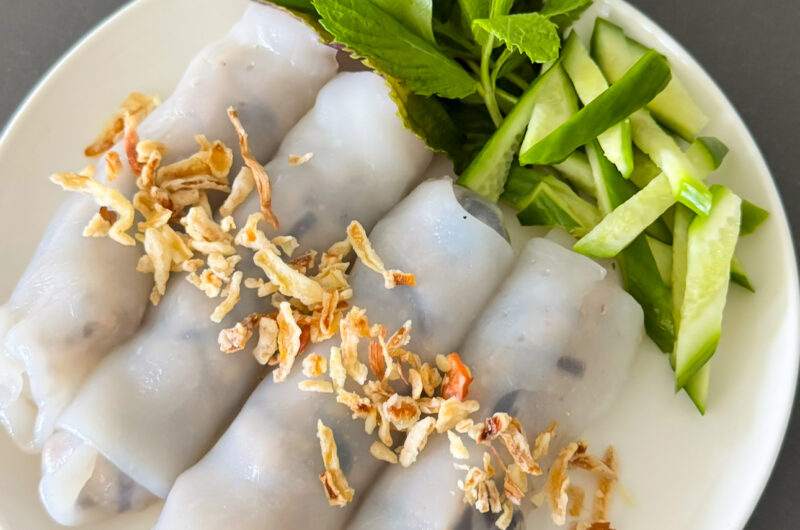
How to make Bánh Cuốn Recipe (Vietnamese Steamed Rice Rolls)
Course: Breakfast, Lunch, DinnerCuisine: viet, vietnamese, asianDifficulty: Medium4
servings30
minutes30
minutesBánh Cuốn (Vietnamese Steamed Rice Rolls with Pork & Mushrooms)
Ingredients
- Batter
1 packet bột bánh cuốn (340g)
3½ cups (840ml) water
2 tbsp neutral oil (canola or avocado)
½ tsp salt
- Filling
½ lb ground pork
½ cup wood ear mushrooms (soaked & minced)
¼ cup yellow onion (minced)
1 garlic clove (minced)
1 tbsp fish sauce
½ tsp sugar
½ tsp black pepper
1 tbsp oil (for sauteing)
- Toppings
Fried shallots
Fresh herbs (cilantro, mint, Thai basil)
Cucumber (julienned)
- Quick Nước Chấm
3 tbsp fish sauce
3 tbsp sugar
6 tbsp warm water
2 tbsp lime or lemon juice
2-3 garlic cloves (minced)
1 chili (optional, minced)
Directions
- Make the Batter
In a large bowl, whisk bột bánh cuốn, water, oil, and salt until smooth.
Let rest 30 minutes, then stir again. - Cook the Filling
Heat oil in a pan over medium. Sauté garlic and onion until fragrant.
Add ground pork, cook until nearly done.
Stir in wood ear mushrooms, fish sauce, sugar, pepper.
Cook until combined and set aside. - Set Up Steaming Station
Prepare a steamer with a few inches of water.
Place a heatproof flat plate inside. Brush lightly with oil.
Steam the Sheets
Stir batter. Pour 2–3 tbsp onto the plate to coat thinly.
Cover and steam 30–40 sec until shiny and cooked.
Remove plate, let cool briefly, and peel sheet off with a spatula. - Fill & Roll
Place a rice sheet on a surface. Add a spoonful of filling.
Roll gently like a spring roll or burrito.
Keep covered so they stay soft. - Assemble & Serve
Plate rolls. Top with fried shallots, herbs, cucumber, and slices of chả lụa (optional)
Serve warm with nước chấm on the side.