
Servings: 3–4
Prep Time: 15 minutes
Marinating Time: 30 minutes minimum
Cook Time: 40–45 minutes
Total Time: Approximately 1 hour 30 minutes
My Lazy Girl Version of Gà Kho Gừng
I love a good gà kho gừng, but if there’s one thing I’ve learned from making Vietnamese braised dishes over the years, it’s that caramelizing sugar is not my strongest skill.
I’ve messed it up more times than I’d like to admit. Sometimes I burn it, sometimes I don’t cook it long enough, and sometimes I just don’t feel like dealing with it. 😂
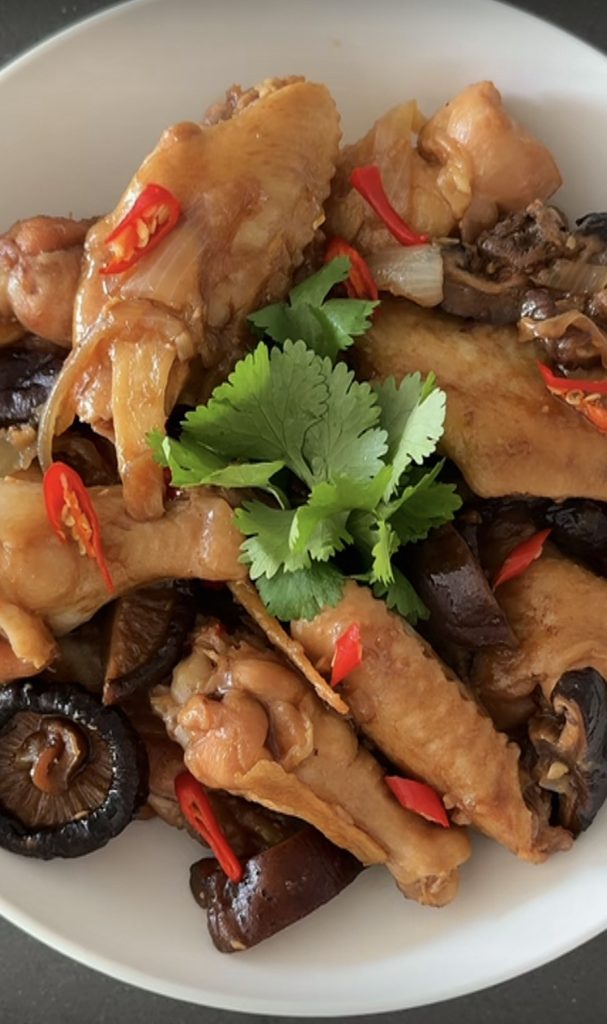
So we’re making my Lazy Girl Gà Kho Gừng, aka Vietnamese ginger chicken.
Instead of caramelizing sugar the traditional way, we’re skipping that step entirely and using a little dark soy sauce to get that beautiful deep brown color. Same familiar sweet and savory flavors, just one less thing to worry about.
And before anyone comes for me, yes, I know this isn’t the traditional way of making gà kho gừng. I love and appreciate the traditional method, but sometimes I just want a good home-cooked meal without making things more complicated than they need to be.
This recipe is especially nostalgic for me because my Bà Nội, my grandmother on my dad’s side, used to make gà kho gừng whenever we visited her.
Funny enough, she was vegetarian.
And somehow, she made some of the best ginger chicken I’ve ever had.
I don’t remember every little detail of how she made it, but I remember the smell of ginger, the tender chicken, and that rich sauce that was practically made for spooning over rice.
It was one of those dishes I always looked forward to eating at her house.
My version is a little different from hers, but it still brings back those same memories.
Over the years, I’ve learned that some of my favorite recipes are the ones I’ve adapted to fit how I cook today. Sometimes that means adding an ingredient, changing a technique, or finding a shortcut that actually works.
And honestly, if I can make one of my favorite childhood dishes a little easier without sacrificing the flavor, I’m all for it.

What Is Gà Kho Gừng?
Gà kho gừng is a traditional Vietnamese ginger chicken dish made by braising chicken in a savory-sweet sauce with fish sauce, sugar, ginger, and aromatics.
The name is pretty straightforward:
- Gà means chicken.
- Kho refers to the Vietnamese method of braising or simmering ingredients in a seasoned sauce.
- Gừng means ginger.
It’s a classic Vietnamese home-cooked dish that’s usually served with steamed jasmine rice and a side of vegetables or soup.
Unlike Vietnamese noodle soups, which often require hours of simmering broth, kho dishes are relatively simple to prepare.
You start with a protein, season it generously, and let everything simmer until the flavors become concentrated.
The sauce is what makes the dish.
It’s salty, slightly sweet, deeply savory, and packed with ginger.
When spooned over hot rice, it turns a handful of simple ingredients into a complete meal.
And that’s exactly the kind of cooking I grew up with.
The History of Gà Kho Gừng and Vietnamese Braised Dishes
To understand gà kho gừng, it helps to understand the role of kho in Vietnamese cooking.
Kho is one of the most familiar cooking methods in Vietnamese households. It’s used for everything from pork and chicken to fish, shrimp, and tofu.
Some of the most recognizable Vietnamese kho dishes include:
- Thịt kho trứng — braised pork and eggs
- Cá kho tộ — caramelized fish
- Gà kho gừng — ginger-braised chicken
- Gà kho sả — lemongrass-braised chicken
- Tôm kho — braised shrimp
These dishes are deeply connected to everyday Vietnamese family meals.
Historically, braising was a practical way to prepare flavorful food using relatively affordable ingredients. A small amount of meat or fish could be seasoned with fish sauce, sugar, and aromatics, then served with a generous amount of rice.
The concentrated sauce helped flavor the entire meal.
Different regions and families developed their own preferences.
Southern Vietnamese kho dishes often lean a little sweeter, sometimes incorporating coconut water or caramelized sugar. Other variations may be saltier, spicier, or more pepper-forward.
And of course, every family has its own version.
Some people use bone-in chicken. Others prefer boneless pieces. Some add fresh chilies, while others keep the heat mild.
There’s no single recipe that represents every Vietnamese household.
What makes gà kho gừng distinct is the generous use of fresh ginger.
Ginger has a long history in Vietnamese cooking, appearing in soups, marinades, dipping sauces, and braised dishes.
In this recipe, it isn’t just a background ingredient.
It’s one of the main flavors.
The ginger adds a warm, slightly peppery bite that balances the richness of the chicken and the salty sweetness of the sauce.
It’s a simple combination, but one that’s been loved in Vietnamese kitchens for generations.
Why I Skip Caramelizing Sugar
Traditionally, many Vietnamese kho dishes begin with nước màu, a caramel coloring made by heating sugar until it turns a deep amber color.
This step gives the dish its signature brown appearance and a subtle bittersweet depth.
When done properly, it’s delicious.
But caramelizing sugar requires a little patience and timing.
You have to watch the sugar carefully as it melts, changes color, and begins to caramelize.
Too light, and you don’t get much flavor or color.
Too dark, and it can turn bitter.
And once the sugar starts changing color, it happens quickly.
I’ve had enough failed attempts to know that this isn’t always a step I want to deal with.
So I started experimenting with dark soy sauce instead.
Dark soy sauce gives the chicken a beautiful deep brown color without having to caramelize sugar separately.
It doesn’t taste exactly the same as traditional Vietnamese caramel sauce, but when combined with fish sauce, sugar, oyster sauce, ginger, and garlic, it creates a wonderfully savory braising liquid.
The sugar still provides sweetness, while the dark soy sauce helps develop that rich color.
It’s a simple substitution that makes the recipe more approachable.
And most importantly, it’s consistent.
I don’t have to worry about whether the caramel is too light or too dark.
I just marinate the chicken, sear it, add some liquid, and let everything simmer.
That’s my kind of lazy girl cooking.
Why I Marinate the Chicken First
Another change I made to this updated recipe is marinating the chicken with nearly all the seasonings before cooking.
Instead of adding everything directly into the pan, I combine the chicken with fish sauce, sugar, chicken bouillon, black pepper, dark soy sauce, oyster sauce, and half of the aromatics.
Then I let everything marinate for at least 30 minutes.
This gives the chicken time to absorb some of the seasoning before it hits the pan.
I also divide the ginger, garlic, and shallots into two portions.
Half goes into the marinade, while the other half gets sautéed in oil before adding the chicken.
I love this method because it builds flavor in two stages.
The aromatics in the marinade season the chicken, while the aromatics sautéed in oil create a fragrant base for the sauce.
And because ginger is such an important part of this dish, I want that flavor throughout.
It’s a small adjustment, but one that makes a noticeable difference.
Easy Gà Kho Gừng Ingredients
This recipe makes approximately 3–4 servings.
Chicken and Marinade
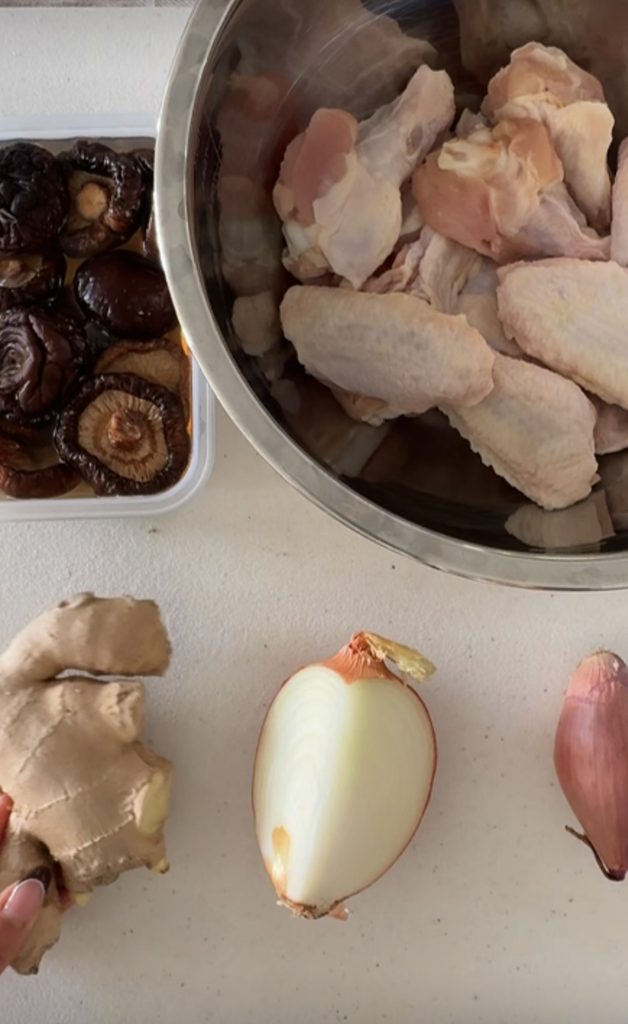
- 1 lb bone-in, skin-on chicken thighs or wings, cut into smaller pieces
- 2 tbsp fish sauce
- 2 tbsp sugar
- 1 tbsp dark soy sauce
- 1 tbsp oyster sauce
- 1 tsp chicken bouillon
- ¾ tsp black pepper
- 1 small shallot, minced or thinly sliced, divided
- 3 garlic cloves, minced, divided
- 2-inch knob fresh ginger, julienned, divided
For Cooking
- 2 tbsp neutral cooking oil
- ½ cup coconut water or regular water
- ½ cup sliced shiitake mushrooms (optional)
Garnish
- 2 green onions, chopped
- Extra black pepper
- Sliced Thai chilies (optional)
Recipe development note: The oyster sauce is included at a suggested 1 tablespoon because you mentioned adding it but didn’t specify the amount. The remaining seasonings follow our proposed revised version rather than verified measurements from your latest test.
Ingredient Notes
Chicken
I prefer using bone-in chicken thighs or wings because they hold up well during braising.
The bones add flavor to the sauce, while the skin helps keep the chicken tender and juicy.
You can use boneless chicken thighs if that’s what you have, but you may need to shorten the cooking time.
I wouldn’t recommend chicken breast as my first choice because it can dry out more easily during longer cooking.
Ginger
Fresh ginger is essential for gà kho gừng.
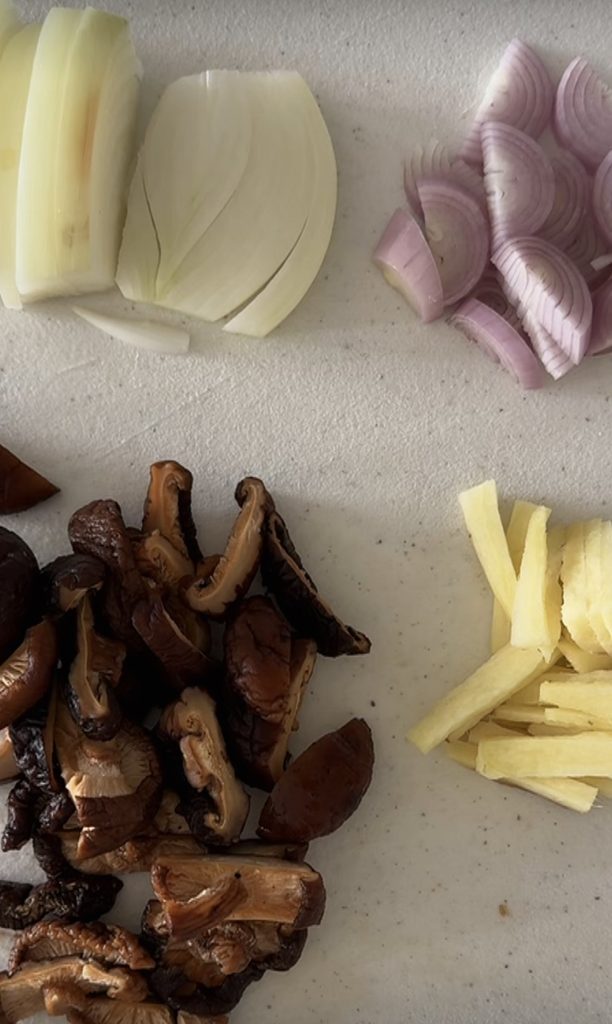
I like cutting it into thin matchsticks rather than mincing it completely.
This allows the ginger to soften during cooking while still giving you little bites of that warm, peppery flavor.
And yes, I use quite a bit of ginger.
It’s ginger chicken, after all.
Fish Sauce
Fish sauce provides the main savory flavor in this recipe.
It’s salty, aromatic, and adds depth that regular salt alone can’t replicate.
Different brands vary in saltiness, so I always recommend tasting the sauce toward the end.
Dark Soy Sauce
This is the ingredient that makes my lazy girl version possible.
Dark soy sauce is commonly used to add color to Asian braised dishes.
It’s typically darker and thicker than regular soy sauce, although the flavor and saltiness depend on the brand.
You only need a little to give the chicken that beautiful deep brown color.
Oyster Sauce
Oyster sauce adds another layer of savory flavor to the marinade.
It’s slightly sweet, rich, and full of umami.
Combined with the fish sauce and dark soy sauce, it helps round out the braising liquid.
Since oyster sauce already contains salt and sugar, taste the finished dish before adding more seasoning.
Chicken Bouillon
I like adding a little chicken bouillon for extra depth.
It’s one of those pantry ingredients I use often in my Vietnamese cooking.
A small amount helps round out the sauce without requiring additional stock.
Shallots and Garlic
Shallots and garlic create the aromatic base.
I prefer shallots because they’re slightly sweeter and more delicate than regular onions.
But if you don’t have shallots, a little yellow onion works too.
Coconut Water
Coconut water is a common addition to Vietnamese braised dishes.
It adds subtle sweetness and helps balance the salty seasonings.
Regular water works just fine, especially since we’re already using sugar in the marinade.
Shiitake Mushrooms
Shiitake mushrooms are completely optional.
They’re not an essential ingredient in traditional gà kho gừng, but I had a version with mushrooms at a restaurant once and really enjoyed it.
They absorb the sauce beautifully and add another layer of savory flavor.
I love how they taste alongside the ginger and chicken.
How to Make Lazy Girl Gà Kho Gừng
Step 1: Marinate the Chicken
Place the chicken pieces into a large mixing bowl.
Add the fish sauce, sugar, dark soy sauce, oyster sauce, chicken bouillon, and black pepper.
Divide the ginger, garlic, and shallots in half.
Add one half of each aromatic to the chicken, reserving the other half for cooking.
Mix everything thoroughly until the chicken is evenly coated.
Cover and refrigerate for at least 30 minutes.
If you have more time, you can marinate the chicken for 1–2 hours for a little more flavor.
This is where most of the seasoning happens, so I wouldn’t skip the marinade.

Step 2: Sauté the Aromatics
Heat 2 tablespoons of cooking oil in a large skillet, sauté pan, or pot over medium heat.
Add the remaining ginger, garlic, and shallots.
Sauté for approximately 1–2 minutes until fragrant and lightly golden.
Stir frequently so the garlic doesn’t burn.
The ginger should become fragrant, and the shallots should begin to soften.
Step 3: Sear the Chicken
Add the marinated chicken to the pan, reserving any remaining marinade.
Arrange the chicken pieces in a single layer if possible.
Let them sear for approximately 3–4 minutes per side until lightly browned.
You don’t need to cook the chicken completely at this stage.
We’re simply developing some color and flavor before braising.
Because the marinade contains sugar, keep the heat at medium and adjust if necessary to prevent burning.
Step 4: Add Coconut Water and Simmer
Pour in ½ cup coconut water or regular water, along with any remaining marinade.
Bring everything to a gentle simmer.
Reduce the heat to medium-low and partially cover the pan.
Let the chicken simmer for approximately 30 minutes, turning the pieces occasionally.
As the chicken cooks, the sauce will gradually reduce and darken.
If the liquid evaporates too quickly, add a small splash of water.
You want enough sauce to coat the chicken and spoon over rice.
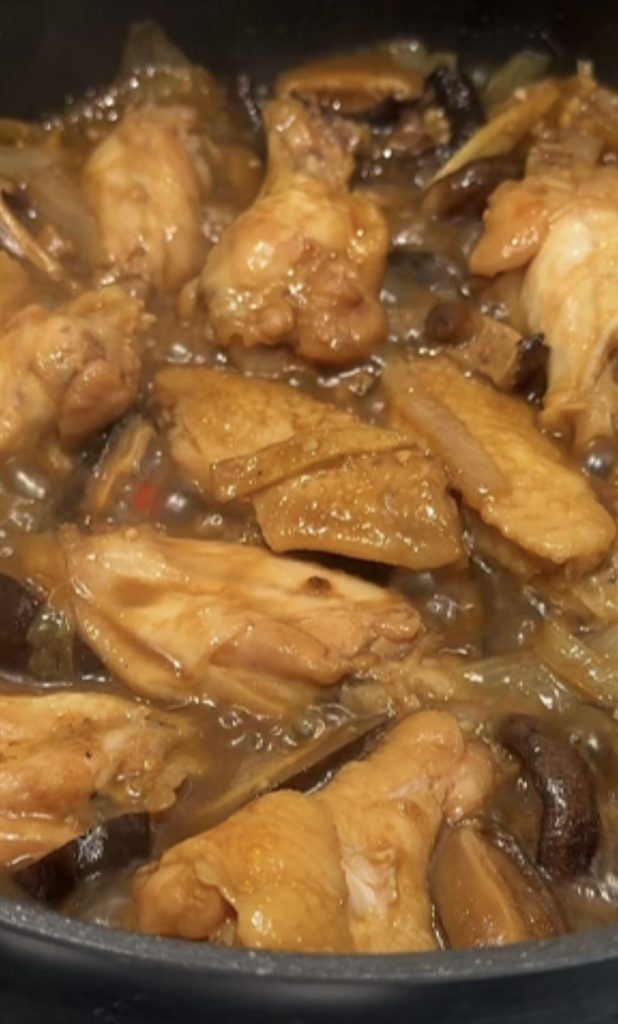
Step 5: Add Shiitake Mushrooms
If you’re using shiitake mushrooms, add them during the last 5–10 minutes of cooking.
Stir gently so the mushrooms become coated in the sauce.
They’ll soften and absorb the savory braising liquid.
If you’re skipping the mushrooms, simply continue simmering the chicken.
The chicken should reach an internal temperature of at least 165°F.
Step 6: Reduce and Adjust the Sauce
Remove the lid and let the sauce simmer for another few minutes if needed.
The sauce should be glossy, concentrated, and thick enough to cling lightly to the chicken.
Taste and adjust the seasoning.
If it needs more saltiness, add a small splash of fish sauce.
If it’s too salty, add a little water.
If you prefer it sweeter, add a small pinch of sugar.
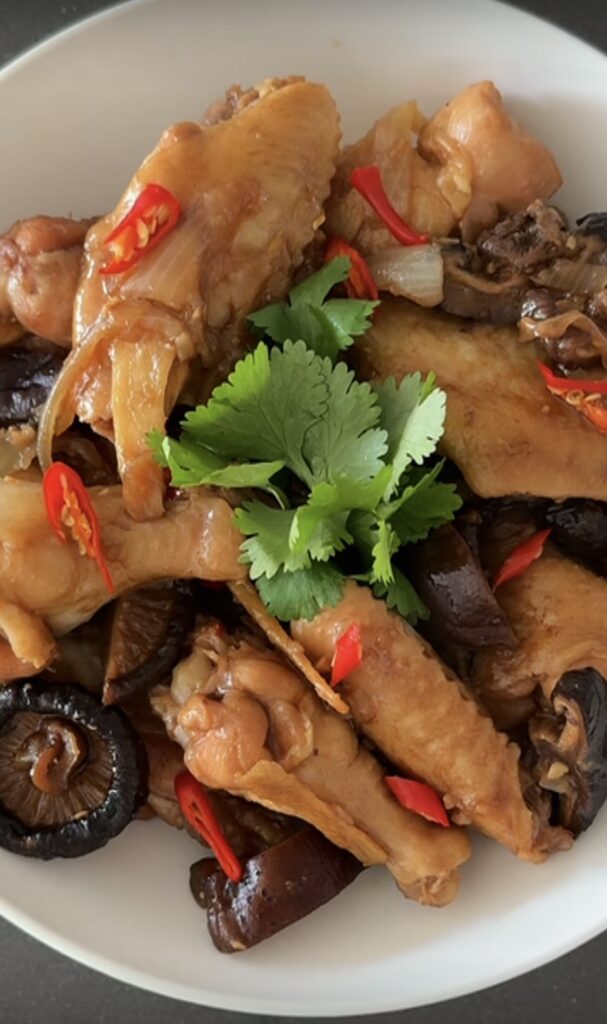
The finished sauce should be savory, slightly sweet, and full of ginger flavor.

Step 7: Garnish and Serve
Turn off the heat and garnish with chopped green onions, extra black pepper, and sliced Thai chilies if desired.
Serve immediately with hot jasmine rice.
And don’t forget to spoon some of that sauce over the rice.
That’s the best part.
Can You Add Vegetables to Gà Kho Gừng?
Absolutely.
While traditional gà kho gừng is primarily focused on chicken and ginger, I love adding vegetables depending on what I have available.
It’s one of those dishes that’s easy to adapt without changing the overall flavor too much.
My two favorite additions are shiitake mushrooms and bamboo shoots.
I actually discovered the mushroom combination at a Vietnamese restaurant and loved how the mushrooms absorbed the sauce.
They add a savory, earthy flavor that pairs beautifully with ginger.
Bamboo shoots are another favorite of mine.
They have a mild flavor and slightly crunchy texture that contrasts nicely with the tender chicken.
I didn’t use bamboo shoots when filming this recipe, but they’re definitely worth trying.
If you’re using canned bamboo shoots, drain and rinse them before adding them during the final 5–10 minutes of cooking.
You can also experiment with other vegetables, although I recommend choosing ones that hold up well during braising.
The important thing is not adding too many vegetables at once, since they can release water and dilute the sauce.
And of course, you can keep the dish simple with just chicken and ginger.
That’s delicious too.
Coconut Water vs. Regular Water
One of the questions I often get about Vietnamese braised dishes is whether coconut water is necessary.
The short answer is no.
Coconut water is commonly used in Vietnamese cooking because it adds natural sweetness and helps balance savory ingredients.
It works especially well in kho dishes because the liquid gradually reduces as the meat cooks.
But regular water works perfectly fine.
Since this recipe already includes sugar, fish sauce, oyster sauce, and dark soy sauce, there’s plenty of flavor in the marinade.
If you’re using water, simply taste the sauce toward the end and adjust as needed.
I wouldn’t go out of my way to buy coconut water just for this recipe if I already had everything else at home.
That’s kind of the whole point of lazy girl cooking.
Use what you have.
What to Serve With Gà Kho Gừng
Gà kho gừng is traditionally served with steamed white rice.
And personally, I don’t think it needs much else.
The chicken is flavorful enough on its own, and the rice helps balance the concentrated sauce.
But if you’re putting together a Vietnamese family-style meal, I love pairing it with a simple vegetable soup or sautéed greens.
Some of my favorite pairings include:
- Steamed jasmine rice
- Canh bí đỏ (Vietnamese pumpkin soup)
- Canh cải (Vietnamese mustard green soup)
- Sautéed bok choy
- Steamed cabbage
- Fresh cucumber slices
I especially like having a lighter soup alongside a savory braised dish.
Growing up, that was a pretty typical Vietnamese meal in our household.
A pot of rice, a savory protein, vegetables, and sometimes soup.
Nothing overly complicated, but everything worked together.
Tips for the Best Vietnamese Ginger Chicken
Use Bone-In Chicken
Bone-in chicken adds flavor to the sauce and holds up well during braising.
Chicken thighs and wings are my favorite cuts.
Don’t Skip the Marinade
Since we’re skipping traditional caramelization, the marinade is especially important.
Let the chicken sit for at least 30 minutes before cooking.
Divide the Aromatics
Adding half the ginger, garlic, and shallots to the marinade and sautéing the other half creates a more layered flavor.
Use Dark Soy Sauce Sparingly
Dark soy sauce is mainly here for color.
Adding too much can make the sauce overly dark and change the flavor.
Keep the Heat Moderate
Because the marinade contains sugar, avoid cooking the chicken over excessively high heat.
Medium heat is enough to develop color without burning the sauce.
Don’t Add Too Much Liquid
Gà kho gừng is a braised dish, not a soup.
Start with ½ cup of liquid and add more only if necessary.
Let the Sauce Reduce
If the sauce is still watery after the chicken is cooked, remove the lid and simmer for a few additional minutes.
There’s no need to add cornstarch.
The sauce should reduce naturally.

Frequently Asked Questions
Is Gà Kho Gừng Spicy?
Not necessarily.
Ginger has a naturally warm, peppery flavor, but the dish doesn’t have to be spicy.
If you prefer heat, add sliced Thai chilies during cooking or as a garnish.
Can I Use Boneless Chicken Thighs?
Yes.
Boneless chicken thighs work well, although they may cook faster than bone-in pieces.
Adjust the cooking time accordingly.
Can I Make This Without Oyster Sauce?
Yes.
Oyster sauce adds extra savory depth, but you can leave it out.
Taste the sauce toward the end and adjust the fish sauce if necessary.
Can I Use Regular Soy Sauce Instead of Dark Soy Sauce?
You can, but the finished chicken won’t have the same deep brown color.
Dark soy sauce is specifically used here as a shortcut for the traditional caramel coloring.
Regular soy sauce also tends to be saltier, depending on the brand.
Is This Traditional Gà Kho Gừng?
This is my simplified version of a traditional Vietnamese dish.
Traditional recipes often use caramelized sugar to develop color and flavor.
My version replaces that step with dark soy sauce while keeping the familiar ginger, fish sauce, and sweet-savory flavor profile.
Can I Make This Ahead of Time?
Absolutely.
Gà kho gừng is great for meal prep because the flavors continue to develop as the chicken sits in the sauce.
Store leftovers in an airtight container in the refrigerator for 3–4 days.
Reheat gently on the stovetop with a splash of water if necessary.
Can I Freeze Gà Kho Gừng?
Yes.
Let the chicken cool, then transfer it to a freezer-safe container with the sauce.
Freeze for up to 2–3 months for best quality.
Thaw overnight in the refrigerator before reheating.
A Little Reminder That Cooking Doesn’t Have to Be Complicated
I think one of the things I’ve learned from cooking Vietnamese food over the years is that there’s room for both tradition and practicality.
I love learning traditional techniques, and I appreciate the time and effort that goes into them.
But I also think it’s okay to adapt recipes to fit your lifestyle.
My grandmother made incredible gà kho gừng, and I’ll always associate this dish with her.
But my version doesn’t have to be an exact replica of hers to be meaningful.
It’s still made with the same familiar ingredients, the same ginger-forward flavors, and the same idea of bringing a comforting meal to the table.
The only difference is that I’m skipping a step that’s given me trouble for years.
And if that means I can make gà kho gừng more often, I consider that a win.
Because at the end of the day, I want my recipes to be approachable.
I want people to feel comfortable making Vietnamese food at home, even if they’re new to cooking or don’t have every ingredient.
Sometimes that means making things from scratch.
And sometimes it means using a little dark soy sauce instead of caramelizing sugar.
Both have their place.

Lazy Girl Gà Kho Gừng (Easy Vietnamese Ginger Chicken)
Course: Chicken, Recipes4
servings15
minutes30
minutesIngredients
- Chicken & Marinade
1 lb chicken thighs or wings, cut into pieces
3 tbsp fish sauce
2 tbsp sugar
1 tbsp dark soy sauce
1 tbsp oyster sauce
1 tsp chicken bouillon
¾ tsp black pepper
1 shallot, minced, divided
3 garlic cloves, minced, divided
2-inch ginger, julienned, divided
- For Cooking
2 tbsp cooking oil
½ cup coconut water or water
½ cup shiitake mushrooms (optional)
- Garnish
Green onions
Black pepper
Thai chilies (optional)
Directions
- Marinate: Combine chicken, fish sauce, sugar, dark soy sauce, oyster sauce, bouillon, and pepper with half the ginger, garlic, and shallots. Refrigerate at least 30 minutes.
- Sauté: Heat oil in a pan over medium heat. Add remaining aromatics and cook 1–2 minutes until fragrant.
- Sear: Add chicken and sear 3–4 minutes per side until lightly browned.
- Braise: Add coconut water or water and remaining marinade. Partially cover and simmer for approximately 30 minutes, until cooked through.
Add mushrooms: Stir in optional shiitake mushrooms during the last 5–10 minutes. - Finish: Simmer uncovered until the sauce reduces and coats the chicken. Adjust seasoning and garnish with green onions, black pepper, and chilies.
Recipe Video
Notes
- Shiitake mushrooms are optional. Bamboo shoots are another favorite addition, although they aren’t included in this version. For a sweeter sauce, use coconut water instead of regular water.