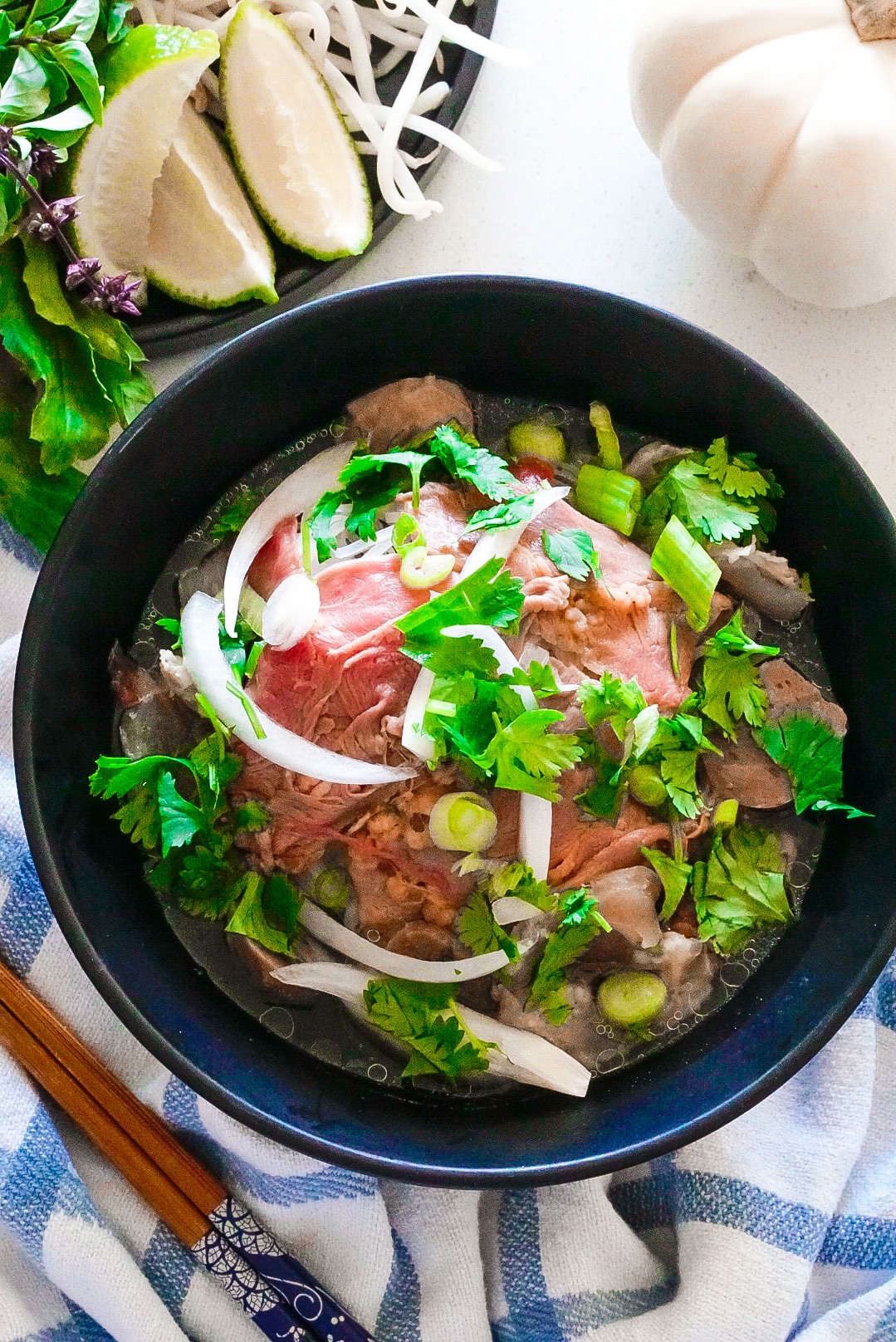
if there’s only one Vietnamese dish you need to try, it’s this one.
Servings: 6–8
Prep Time: 30 minutes
Cook Time: 4–5 hours
Total Time: ~5 hours
Introduction
There are certain dishes that feel bigger than food.
For Vietnamese people, phở bò is one of them.
It’s not just soup. It’s memory, routine, smell, sound. It’s the smell of charred onion and spices clinging to your clothes after hours of simmering broth. It’s the kind of meal that asks you to slow down a little.
Growing up, phở always felt special in our house because it took time. This wasn’t a quick weeknight meal. This was a “the stock has been simmering all day” kind of meal. Bones bubbling on the stove, herbs soaking in water, someone checking the broth every hour like it was a living thing.
And honestly? That’s still what I love about it.
This version of phở bò is somewhere between traditional and practical home cooking. I’m using:
- beef bones,
- tripe,
- sliced beef,
- beef meatballs,
- and a mix of shortcuts that genuinely work.
Because here’s the thing: I’m not interested in pretending every home cook has unlimited time or access to restaurant-level techniques. Vietnamese home cooking has always adapted. People use what works.
So yes — I used Quốc Việt phở bò soup base.
And honestly? It’s solid.
But I also added:
- an extra Phở Hòa spice bag for more depth,
- and daikon into the broth, which quietly makes the stock sweeter and cleaner tasting.
The result is a broth that still tastes rich, aromatic, and deeply comforting — without pretending you spent three days building it from scratch.
Quiet shortcuts. Thoughtful additions. Same soul.

What Is Phở Bò?
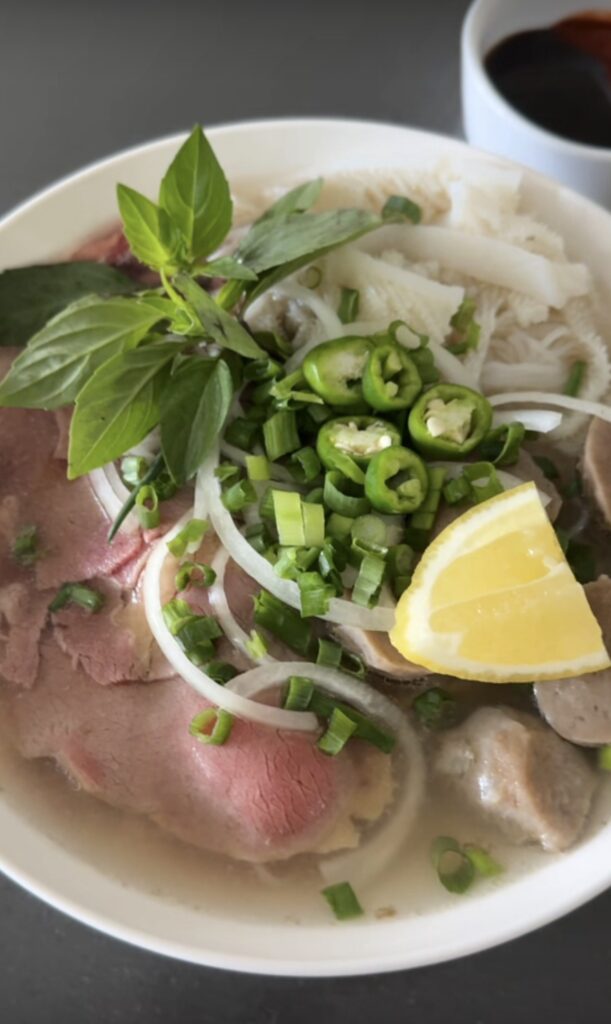
Phở bò is Vietnamese beef noodle soup made with:
- slow-simmered beef broth,
- rice noodles,
- herbs,
- and thinly sliced beef.
The word:
- phở refers to the rice noodles,
- while bò means beef.
At its core, phở is all about balance:
- rich but clean broth,
- warm spices without heaviness,
- freshness from herbs,
- depth from bones and time.
Good phở doesn’t feel loud.
It feels clear, layered, and comforting.
A Little History Behind Phở
Phở originated in Northern Vietnam in the early 1900s, likely influenced by both:
- Chinese noodle traditions,
- and French colonial cooking techniques.
Many historians believe the long-simmered beef bones were inspired by French beef consumption during colonial rule, while the noodle soup structure came from Chinese influence.
Over time, phở evolved into something entirely Vietnamese.
Northern-style phở tends to be:
- cleaner,
- simpler,
- more restrained.
Southern-style phở (the version many Vietnamese-Americans grew up with) became:
- sweeter,
- heavier on herbs,
- more customizable,
- served with bean sprouts, hoisin, and sriracha.
As Vietnamese families immigrated abroad, phở adapted again — because ingredients, schedules, and life looked different. That’s why home phở often becomes a blend of:
- traditional techniques,
- practical shortcuts,
- and family habits.
Which honestly feels very Vietnamese to me.
Why I Add Daikon to the Broth
Daikon is one of those quiet ingredients that doesn’t get enough credit.
When simmered in stock, it adds:
- sweetness,
- clarity,
- and softness to the broth.
It rounds out the richness of the beef bones without making the broth heavy. It’s subtle, but you notice it when it’s there.
A lot of Vietnamese home cooks do this naturally — tossing extra vegetables into broth because they know it creates balance.
Why Soup Bases Exist in Vietnamese Home Cooking
There’s this weird pressure online sometimes that everything has to be fully from scratch to be “real.” But honestly? Vietnamese home cooking has always been practical.
Soup bases like Quốc Việt exist because:
- they save time,
- they create consistency,
- and busy families still want phở on a weekday.
The important thing is how you build around it.
Adding:
- real bones,
- extra aromatics,
- spices,
- and slow simmering
still creates a deeply flavorful broth.
This isn’t about shortcuts replacing craft.
It’s about using tools intentionally.
Ingredients (Serves 6–8)
For the Broth
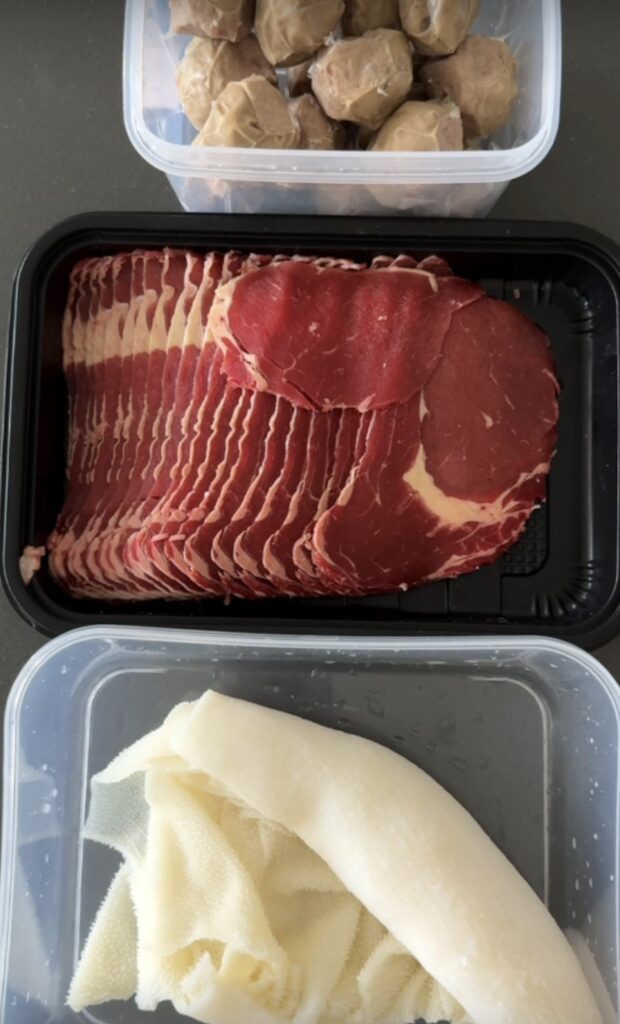
- 4–5 lb beef bones (marrow + knuckle preferred)
- 1 lb tripe, cleaned
- 1 daikon, peeled & cut into chunks
- 1 small onion, halved
- 1 knob ginger, halved
- 2-3 tbsp Quốc Việt Phở Bò Soup Base
- 1 Phở Hòa spice bag
- 1–2 pieces rock sugar (adjust to taste)
- 1–2 tsp chicken bouillon
- 1–2 tbsp fish sauce (to taste)
- 14–16 cups water
For Serving
- Rice noodles (bánh phở)
- Thinly sliced beef
- Beef meatballs
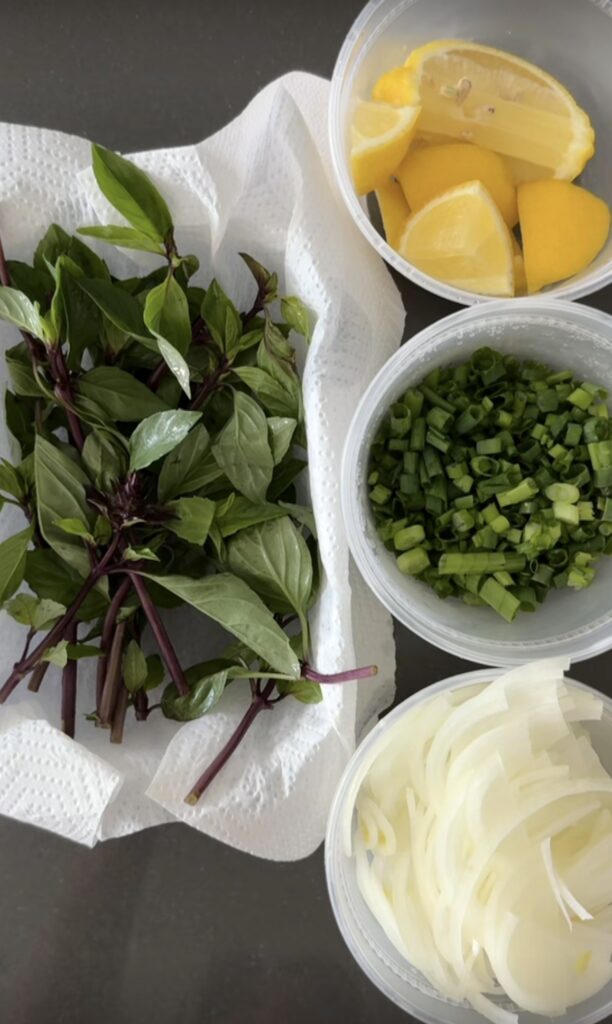
- Green onions
- Cilantro
- White onion slices
Optional Garnishes
- Bean sprouts
- Thai basil
- Lime
- Jalapeños
- Hoisin sauce
- Sriracha
Step-by-Step Instructions
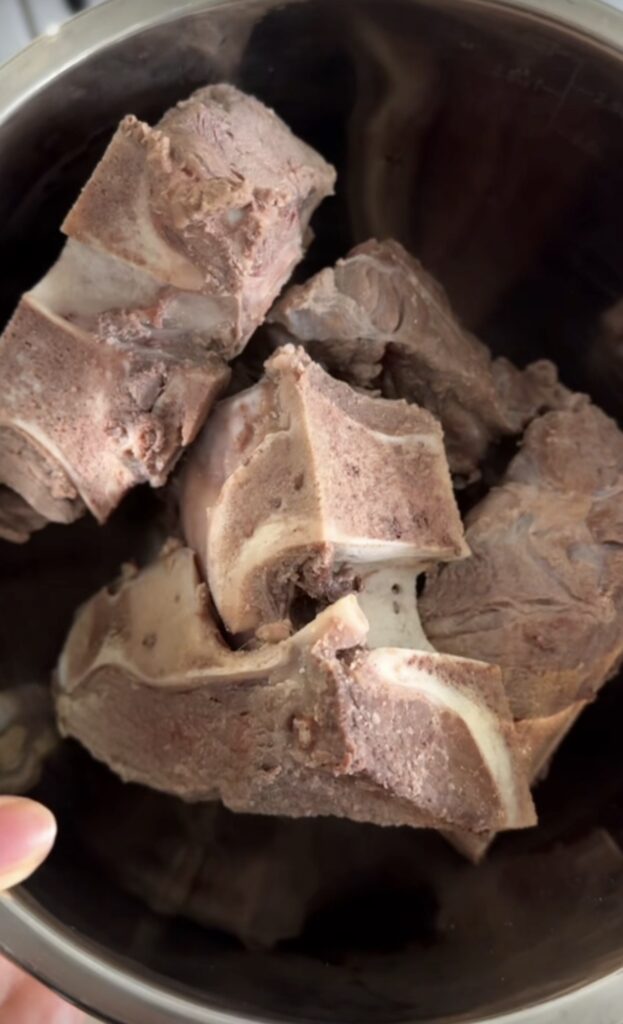
1. Blanch the Bones
Bring a large pot of water to a boil.
Add beef bones and boil for about 10 minutes to remove impurities.
Drain and rinse the bones thoroughly.
This step helps create a cleaner broth.
2. Char the Aromatics
Char:
- onion
- ginger
directly over a flame or in a dry pan until lightly blackened.
This adds depth and that signature phở aroma.
3. Build the Broth
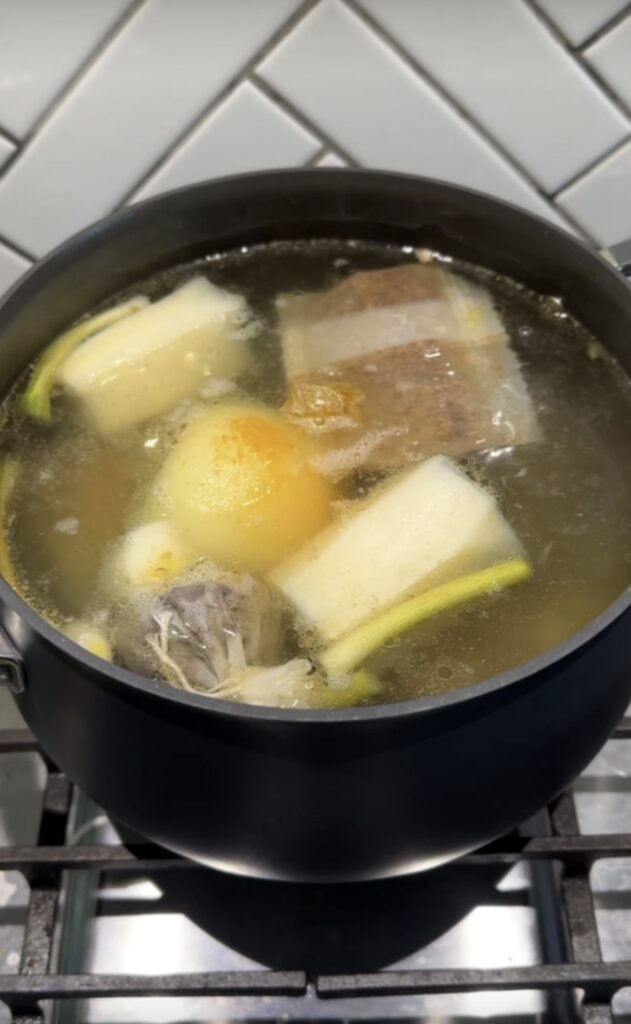
In a large stock pot, add:
- cleaned bones
- daikon
- charred onion
- charred ginger
- spice bag
- water
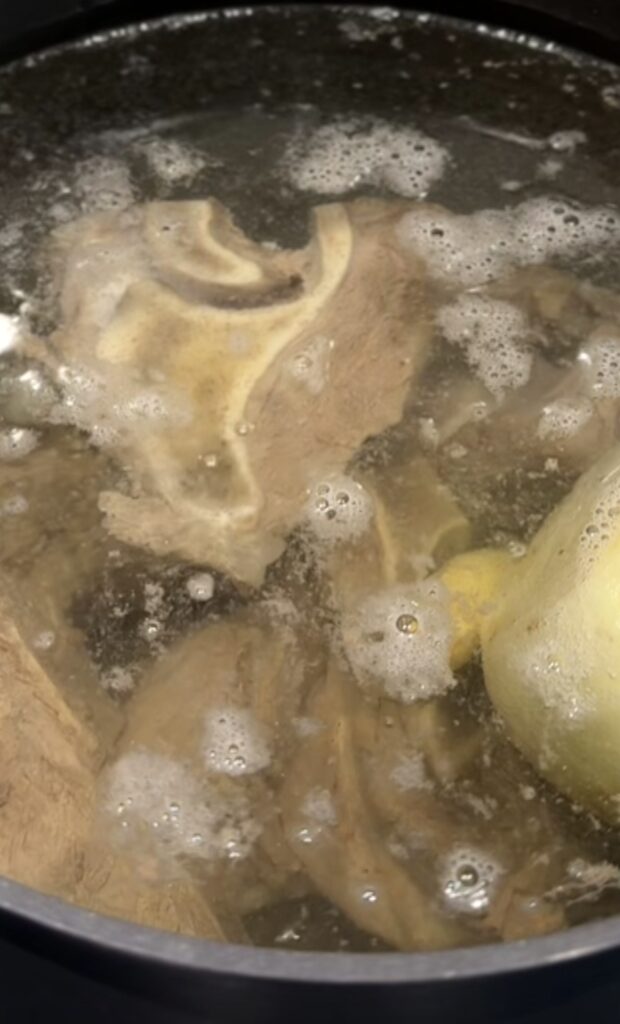
Bring to a boil, then lower to a gentle simmer.
Skim foam occasionally.
Simmer for 3–4 hours.
4. Add Seasonings
After the broth has simmered for several hours, I add:
- the Quốc Việt phở bò soup base,
- a little rock sugar,
- chicken bouillon,
- and fish sauce.
This combination creates a broth that tastes layered and complete — savory, aromatic, slightly sweet, and deeply comforting.
The goal isn’t to make the broth heavy. Good phở should still feel clean and balanced, even when it’s rich.
5. Cook the Tripe
Add tripe during the last 1–1½ hours of simmering until tender.
Slice thinly before serving.
6. Prepare the Noodles & Meatballs
Cook rice noodles according to package instructions.
Warm the beef meatballs in broth and slice if desired.
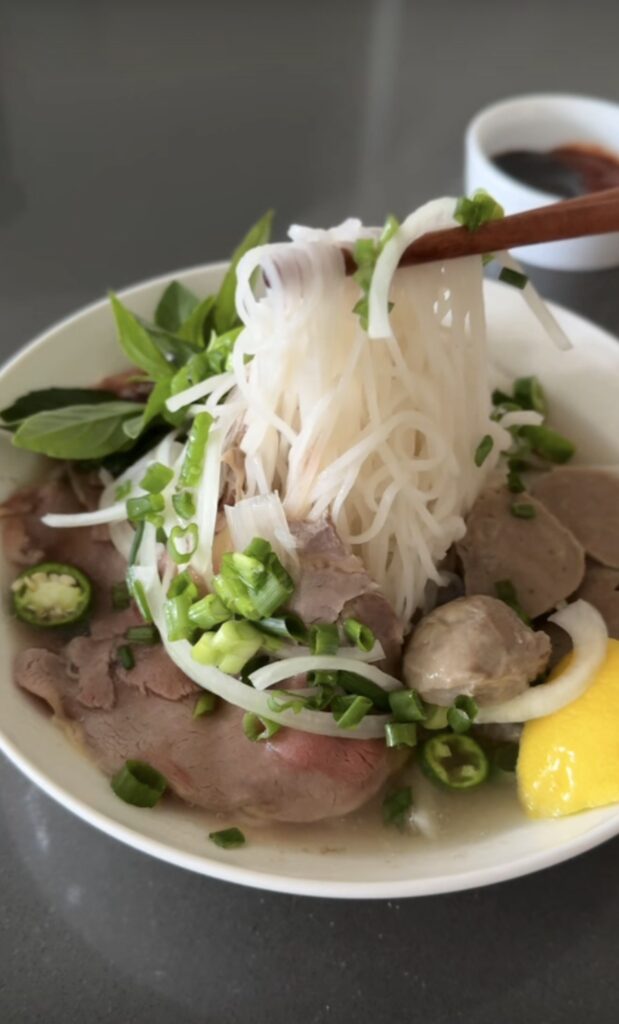
7. Assemble the Bowls
Add noodles to a bowl.
Top with:
- sliced beef
- tripe
- meatballs
- green onions
- onions
- cilantro
Ladle the boiling broth over everything.
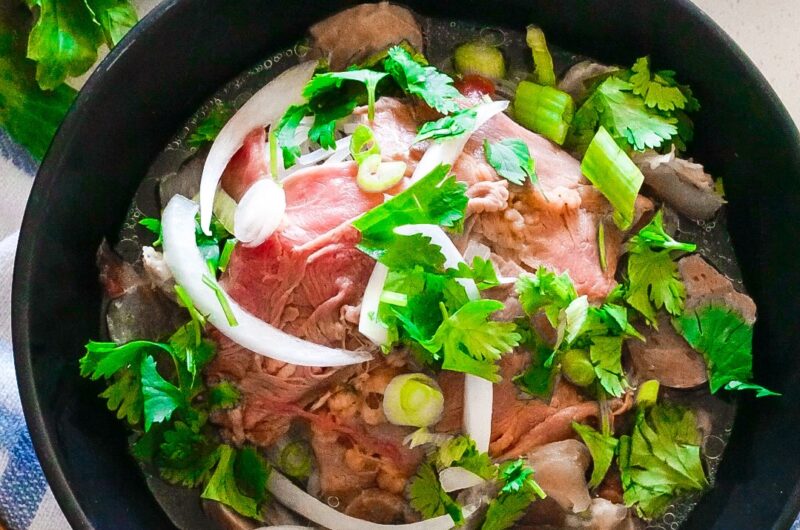
The hot broth will cook the sliced beef gently.
The Quiet Ritual of Building a Bowl
One of my favorite things about phở is that everyone finishes it differently.
Some people add:
- lots of herbs,
- lots of lime,
- extra chili.
Others keep it simple and barely touch the broth.
There’s no single “correct” bowl.
That’s part of what makes phở feel personal.
Why Phở Feels So Comforting
Phở is warm without being heavy.
Rich without feeling overwhelming.
A good bowl feels restorative in a way that’s hard to explain unless you grew up with it.
It’s:
- slow food,
- but also everyday food.
And I think that balance is part of why it’s endured for generations.
Tips for Better Home Phở
Don’t aggressively boil the broth
A gentle simmer keeps the broth cleaner.
Skim occasionally
This helps clarity and flavor.
Add herbs at the end
Freshness matters.
Use both bones and spice
One without the other feels incomplete.
Storage & Leftovers
Phở broth keeps beautifully.
- Fridge: 4–5 days
- Freezer: up to 3 months
Store noodles separately if possible.
The broth often tastes even better the next day.
Final Thoughts
Phở bò is one of those dishes that teaches patience without asking for perfection.
You build it slowly:
- bones,
- spices,
- aromatics,
- time.
And somewhere along the way, the kitchen starts smelling like home.
This version honors tradition while also embracing practicality — which honestly feels true to how many Vietnamese families cook now. A mix of old techniques and modern shortcuts, all working toward the same goal:
…a deeply comforting bowl of soup.

🍜 Phở Bò (Vietnamese Beef Noodle Soup)
Course: RecipesCuisine: Vietnamese, AsianDifficulty: Medium6-8
servings30
minutes5
minutesThis version of phở bò is somewhere between traditional and practical home cooking.
Ingredients
- Broth
4–5 lb beef bones (marrow + knuckle preferred)
1 lb tripe, cleaned
1 daikon, peeled & cut into chunks
1 small onion, halved
1 knob ginger, halved
2-3 tbsp Quốc Việt Phở Bò Soup Base
1 Phở Hòa spice bag
14–16 cups water
1–2 pieces rock sugar (adjust to taste)
1–2 tsp chicken bouillon
1–2 tbsp fish sauce (to taste)
- For Serving
Rice noodles (bánh phở)
Thinly sliced beef
Beef meatballs
Green onions
Cilantro
White onion slices
- Optional Garnishes
Bean sprouts
Thai basil
Lime
Jalapeños
Hoisin sauce
Sriracha
Directions
- Blanch the Bones
Boil beef bones for 10 minutes. Drain and rinse clean. - Char Aromatics
Char onion and ginger over an open flame or dry pan until lightly blackened. (You can also airfry them!) - Simmer the Broth
In a large pot, add bones, daikon, onion, ginger, spice bags, and water. Bring to a boil, then simmer gently for 3–4 hours, skimming occasionally. - Season the Broth
Add:
Quốc Việt phở soup base
rock sugar
chicken bouillon
fish sauce
Taste and adjust as needed. - Cook the Tripe
Boil tripe during the last 1–1½ hours of simmering until tender. Slice thinly. - Prep Noodles & Meatballs
Cook rice noodles according to package directions. Warm meatballs in broth. - Assemble
Add noodles to bowls. Top with sliced beef, tripe, meatballs, onions, green onions, and cilantro. Ladle boiling broth over the top.