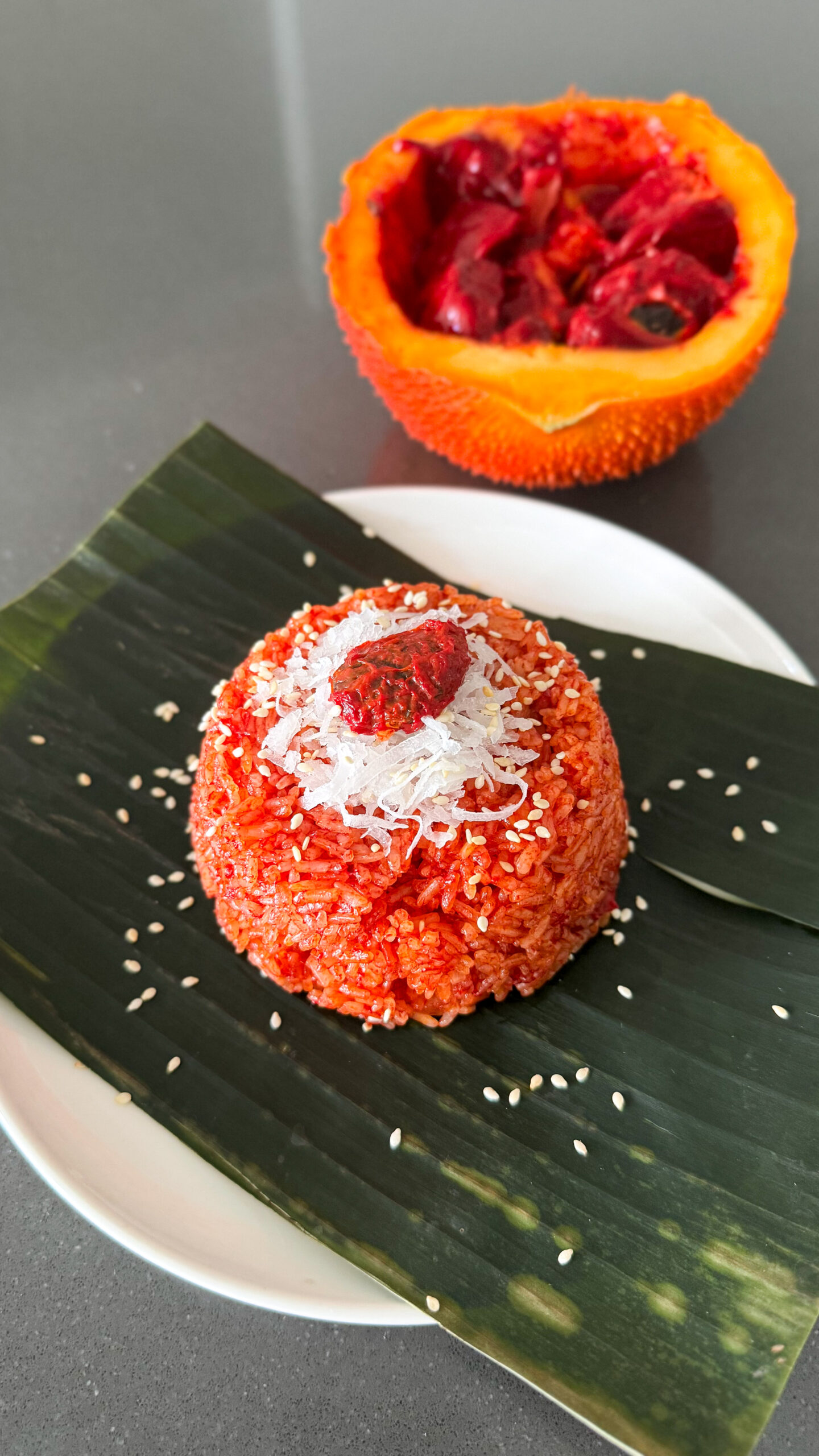
Why xôi gấc matters (and why I got excited seeing fresh gấc)
Some dishes whisper instead of shout. Xôi gấc is one of them.
It’s not an average sticky rice. It’s the sticky rice you see at Tết, weddings, and at Vietnamese markets and bakeries. The kind of dish that shows up when something important is happening, even if no one says it out loud.
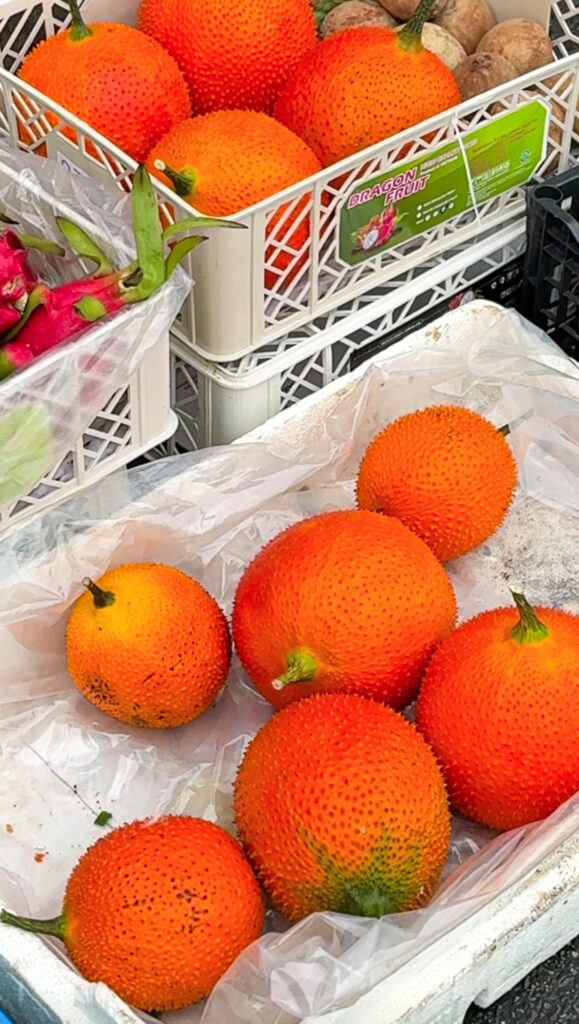
What makes it special isn’t just the color (though… yes, the color wins). It’s the fruit behind it: trái gấc — spiky on the outside, jewel-toned on the inside, and rarely sold fresh outside of Vietnam.
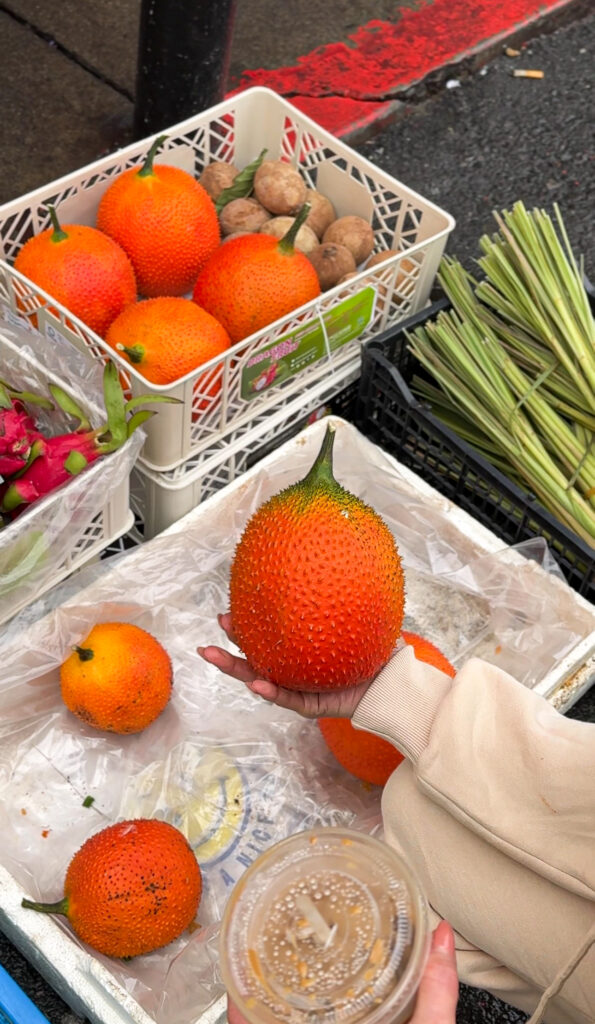
So when I came across fresh gấc being sold by aunties on the street in Westminster, it felt like one of those pay attention moments. No hesitation. We’re making xôi gấc.
And we’re making it the way that respects the ingredient — no shortcuts, no dye, no gimmicks. Just sticky rice, real gấc, and patience.
What is xôi gấc?
Xôi gấc is Vietnamese red sticky rice made by steaming glutinous rice that’s been mixed with the vibrant red arils of the gấc fruit. The rice takes on a naturally rich red-orange hue, a subtle nutty aroma, and a gentle sweetness.
It’s traditionally:
- Served during Tết (Lunar New Year)
- Paired with weddings and celebratory events
- Associated with luck, prosperity, and happiness (red matters)
Despite its significance, the ingredient list is refreshingly minimal. This is craft food, not complicated food.
A little history
Gấc has been used in Vietnamese cooking for generations — not just for color, but for meaning. Red symbolizes joy, longevity, and good fortune, which is why xôi gấc appears during moments when people are wishing well for the future.
Historically, gấc wasn’t something you could just grab anytime. It’s seasonal. It’s regional. And even today, most people outside Vietnam have only experienced xôi gấc made with frozen pulp or extract — if at all.
Fresh gấc is different.
The aroma is warmer. The color is deeper. The process is tactile — you massage the fruit, release the pigment, work it into the rice by hand. It slows you down in a good way.
This is food that asks you to be present.
Ingredient spotlight: Trái gấc
Let’s talk about the fruit for a second.
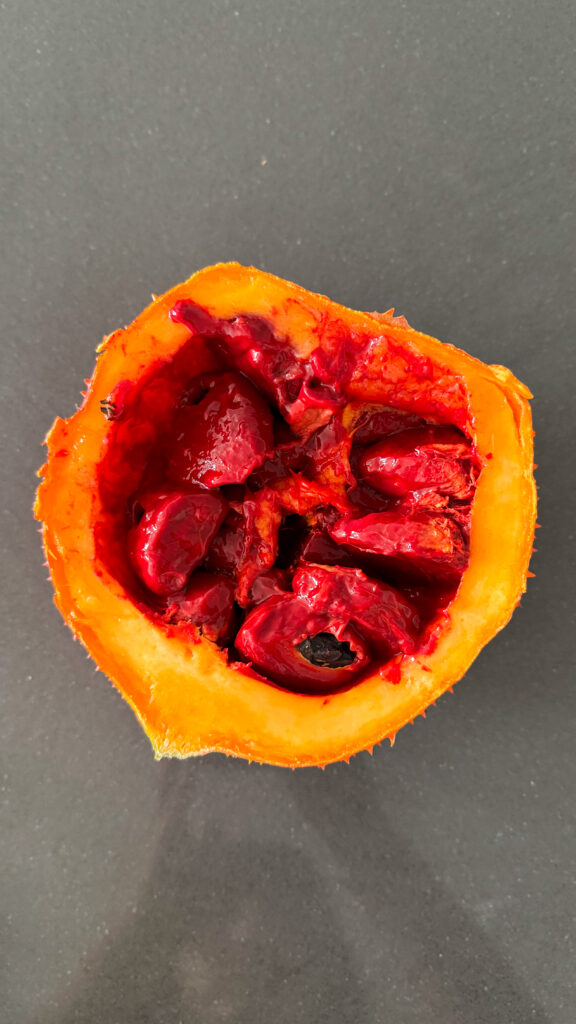
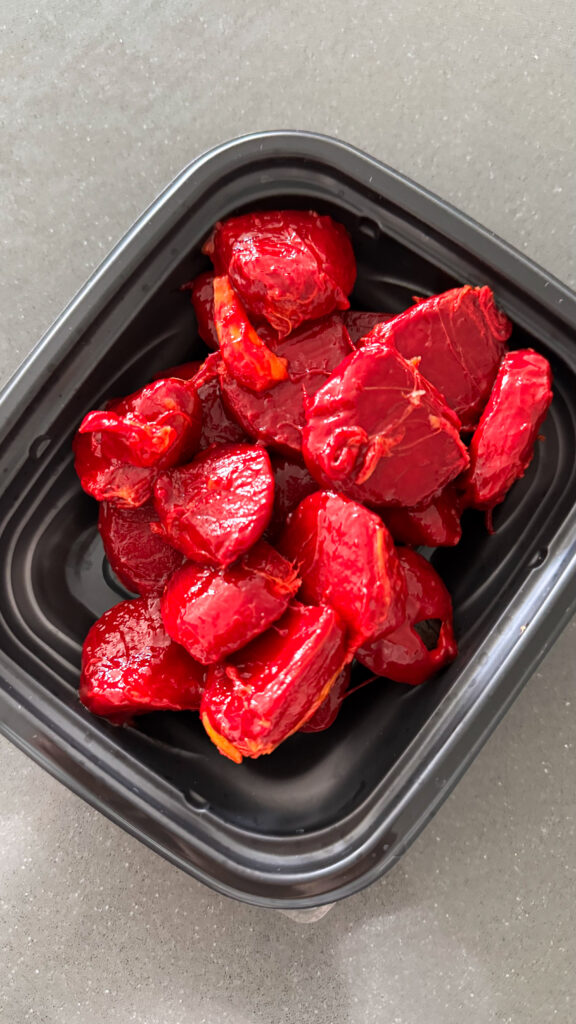
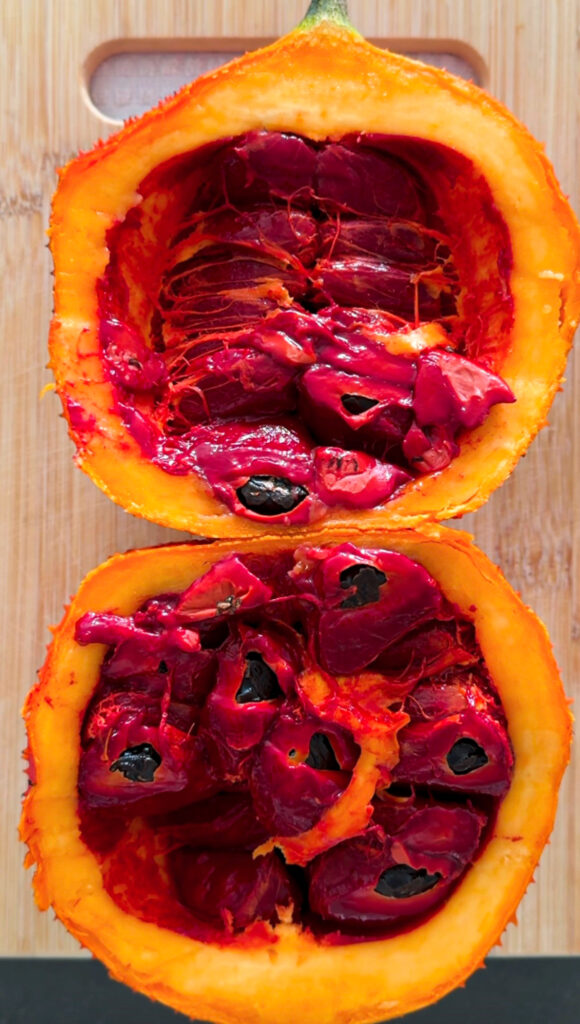
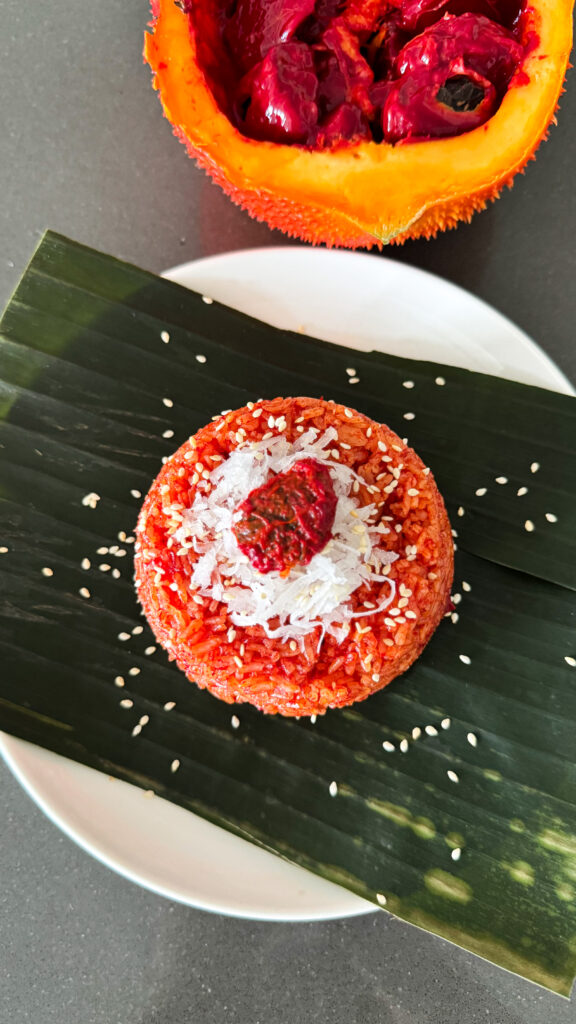
Trái gấc looks intimidating. Spiky shell. Thick rind. Inside? Bright red arils clinging to large seeds, almost unreal in color.
A few things to know:
- You only use the red flesh surrounding the seeds, not the seeds themselves
- The flavor is mild, slightly nutty, not fruity-sweet
- It stains everything (worth it)
- A single gấc goes a long way
For this recipe, we used half of one fresh gấc and froze the other half for later — which is exactly what I recommend if you’re lucky enough to find one.
Yield, timing & overview
Servings: 3–4
Prep time: 20 minutes (plus soaking time)
Soak time: 6 hours or overnight
Cook time: 30–35 minutes
Total active time: ~50 minutes
Ingredients
- 2 cups glutinous rice (sweet rice)
- ½ fresh trái gấc
- 1 tsp salt
- 2–3 tbsp sugar, to taste
- 2–3 tbsp coconut milk
Optional additions (very subtle):
- 1 tsp neutral oil or melted coconut oil (for gloss)
- A pinch of extra salt at the end to balance sweetness
Step-by-step: How to make xôi gấc with fresh gấc
1. Soak the rice (this is non-negotiable)
Rinse the glutinous rice until the water runs mostly clear. Then soak it in plenty of water for at least 6 hours or overnight.
This step ensures:
- Even cooking
- Proper stickiness
- No chalky center
Drain thoroughly before mixing. Excess water = mushy rice.
2. Prepare the gấc (wear gloves, trust me)
Cut the gấc in half using a sturdy knife. Scoop out the red arils and seeds from half of the fruit.
Place them in a bowl and add:
- 1 tsp salt
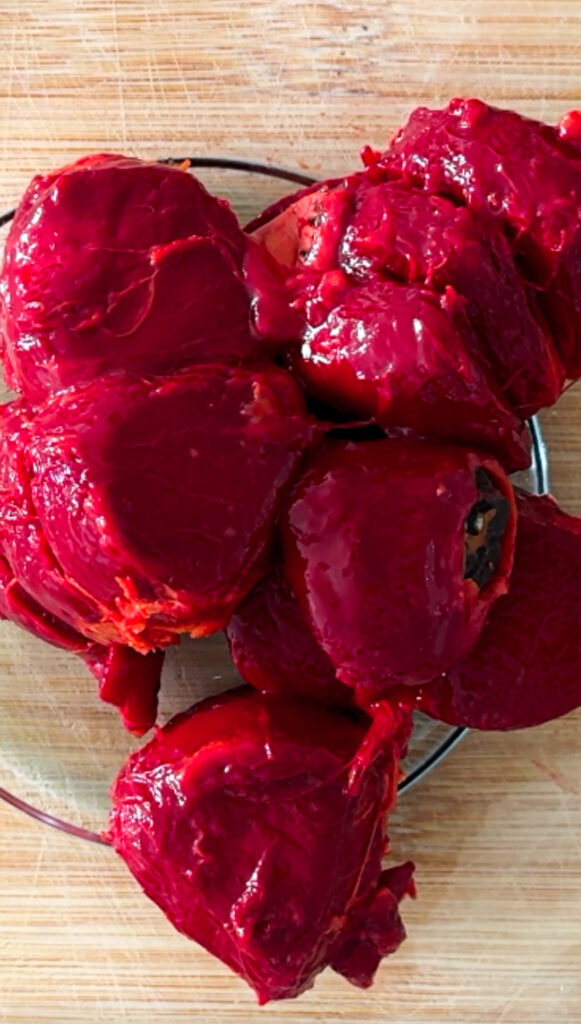
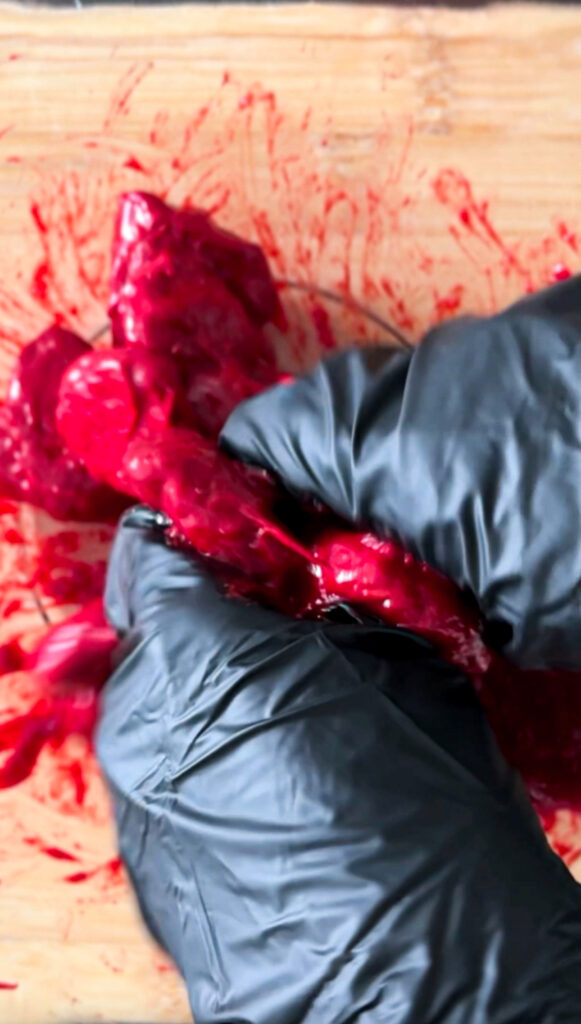
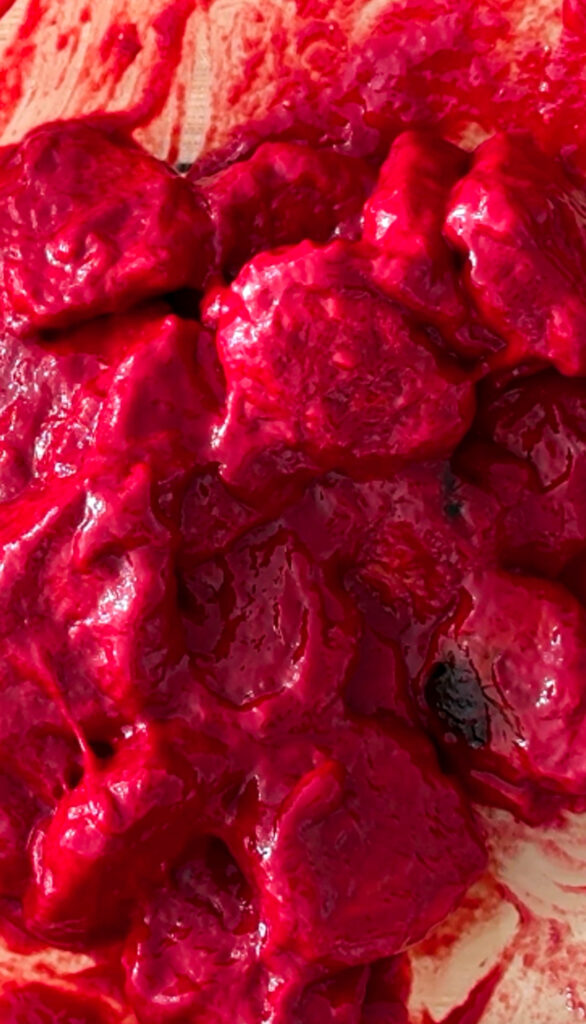
Using gloved hands or a spoon, massage the arils until the red flesh releases from the seeds. You’re not crushing the seeds — just loosening the coating.
This step is key. If the rice doesn’t turn evenly red later, it’s usually because the gấc wasn’t massaged enough.
3. Mix rice + gấc
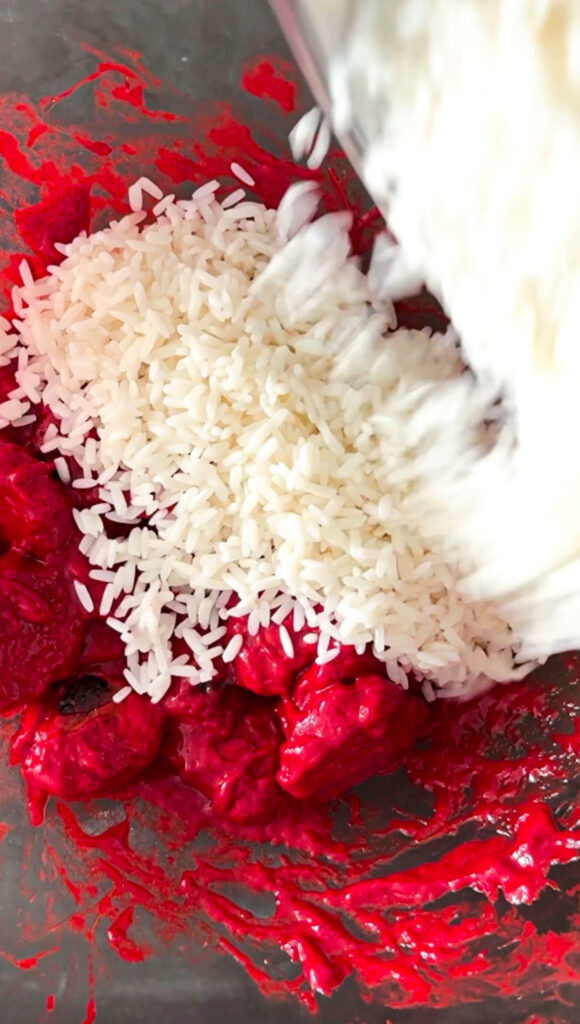
Add the drained rice to the bowl with the gấc mixture.
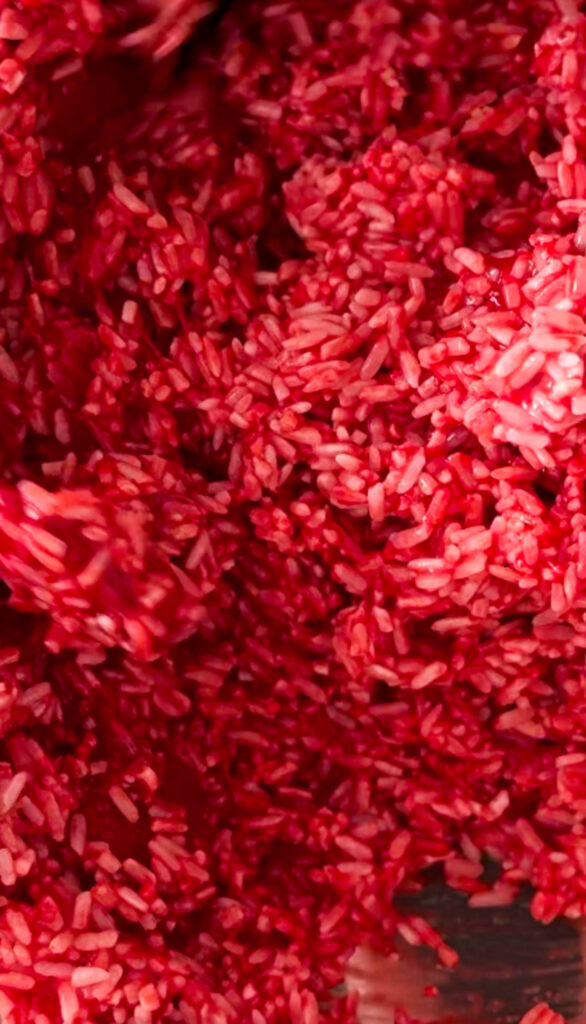
Use your hands to gently mix until:
- The rice is evenly coated
- No white grains remain
Add:
- Sugar
- Coconut milk (if using)
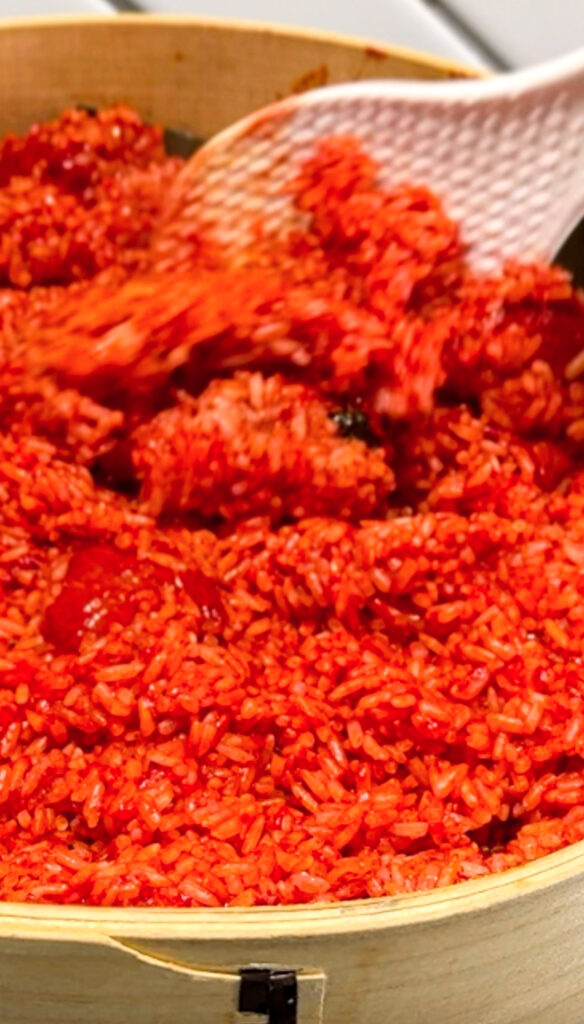
At this stage, the rice should look vibrantly red-orange and smell lightly nutty.
4. Steam the rice
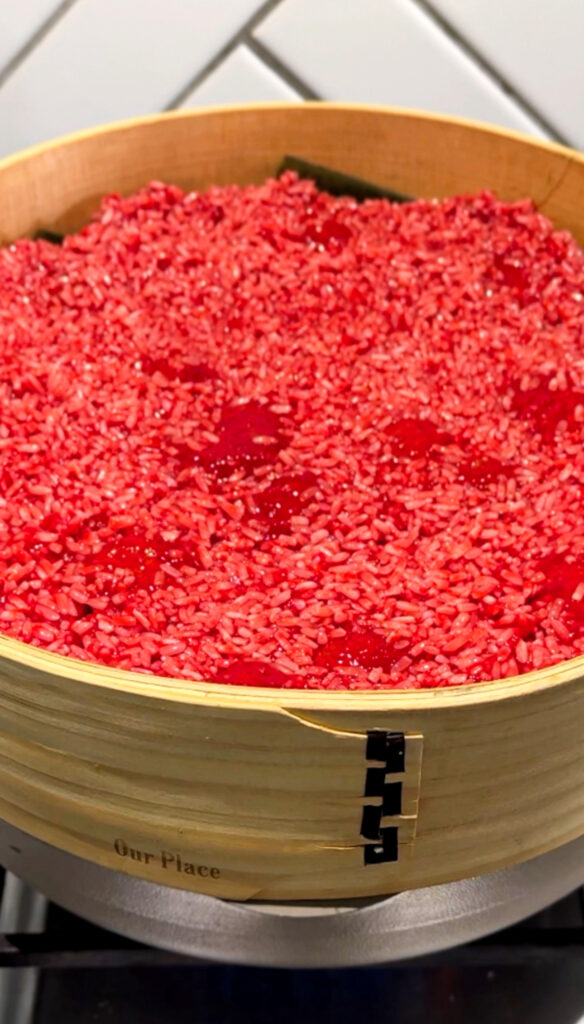
Transfer the rice to a steamer lined with cheesecloth or banana leaf (if you have it).
Steam over medium heat for 25–30 minutes.
Halfway through:
- Fluff the rice gently
- Sprinkle 1–2 tbsp water or coconut milk if it looks dry
Avoid overhandling — sticky rice likes a gentle touch.
5. Final steam + finish
Taste the rice. Adjust sugar or salt as needed.
Steam an additional 5 minutes, then fluff once more.
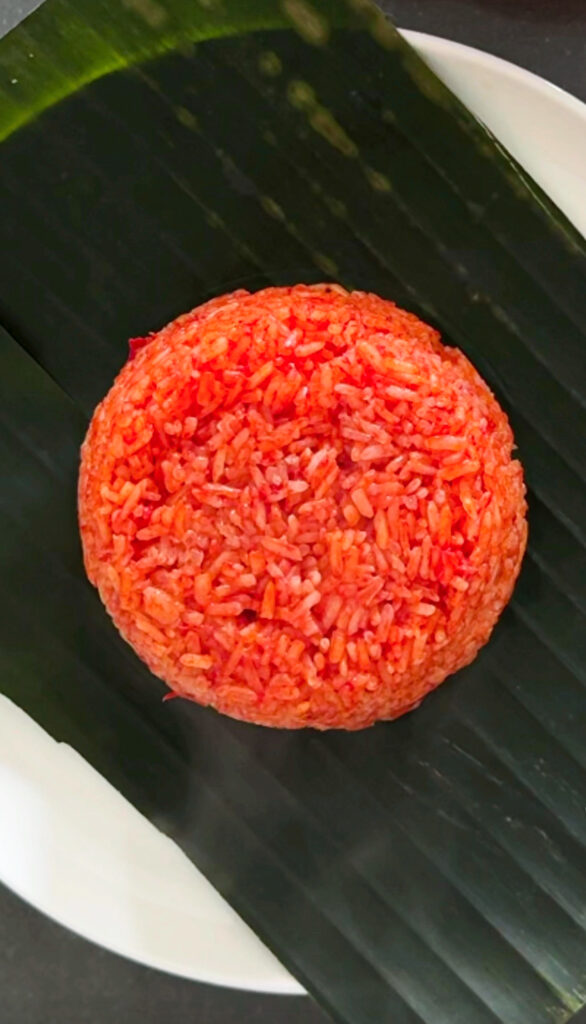
The finished xôi gấc should be:
- Tender
- Sticky but not wet
- Glossy
- Deep red-orange in color
How to serve xôi gấc
Traditionally, xôi gấc can be served simply — and honestly, that’s my favorite way.
But here are a few options:
- Plain, with hot tea
- With mung bean paste
- With Vietnamese pork floss (chà bông) for salty contrast
- Molded into domes or pressed into a pan and sliced
It’s understated food. Let it be that.
How to store & reheat
Best enjoyed same day, but leftovers can be saved.
- Store covered in the fridge for up to 2 days
- Reheat by:
- Steaming, or
- Microwaving with a damp paper towel
Dry heat will ruin it. Moisture is your friend here.
Freezing leftover gấc (what we did)
We used half a gấc for this recipe and froze the rest.
Here’s how:
- Scoop out the remaining arils
- Massage lightly with a pinch of salt
- Store in an airtight container or freezer bag
- Freeze up to 6 months
Thaw in the fridge before using. Perfect for your next batch of xôi gấc.
Common mistakes (and how to avoid them)
Pale color
→ The gấc wasn’t massaged enough
Mushy rice
→ Too much water or under-drained rice
Dry center
→ Rice not soaked long enough
Bland flavor
→ Needs a pinch more salt — sweetness alone isn’t the goal
Conclusion:
There’s something grounding about food that can’t be rushed. Xôi gấc asks for patience — soaking, steaming, waiting — and gives you back something steady and reassuring. No shortcuts, no spectacle. Just a bowl of sticky rice made the way it’s been made for generations. It’s enough. And sometimes, that’s the whole point.

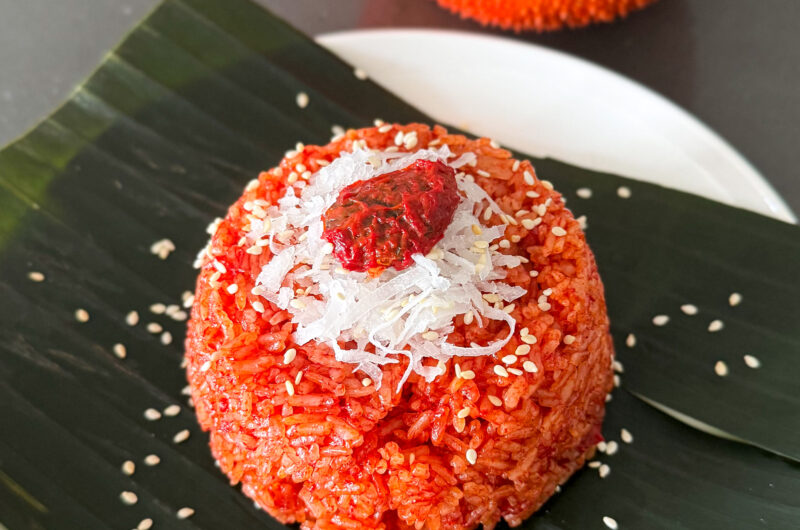
Xôi Gấc Recipe (Vietnamese Red Sticky Rice)
Course: dessert, SnacksCuisine: viet, vietnamese, asianDifficulty: Easy3-4
servings20
minutes30
minutesLearn how to make xôi gấc, Vietnamese red sticky rice, using fresh gấc fruit. A traditional recipe for Tết, weddings, and celebrations.
Ingredients
2 cups glutinous rice
½ fresh trái gấc
1 tsp salt
2–3 tbsp sugar (to taste)
2–3 tbsp coconut milk
Directions
- Rinse rice until mostly clear. Soak 6 hrs or overnight. Drain well.
- Cut gấc in half. Scoop out red arils + seeds. Massage with salt until red flesh releases.
- Mix gấc with rice until evenly red. Stir in sugar and coconut milk.
- Steam over medium heat 25–30 min, fluffing once halfway. Taste, adjust seasoning, steam 5 more min. Fluff and serve.