
If you grew up in a Vietnamese household, chances are you’ve had canh bí đỏ at least once in your life. It’s one of those simple, comforting Vietnamese soups that doesn’t get nearly enough attention, but somehow always finds its way onto the dinner table.
And honestly? I get why.
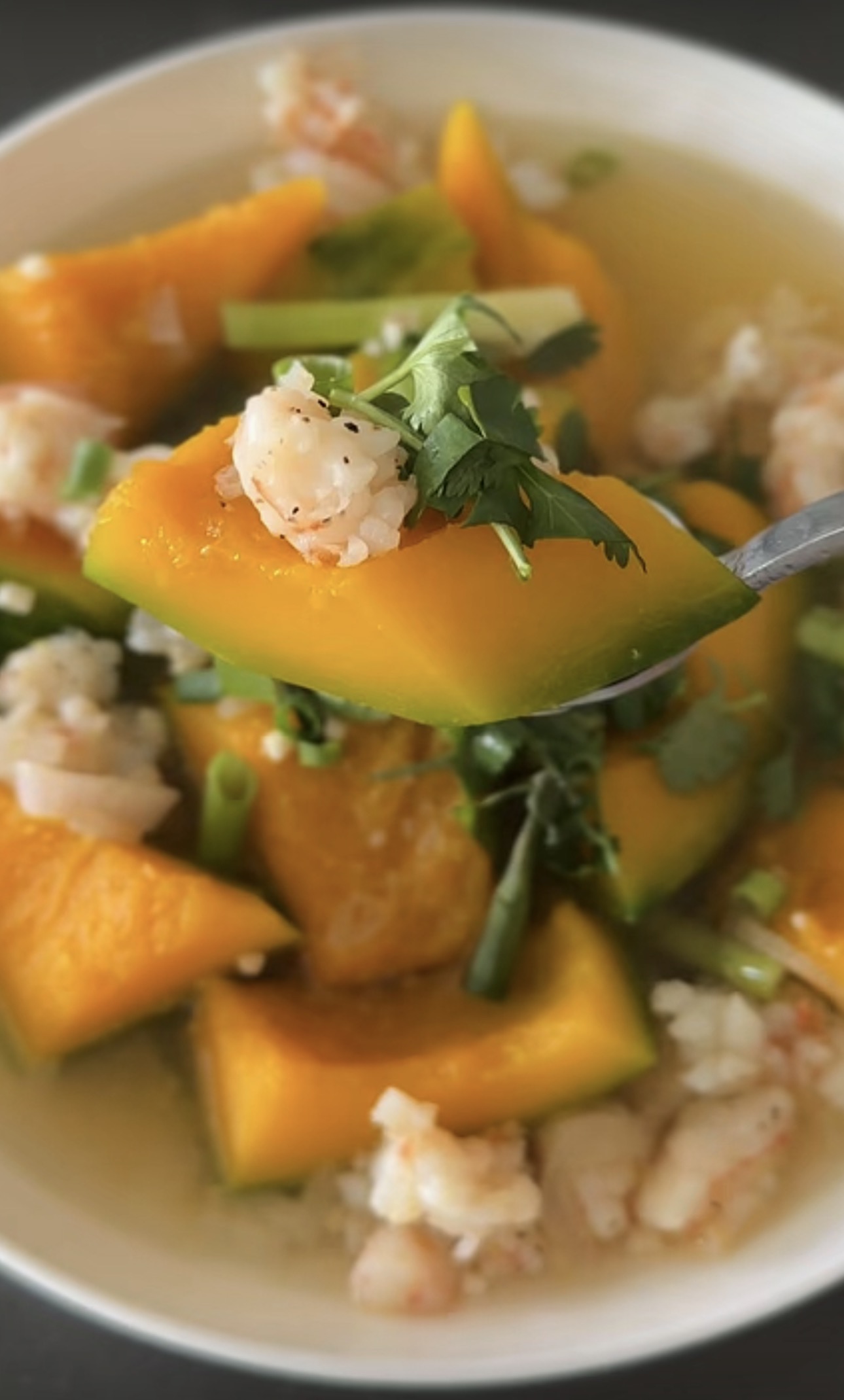
Canh bí đỏ, also known as Vietnamese pumpkin soup, is made with tender chunks of kabocha squash simmered in a light, savory broth. The squash naturally sweetens the soup as it cooks, making it incredibly flavorful without needing a ton of ingredients.
There are several ways to make this dish, including versions with pork bones, ground pork, or shrimp. Personally, I grew up eating canh bí đỏ nấu tôm, which is the shrimp version, so that’s how I’m making it today.
Growing up, this soup was usually served as a side dish alongside a savory Vietnamese main dish, steamed jasmine rice, and sometimes another vegetable dish. It’s not necessarily something we would eat as a complete meal on its own. Instead, it’s one of those soups that balances everything else on the table.
And now that we’re in kabocha squash season, there’s no better time to make it!
There’s just one thing about kabocha squash that drives me absolutely crazy.
THE SKIN.

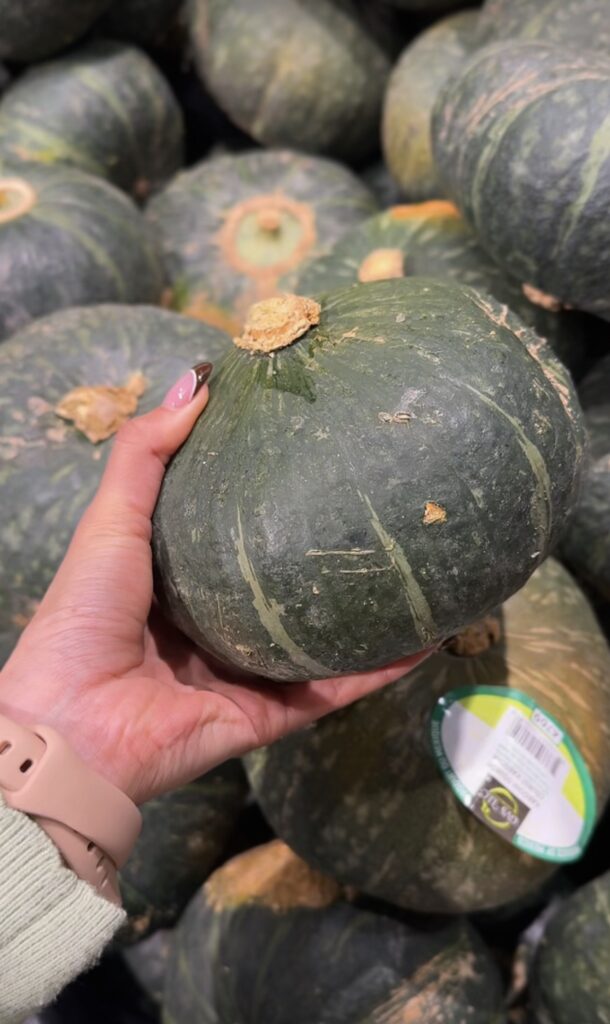
If you’ve ever tried peeling one of these things, you already know what I’m talking about. The skin is ridiculously tough, and trying to cut through a whole kabocha squash can feel like you’re fighting for your life in the kitchen.
Luckily, I’ve got a little trick that makes prepping it so much easier. All you need is a microwave and a few minutes.
So if you’ve been avoiding cooking with kabocha squash because you don’t want to wrestle with it, this recipe is for you.
What Is Canh Bí Đỏ?
Canh bí đỏ is a traditional Vietnamese squash soup commonly made with kabocha squash, water or broth, simple seasonings, and a protein such as pork or shrimp.
In Vietnamese, canh refers to a soup, while bí đỏ means pumpkin or orange-fleshed winter squash. Tôm means shrimp, so canh bí đỏ nấu tôm is essentially Vietnamese pumpkin soup cooked with shrimp.
Unlike thick and creamy Western pumpkin soups, Vietnamese canh bí đỏ has a much lighter broth.
There’s no heavy cream, milk, or blending involved. Instead, the squash is cut into chunks and simmered until tender, allowing its natural sweetness to flavor the broth.
The result is a delicious balance of sweet and savory flavors.
What I love most about this soup is how simple it is. You don’t need hours of simmering or a long list of ingredients to make something comforting.
It’s exactly the kind of dish I associate with everyday Vietnamese home cooking.
A Vietnamese Household Staple
One thing I love about Vietnamese food is that not every dish needs to be elaborate.
Of course, everyone knows about pho, bánh mì, and bún bò Huế. But there’s an entire world of Vietnamese home-cooked dishes that don’t always get the same attention.
And honestly, those are some of my favorites.
Growing up, dinner in our household usually consisted of several dishes served family-style. We’d have a savory protein, a vegetable dish, a bowl of soup, and plenty of steamed jasmine rice.
Canh bí đỏ was one of those soups that fit perfectly into that kind of meal.
It’s slightly sweet from the squash, savory from the shrimp and fish sauce, and light enough that it doesn’t overpower everything else.
If the main dish is particularly salty or rich, a spoonful of this soup helps balance everything out.
I especially love eating it with caramelized Vietnamese dishes like cá kho or thịt kho because the flavors complement each other so well.
While some Vietnamese families make this soup with pork bones or ground pork, my family made it with shrimp.
And because that’s what I grew up eating, it’s still my preferred version.
There’s something about the natural sweetness of the shrimp combined with the kabocha squash that makes this soup taste so comforting and familiar.

Why You’ll Love This Vietnamese Kabocha Squash Soup
There are plenty of reasons this recipe deserves a spot in your regular dinner rotation.
- Simple ingredients: You only need a handful of everyday Vietnamese pantry staples, including fish sauce, shallots, and a little chicken bouillon.
- Naturally sweet: Kabocha squash has a delicious natural sweetness that flavors the broth without requiring much added sugar.
- Light but flavorful: Unlike creamy pumpkin soups, this version has a light, savory broth that’s perfect with rice.
- Easy to prepare: The squash does most of the work once it’s simmering, and the shrimp cooks in just a few minutes.
- Perfect for family-style meals: This soup pairs beautifully with savory Vietnamese meat and seafood dishes.
- Great for squash season: It’s a delicious way to enjoy kabocha squash when it’s plentiful during the fall and winter months.
And did I mention my microwave trick? Because that alone makes this recipe worth saving.
What Is Kabocha Squash?
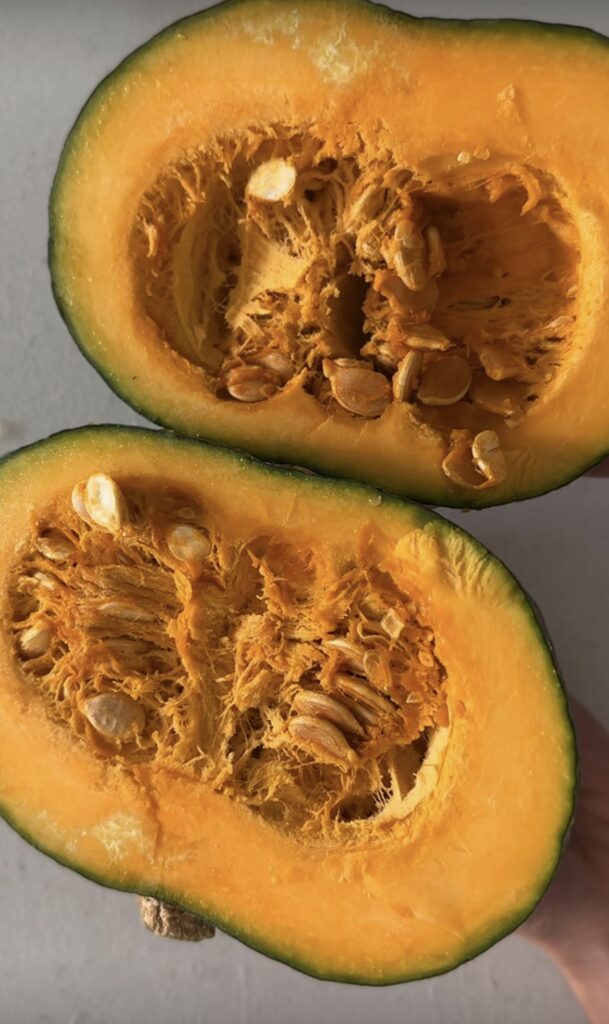
Kabocha squash, sometimes called Japanese pumpkin, is a type of winter squash with dark green skin and vibrant orange flesh.
If you’ve never cooked with it before, imagine something between a pumpkin and a sweet potato.
It has a naturally sweet, slightly nutty flavor and a dense, creamy texture when cooked.
Compared to some other varieties of pumpkin, kabocha squash tends to have a richer flavor and less watery flesh.
That’s one of the reasons it’s so delicious in soup.
As the squash simmers, it softens and releases some of its natural sweetness into the broth.
The chunks become tender and almost buttery, while still holding their shape when cooked properly.
Kabocha squash is especially popular during the fall and winter, although you can often find it year-round at Asian grocery stores.
I typically look for it at Vietnamese, Japanese, Korean, and other Asian supermarkets.
Can You Eat Kabocha Squash Skin?
Yes! Kabocha squash skin is edible.
In fact, many recipes recommend leaving the skin on because it softens as the squash cooks.
And while there’s absolutely nothing wrong with eating it, I personally prefer removing the skin when making canh bí đỏ.
For this particular soup, I love the soft, almost creamy texture of the squash without having to bite through the skin.
Plus, I think the bright orange squash looks especially beautiful floating in the broth alongside the shrimp and green onions.
Of course, this is completely a personal preference.
If you enjoy the skin, you can leave it on. Just make sure to wash the squash thoroughly before cooking.
But if you’re like me and prefer the squash peeled, keep reading because I’ve got a little kitchen hack for you.

My Secret to Peeling Kabocha Squash Easily
Let’s talk about the most annoying part of cooking with kabocha squash.
Peeling it.
Seriously, why does something so delicious have to be so difficult to prepare?
The skin is incredibly tough, and depending on the squash, even cutting it in half can be a challenge.
For the longest time, peeling kabocha squash was easily my least favorite part of making this soup.
Until I started microwaving it first.
My trick is to microwave the whole kabocha squash for a few minutes before cutting and peeling it.
The microwave gently warms and softens the outer layers of the squash, making it easier to handle.
You’re not trying to fully cook the squash. You just want to soften it enough that your knife or peeler can work through the skin more easily.
Here’s how I do it:
- Wash the outside of the kabocha squash and dry it thoroughly.
- Carefully pierce the skin several times with the tip of a sharp knife to create steam vents. Never microwave a completely unvented whole squash.
- Place the squash on a microwave-safe plate.
- Microwave on high for 2–3 minutes, depending on its size.
- For a particularly large or hard squash, continue microwaving in 30-second increments as needed.
- Allow the squash to rest for a few minutes before handling it.
- Once cool enough to handle safely, carefully cut it in half, remove the seeds, and peel away the skin.
That’s it!
The skin should be easier to peel compared to working with a completely raw, rock-hard squash.
Keep in mind that microwaving doesn’t make the squash completely soft, so you’ll still need a sharp knife and a little patience.
Also, be careful when cutting into the warmed squash because steam can escape from the inside.
I like doing this before cutting the squash into chunks for my soup.
And since the squash has already been warmed slightly, I always start checking it a little earlier during simmering.
A few minutes in the microwave can make a surprisingly big difference when it comes to prepping kabocha squash.
Ingredients You’ll Need
One of the best things about canh bí đỏ nấu tôm is that it doesn’t require a complicated ingredient list.
Most of the ingredients are probably already in your kitchen if you regularly cook Vietnamese food.
Kabocha Squash
The star of the recipe!
You’ll need approximately 1 pound of prepared kabocha squash, peeled, seeded, and cut into chunks.
I recommend cutting the squash into pieces about 1–1½ inches wide.
You want the pieces large enough that they hold their shape while cooking, but small enough that they become tender relatively quickly.
Shrimp
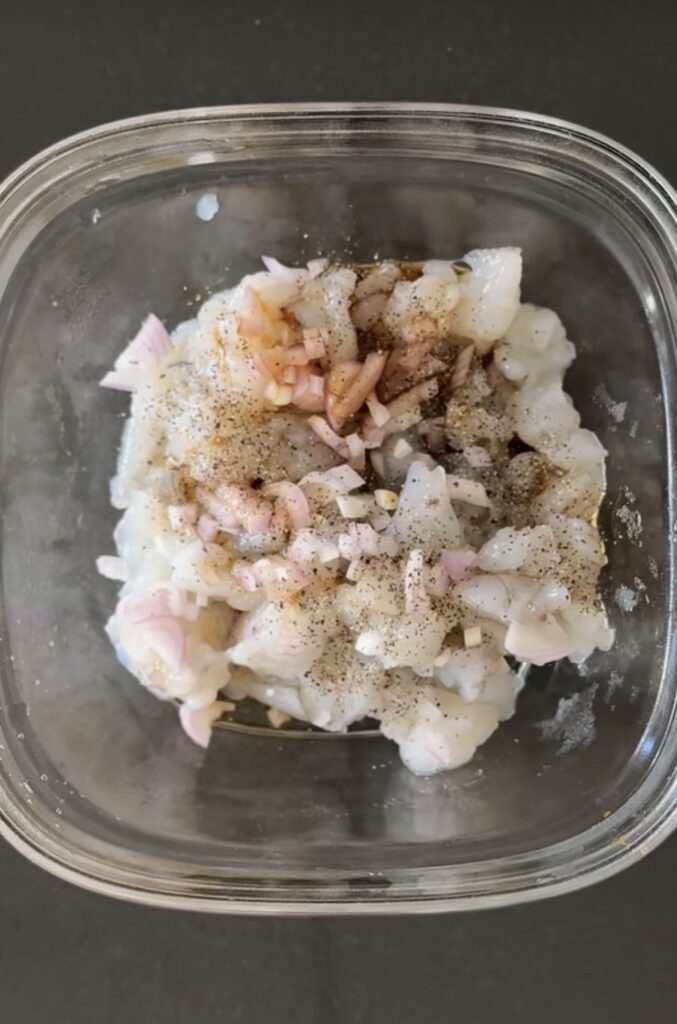
I use ½ pound of raw shrimp, peeled and deveined.
You can leave the shrimp whole or roughly chop them into smaller pieces.
I personally like having a combination of whole and chopped shrimp because you get some substantial bites of shrimp while the smaller pieces distribute throughout the soup.
Using raw shrimp is important because we’re adding it directly to the broth toward the end of cooking.
This allows the shrimp to release its flavor into the soup without becoming overcooked.

Shallots
Shallots add a subtle sweetness and aromatic flavor to the broth.
I prefer shallots over regular onions in this recipe because their flavor is a little more delicate.
Garlic
A small amount of minced garlic adds another layer of flavor.
This is optional, but I like including it when sautéing the shallots.
Fish Sauce
Fish sauce is essential for giving this soup its savory Vietnamese flavor.
It adds saltiness and umami without overpowering the natural sweetness of the squash.
Start with a smaller amount and adjust toward the end of cooking.
Chicken Bouillon Powder
I like adding a little chicken bouillon powder to round out the broth.
It’s completely optional, especially if you’re already using a flavorful broth instead of water.
Because fish sauce and bouillon both contain salt, be sure to taste before adding more.
Sugar
Just a little sugar helps balance the savory seasonings.
Kabocha squash is already naturally sweet, so you really don’t need much.
Green Onions and Cilantro
Fresh green onions add color and a mild onion flavor.
Cilantro is optional, but I love adding a little fresh herb flavor right before serving.
How to Make Canh Bí Đỏ Nấu Tôm
This Vietnamese kabocha squash soup comes together in one pot, making it perfect for a simple weeknight dinner.
Step 1: Prepare the Kabocha Squash
Wash and dry the outside of the squash.
Carefully pierce the skin several times to allow steam to escape, then place the squash on a microwave-safe plate.
Microwave on high for 2–3 minutes, adding short increments if needed to slightly soften the squash.
Let it rest until cool enough to handle.
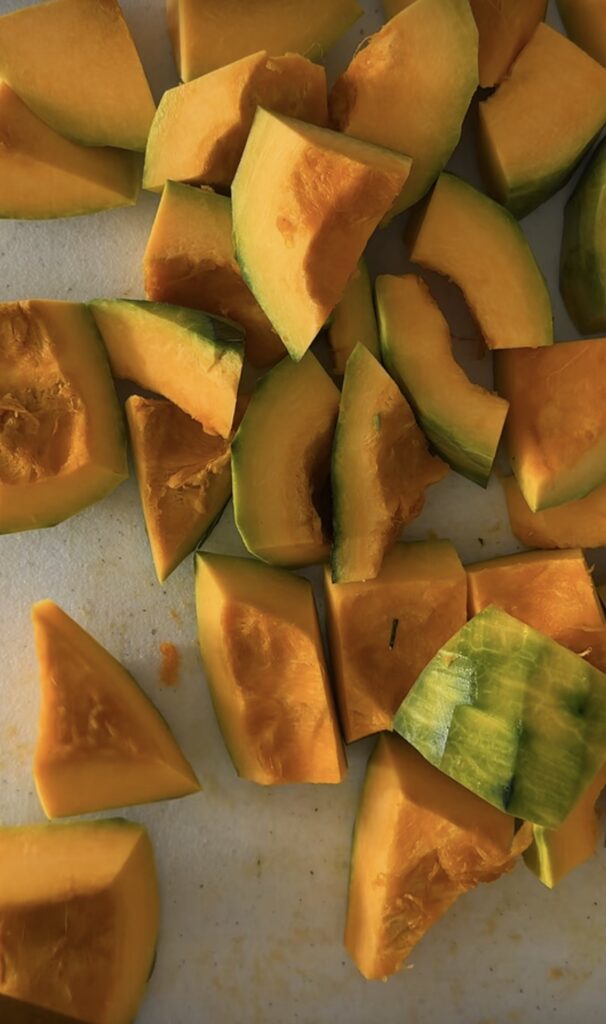
Carefully cut the squash in half, scoop out the seeds, and remove the skin with a sturdy vegetable peeler or sharp knife.
Cut the squash into approximately 1–1½-inch chunks.
Step 2: Prepare the Shrimp
Peel and devein the shrimp if they haven’t already been cleaned.
You can leave the shrimp whole or roughly chop some into smaller pieces.
I like using a combination of both.
Set the raw shrimp aside in the refrigerator while preparing the soup.
There’s no need to precook the shrimp because we’re adding it directly into the simmering broth later.
Step 3: Sauté the Aromatics
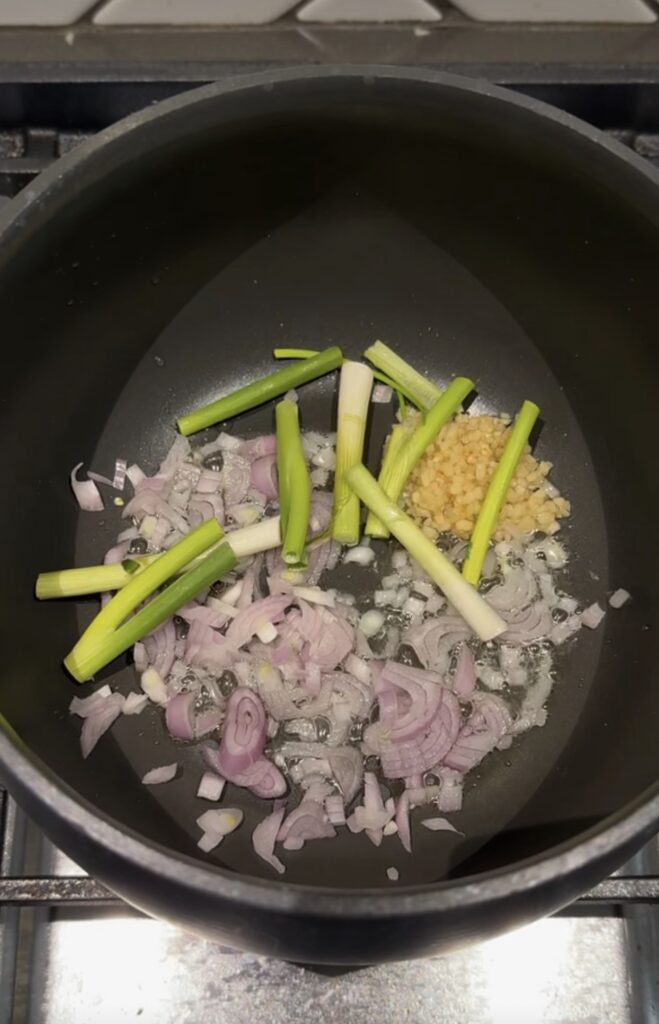
Heat 1 tablespoon of neutral cooking oil in a medium pot over medium heat.
Add the minced shallots and garlic.
Sauté for about 30–60 seconds, stirring frequently until fragrant.
Be careful not to burn the garlic because it can make the broth taste bitter.

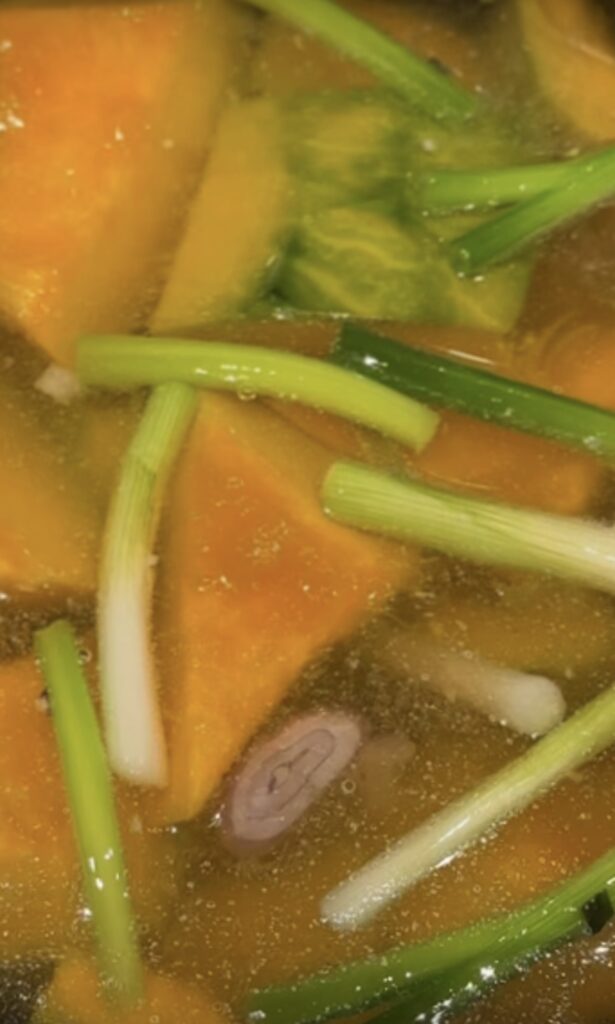
Step 4: Simmer the Kabocha Squash
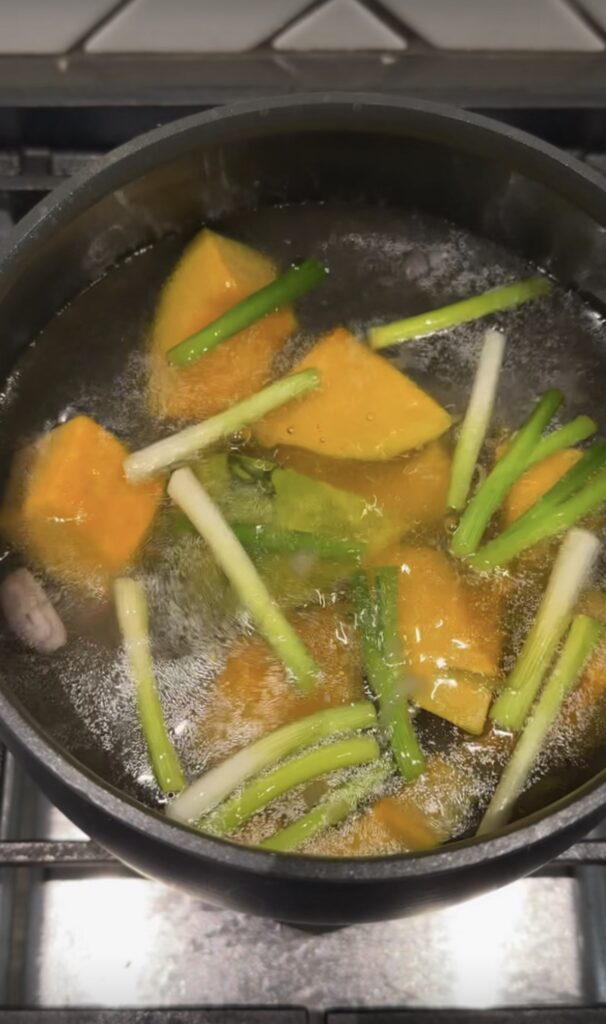
Add 5 cups of water to the pot and bring to a gentle boil.
Add the prepared kabocha squash, fish sauce, sugar, and chicken bouillon powder.
Reduce the heat to medium-low and let everything simmer for approximately 10–15 minutes.
The exact cooking time will depend on the size of your squash pieces and how much they softened in the microwave.
You’ll know the squash is ready when a fork can easily pierce the flesh.
You want the squash tender, but not completely falling apart.
Step 5: Add the Shrimp
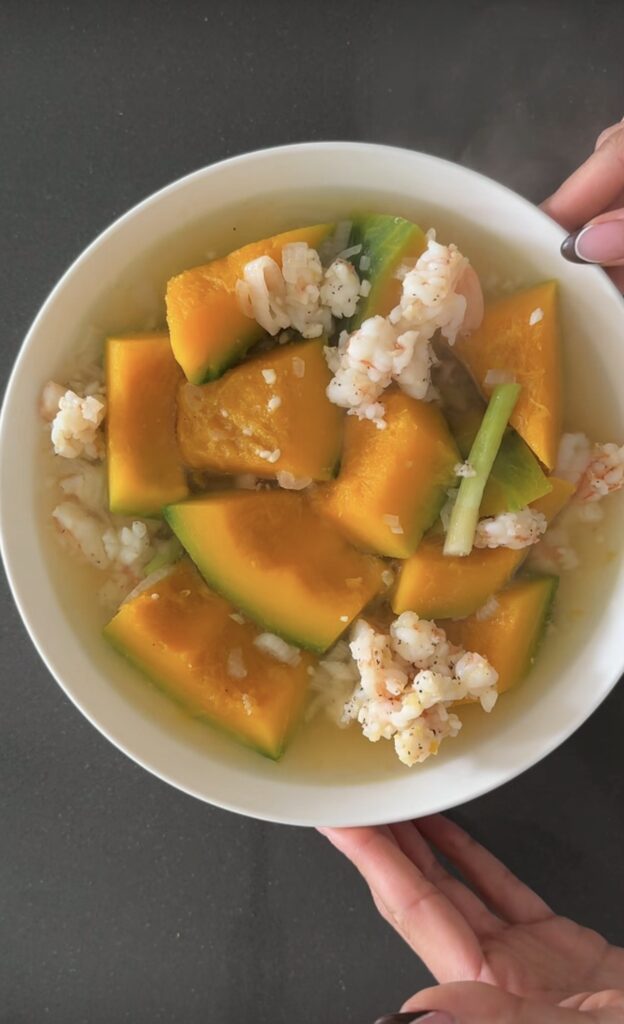
Once the squash is tender, add the raw shrimp directly into the simmering soup.
Gently stir to distribute the shrimp throughout the pot.
Let the shrimp cook for approximately 2–4 minutes, depending on their size, until pink, opaque, and fully cooked.
The shrimp should reach an internal temperature of 145°F.
There’s no need to remove the shrimp from the pot. Simply leave them in the soup once cooked and turn off the heat.
This is how I prefer making canh bí đỏ because it’s simple, requires fewer steps, and allows the shrimp to flavor the broth as it cooks.

Step 6: Season and Serve
Taste the broth and adjust with additional fish sauce, chicken bouillon, or a pinch of sugar if needed.
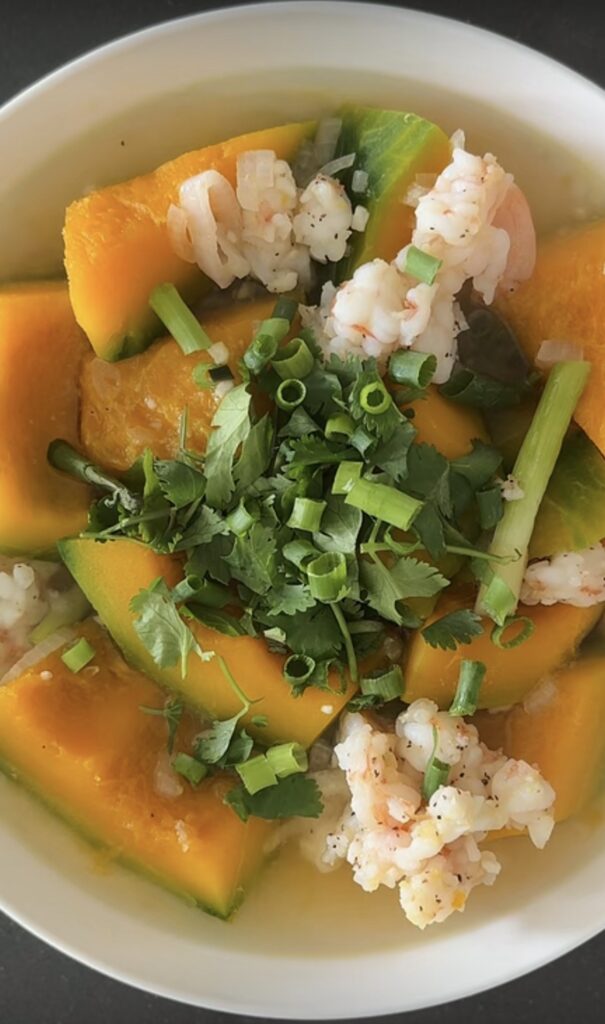
Turn off the heat and stir in the chopped green onions and cilantro.
Finish with freshly cracked black pepper.
Serve warm alongside steamed jasmine rice and your favorite Vietnamese savory dishes.
And that’s it!
A comforting bowl of homemade Vietnamese squash soup.
Tips for Making the Best Vietnamese Pumpkin Soup
Choose a Good Kabocha Squash
Look for a squash that feels heavy for its size and has firm skin without soft spots.
The skin should be dark green, although some varieties may have lighter markings.
Avoid squash with large damaged or moldy areas.
Don’t Overcook the Squash
Kabocha squash becomes incredibly soft when cooked.
While a little squash breaking down into the broth is delicious, you don’t want every piece turning into mush.
Start checking for doneness around the 10-minute mark, especially if you microwaved the squash beforehand.
Add the Shrimp at the End
Shrimp cooks much faster than squash.
If you add it too early, it can become tough and rubbery by the time the squash is tender.
That’s why I add the raw shrimp during the final few minutes of cooking.
Once the shrimp is opaque and fully cooked, turn off the heat.
It can stay right in the soup until you’re ready to serve.
Use Fish Sauce for Flavor
Fish sauce is one of the most important ingredients in this recipe.
It gives the broth that distinct savory flavor without needing a complicated seasoning mixture.
Keep in mind that different brands of fish sauce have different levels of saltiness.
I always recommend seasoning gradually and tasting toward the end.
Adjust the Sweetness Naturally
One of my favorite things about kabocha squash is how sweet it becomes when cooked.
You really don’t need much added sugar.
In fact, depending on your squash, you might not need any additional sugar at all.
If you prefer a sweeter broth, you can gently mash a couple of squash pieces into the soup to release more of their flavor.
Canh Bí Đỏ with Shrimp vs. Pork
Like many Vietnamese recipes, canh bí đỏ can be prepared in several different ways depending on the household.
Two popular variations are made with shrimp or pork.
Canh bí đỏ nấu tôm, which is the version we’re making today, uses shrimp to create a light, slightly sweet, savory broth.
The shrimp cooks quickly, making this version especially convenient for weeknight meals.
Another common variation is canh bí đỏ nấu xương, which uses pork bones.
The pork bones are typically simmered longer to create a richer broth before the squash is added.
Some families also use ground pork for a quicker version.
All of these variations are delicious, but I personally prefer shrimp.
Not necessarily because it’s better than pork, but because it’s the version I grew up eating.
It’s funny how certain flavors just stick with you. Even when there are several ways to make the same dish, there’s usually one version that reminds you of home.
For me, that’s canh bí đỏ with shrimp.
What to Serve with Canh Bí Đỏ
In Vietnamese households, soup is often one part of a larger family-style meal.
Rather than serving canh bí đỏ as a standalone entrée, I love pairing it with savory dishes and steamed jasmine rice.
Here are some of my favorite combinations:
- Cá kho tộ: Vietnamese caramelized fish has a rich, savory flavor that pairs beautifully with the sweetness of the squash.
- Thịt kho tiêu: Peppery caramelized pork complements the light broth.
- Sườn ram mặn: Savory caramelized pork ribs are delicious alongside this soup.
- Đậu hũ chiên: Crispy fried tofu adds another texture to the meal.
- Rau muống xào tỏi: Garlic sautéed water spinach gives you something green and savory on the table.
Personally, I think this soup tastes best with a bowl of hot jasmine rice and something salty on the side.
You can spoon some broth over your rice or enjoy it separately between bites.
That’s how I grew up eating Vietnamese family-style dinners, and it’s still one of my favorite ways to enjoy them.

How to Store and Reheat Leftovers
Canh bí đỏ is best enjoyed fresh, especially because shrimp can become overcooked when repeatedly reheated.
However, leftovers can still be delicious if stored properly.
Refrigerating
Allow the soup to cool slightly, then transfer it to an airtight container.
Refrigerate promptly, within two hours of cooking, and enjoy within 3–4 days.
Keep in mind that the kabocha squash will continue absorbing some of the broth as it sits.
The squash may also become softer over time.
Reheating
Transfer the soup to a small saucepan and gently reheat over medium-low heat until steaming hot throughout, reaching 165°F.
Avoid boiling it aggressively because the shrimp can become rubbery and the squash may break apart.
You can add a splash of water if the broth has thickened.
Can You Freeze Canh Bí Đỏ?
You can freeze this soup, but I personally prefer enjoying it fresh.
Kabocha squash can become softer after freezing and thawing, and the shrimp may lose some of its tender texture.
If you decide to freeze it, transfer the cooled soup to a freezer-safe container and leave enough space for expansion.
For the best quality, enjoy it within 2–3 months.
Thaw in the refrigerator before reheating thoroughly.
Frequently Asked Questions
Is kabocha squash the same as pumpkin?
Kabocha squash is often referred to as Japanese pumpkin, but it’s a distinct variety of winter squash.
It has dark green skin, orange flesh, and a naturally sweet, nutty flavor.
Its dense texture makes it especially delicious in Vietnamese soups.
Do I have to peel kabocha squash?
No! The skin is completely edible once properly cooked.
However, I personally prefer peeling it for canh bí đỏ because I like the softer texture of the squash without the skin.
If you want to save time, you can leave the skin on.
Can I use frozen shrimp?
Absolutely.
Frozen raw shrimp works well in this recipe.
Just thaw the shrimp completely in the refrigerator or under cold running water, then drain before adding it to the soup.
Avoid adding large frozen clumps directly to the pot because they can lower the broth temperature and cook unevenly.
Can I make this soup without shrimp?
Yes!
You can make a simple vegetable-based version using water or vegetable broth.
Omit the shrimp and use salt, soy sauce, or a vegetarian seasoning in place of the fish sauce.
You can also add mushrooms or tofu for additional texture.
Can I use butternut squash instead of kabocha?
Yes, although the flavor and texture will be slightly different.
Butternut squash is generally softer and has a milder flavor.
Kabocha squash has a denser, starchier texture and a naturally sweet, nutty taste that I especially love for this recipe.
If you have access to kabocha squash, I definitely recommend using it.
Why is my kabocha squash falling apart?
The squash was likely cooked for too long or cut into pieces that were too small.
Kabocha becomes very soft when simmered, especially after microwaving.
Try cutting larger chunks and checking the squash earlier during cooking.
Can I make canh bí đỏ ahead of time?
Yes, but for the best texture, I recommend preparing the squash and cleaning the shrimp ahead of time, then cooking the soup shortly before serving.
If you’re meal prepping, you can also cook the soup base and squash ahead of time, then add fresh shrimp when reheating and finish cooking it before serving.

More Vietnamese Home-Cooked Recipes to Try
If you love simple, comforting Vietnamese dishes like this one, there are so many other recipes worth adding to your dinner rotation.
From savory caramelized meats to fresh vegetable dishes and traditional noodle soups, Vietnamese home cooking is all about balancing flavors and textures.
Some of my favorites include:
- Bún Bò Huế: A flavorful Vietnamese spicy beef noodle soup loaded with lemongrass and aromatic spices.
- Bánh Xèo: Crispy Vietnamese sizzling crepes filled with shrimp, pork, and fresh vegetables.
- Chả Giò: Crispy Vietnamese fried spring rolls that are perfect for family gatherings.
And of course, no Vietnamese family-style meal is complete without steamed jasmine rice!
Final Thoughts
Canh bí đỏ nấu tôm is one of those recipes that reminds me why I love Vietnamese home cooking so much.
It’s simple, comforting, and doesn’t require a long list of ingredients.
The naturally sweet kabocha squash, savory shrimp, and light broth come together to create something that tastes so much more flavorful than you’d expect.
And even though peeling kabocha squash is still one of my least favorite kitchen tasks, microwaving it beforehand has made the process so much easier.
If you’ve never tried Vietnamese kabocha squash soup, I hope this recipe inspires you to give it a shot.
And if you grew up eating it like I did, I hope it brings back a little taste of home.
Happy cooking! 💛


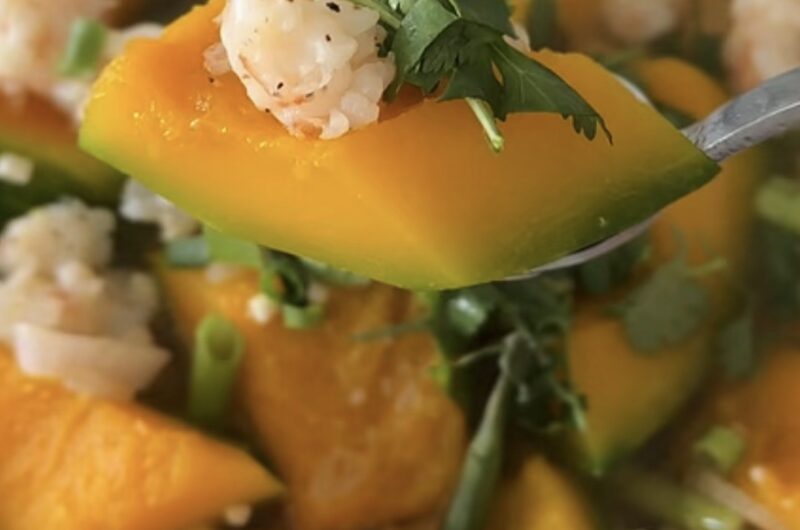
Canh Bí Đỏ Nấu Tôm (Vietnamese Kabocha Squash Soup with Shrimp)
4
servings15
minutes20
minutesA comforting Vietnamese soup made with tender kabocha squash, juicy shrimp, and a naturally sweet, savory broth. This easy recipe includes a microwave trick to make peeling tough kabocha squash easier.
Ingredients
1 lb (450 g) kabocha squash, peeled, seeded, and cubed
½ lb (225 g) raw shrimp, peeled and deveined
5 cups water
2 shallots, minced
2 cloves garlic, minced (optional)
1 tbsp neutral cooking oil
1–1½ tbsp fish sauce, divided, or to taste
½ tsp sugar
½ tsp chicken bouillon powder (optional)
¼ tsp black pepper
2 green onions, chopped
Small handful cilantro, chopped (optional)
Directions
- Soften the squash: Wash and dry the whole kabocha squash. Carefully pierce its skin several times to vent steam. Place on a microwave-safe plate and microwave on high for 2–3 minutes, adding 30-second increments as needed until slightly softened. Let rest until cool enough to handle.
- Prepare the squash: Carefully cut the squash in half, scoop out the seeds, and peel off the skin. Cut into 1–1½-inch chunks. Measure approximately 1 lb of prepared squash.
- Prepare the shrimp: Peel and devein the shrimp. Leave whole or roughly chop some into smaller pieces. Keep refrigerated until ready to cook.
- Sauté the aromatics: In a medium pot, heat oil over medium heat. Add the minced shallots and garlic. Sauté for 30–60 seconds until fragrant.
- Simmer the squash: Pour in 5 cups of water and bring to a gentle boil. Add the squash, 2 tsp fish sauce, sugar, and chicken bouillon powder. Reduce heat to medium-low and simmer for 10–15 minutes, or until the squash is fork-tender.
- Add the shrimp: Add the raw shrimp directly to the simmering soup. Gently stir and cook for 2–4 minutes, or until the shrimp are opaque and fully cooked (145°F). Leave the shrimp in the pot and turn off the heat.
Season: Taste the broth and add more fish sauce, up to the remaining amount, as needed. Adjust other seasonings to taste. - Garnish and serve: Stir in the chopped green onions and cilantro. Sprinkle with black pepper and serve warm with steamed jasmine rice.
Notes
- Kabocha skin: The skin is edible, but peeling it gives the soup a softer texture.
Microwave trick: Always pierce the whole squash to vent steam before microwaving. Let it cool enough to handle and be careful of escaping steam when cutting.
Shrimp: Add shrimp only during the final few minutes of cooking to prevent a rubbery texture.
Squash cooking time: Because the squash is slightly softened in the microwave, begin checking for tenderness after 10 minutes.
Broth: Water works perfectly because the squash and shrimp provide natural sweetness and flavor.
Storage: Refrigerate in an airtight container for 3–4 days. Reheat thoroughly and gently to preserve the shrimp’s texture.